
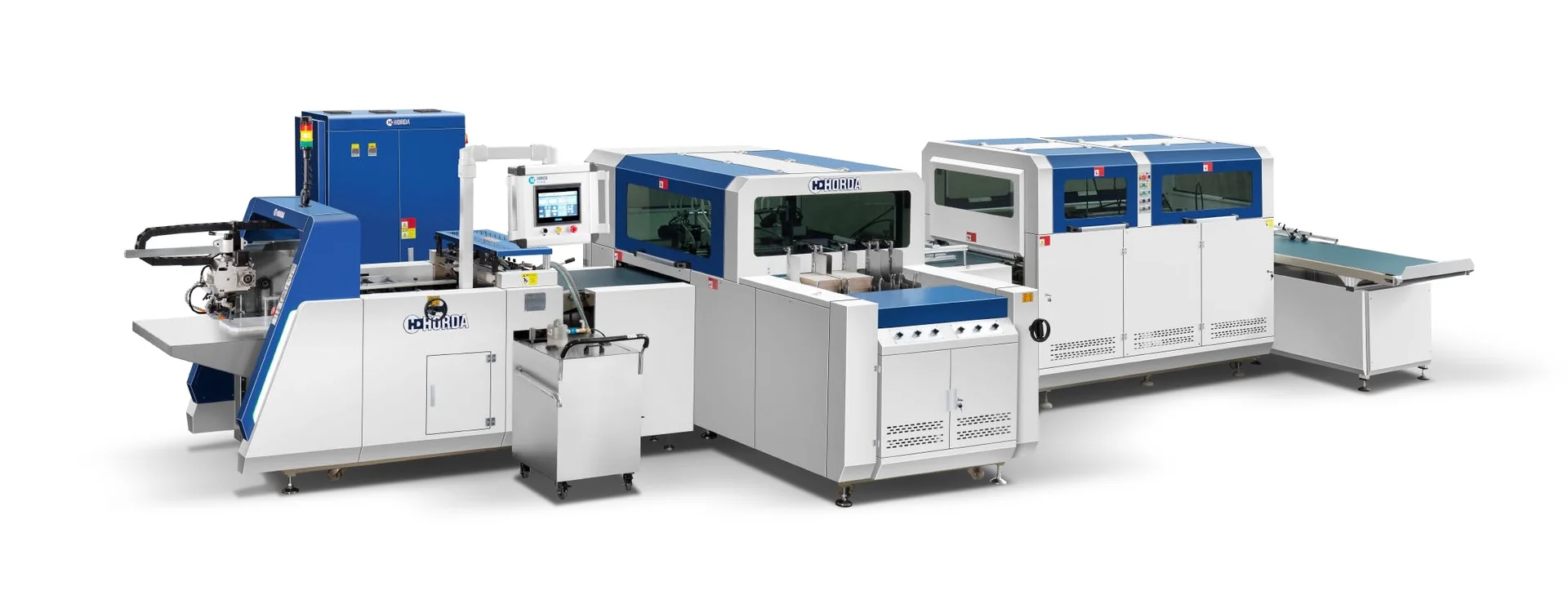
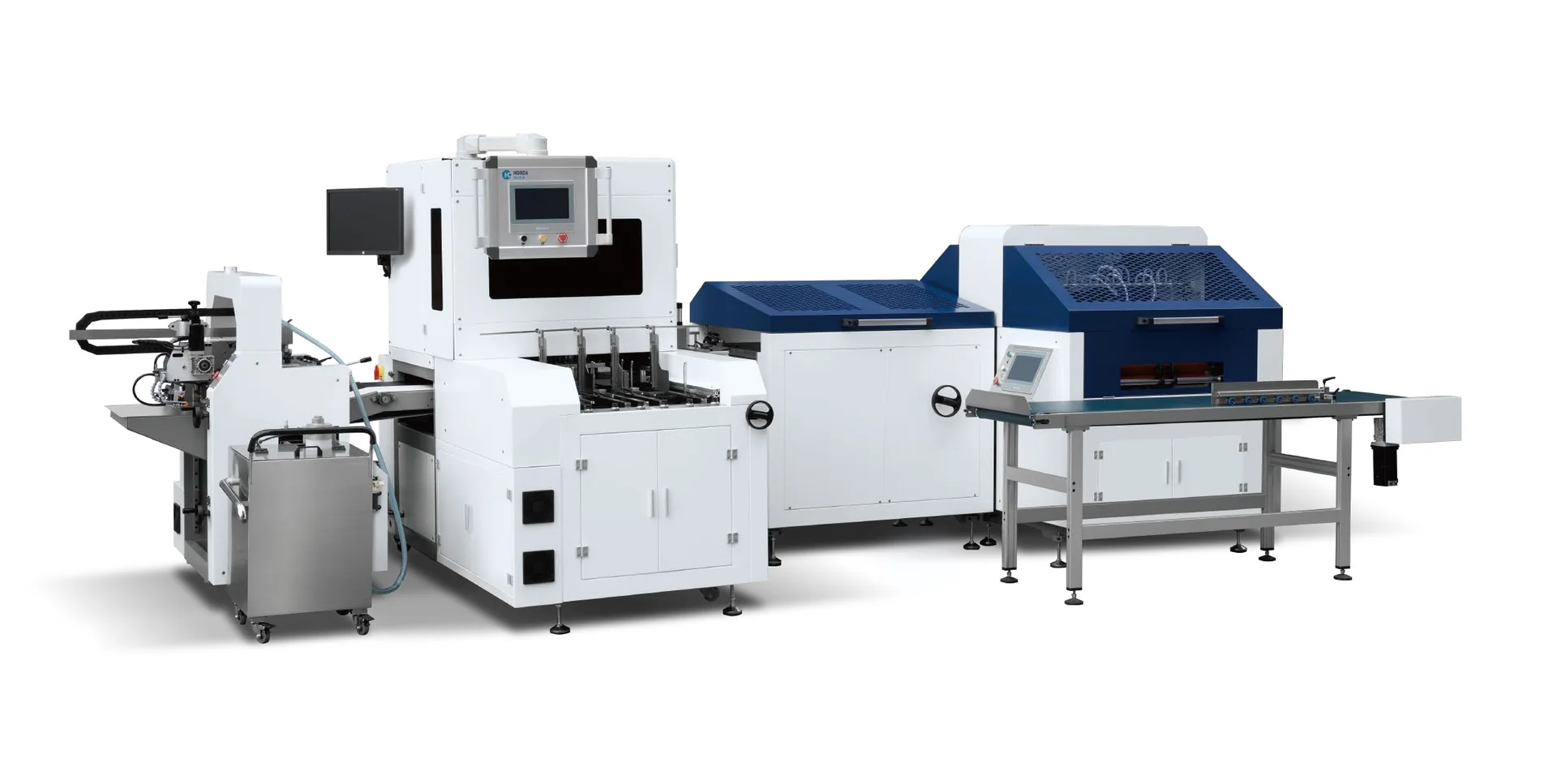
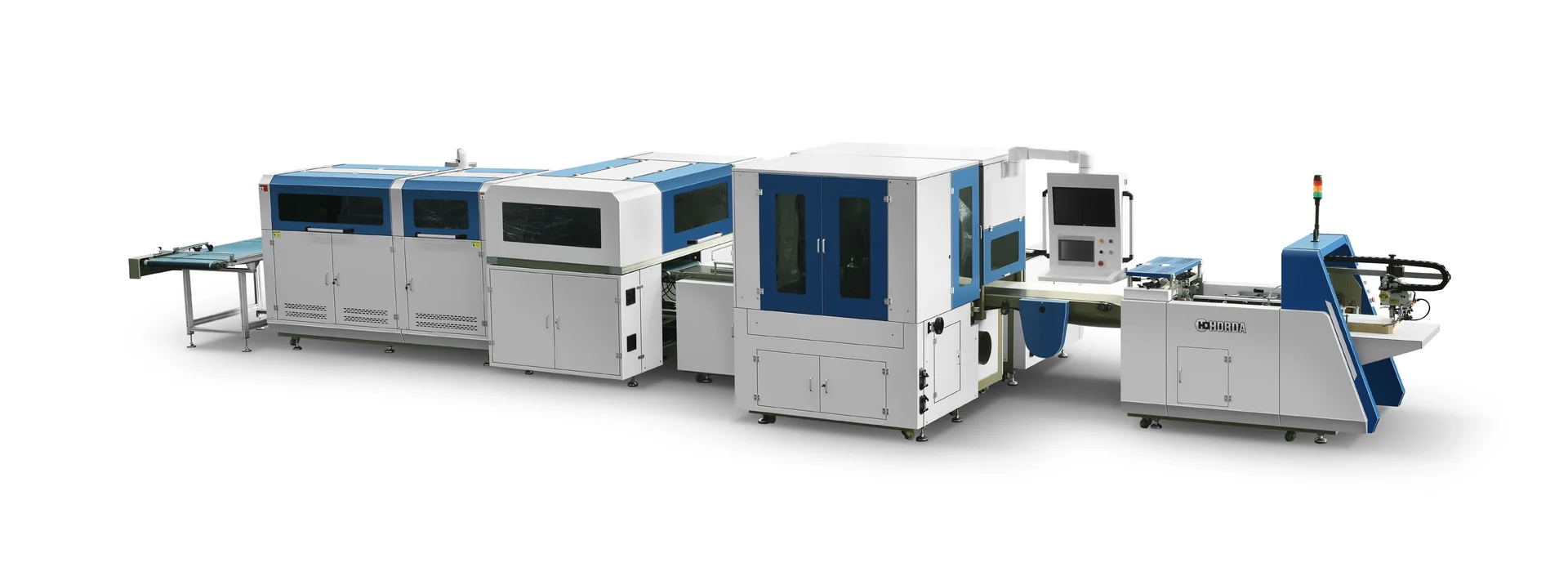
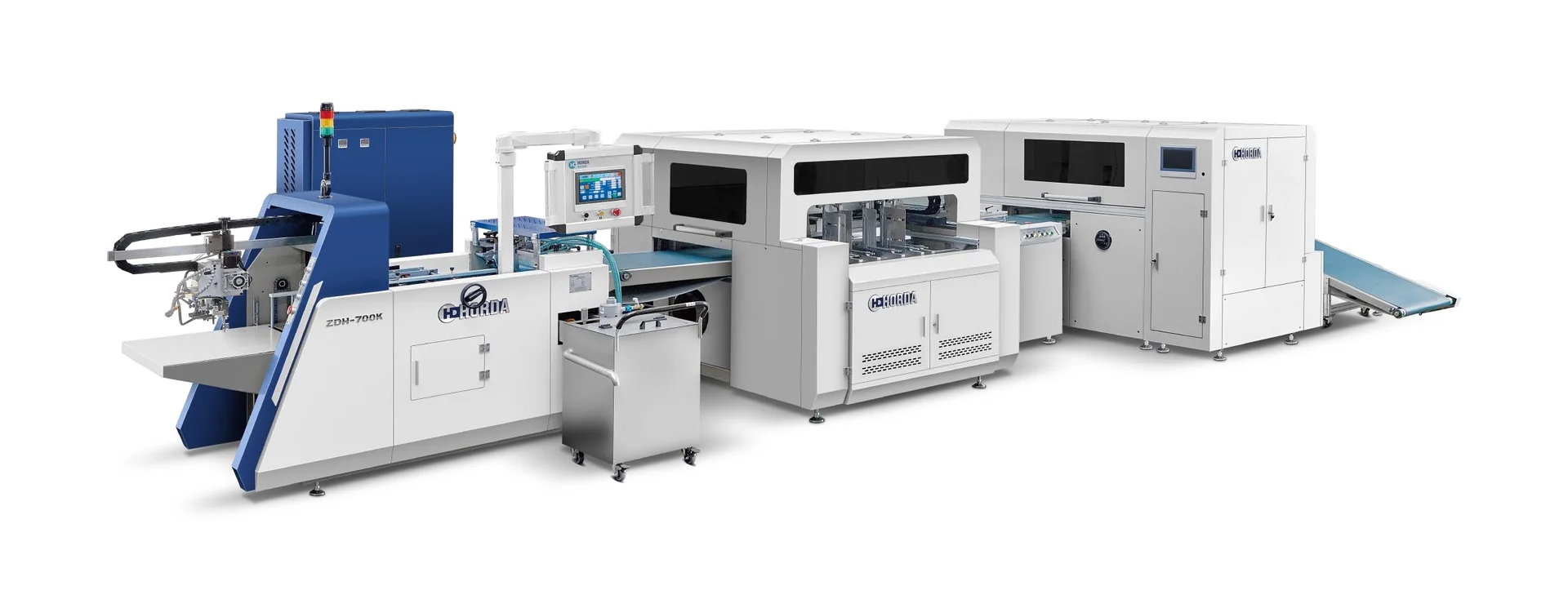
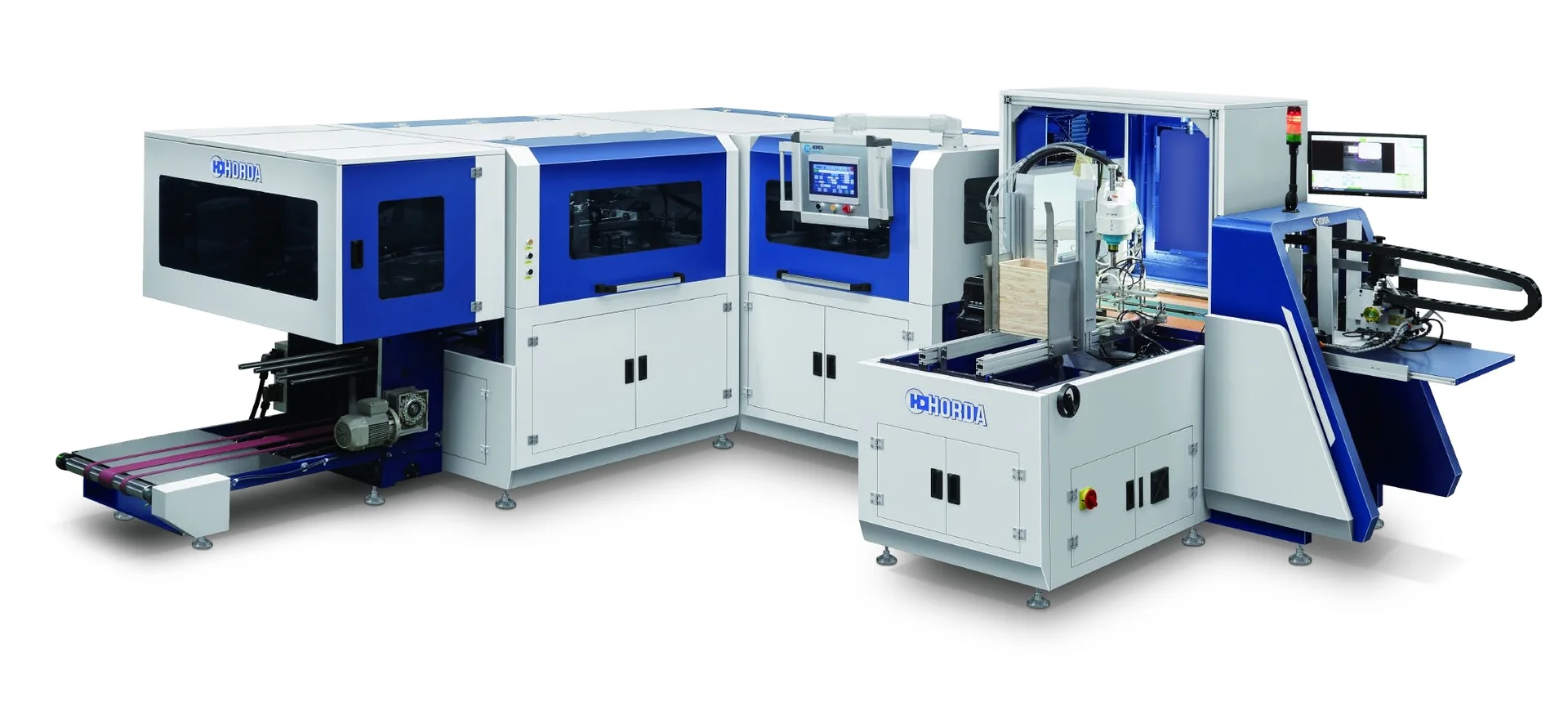
Which machine is suitable for Hardcover Book & Folder Case Making Machines?
Selection depends on the flat component layout, size range, board, covering material, positioning method and the operations before and after case making.
Choose by operation and finished format.
Connect machines into a workable production route.
Start with the product you need to package.
Turn an inquiry into a verifiable project scope.
For books, folders and presentation covers, the front board, spine, back board and gaps determine the working layout more accurately than the closed finished size.
Structure / Materials / Project scope
VISUAL NOTE 01The case, page block and assembled book are separate objects. Use this distinction when defining the equipment hand-off.
Confirm the boards, covering stock and hinge geometry.
Book-block preparation is a separate scope to define.
Agree the later joining and finishing operations.
This section separates the operation supported by the supplied HORDA catalogue from downstream work that still needs project-specific confirmation.
Source: HORDA 2026 equipment catalogue supplied for this project. Manufacturer statements and configurations require current-document confirmation.
Use the answers as a starting checklist and confirm project-specific statements with current technical evidence.
Selection depends on the flat component layout, size range, board, covering material, positioning method and the operations before and after case making.
Not always. Case making, lining, box-body forming, inserts, magnets and final assembly can be separate production steps.
Send finished and open samples, flat drawings, minimum and maximum sizes, materials, target output and current production method.
Use actual materials and count consecutive accepted pieces after inspection, rather than relying only on catalogue maximum speed.
Continue from hardcover book & folder case making machines to the most relevant equipment, process, application or buyer-information page.
Send the finished product, flat drawing, materials, size range and target output.