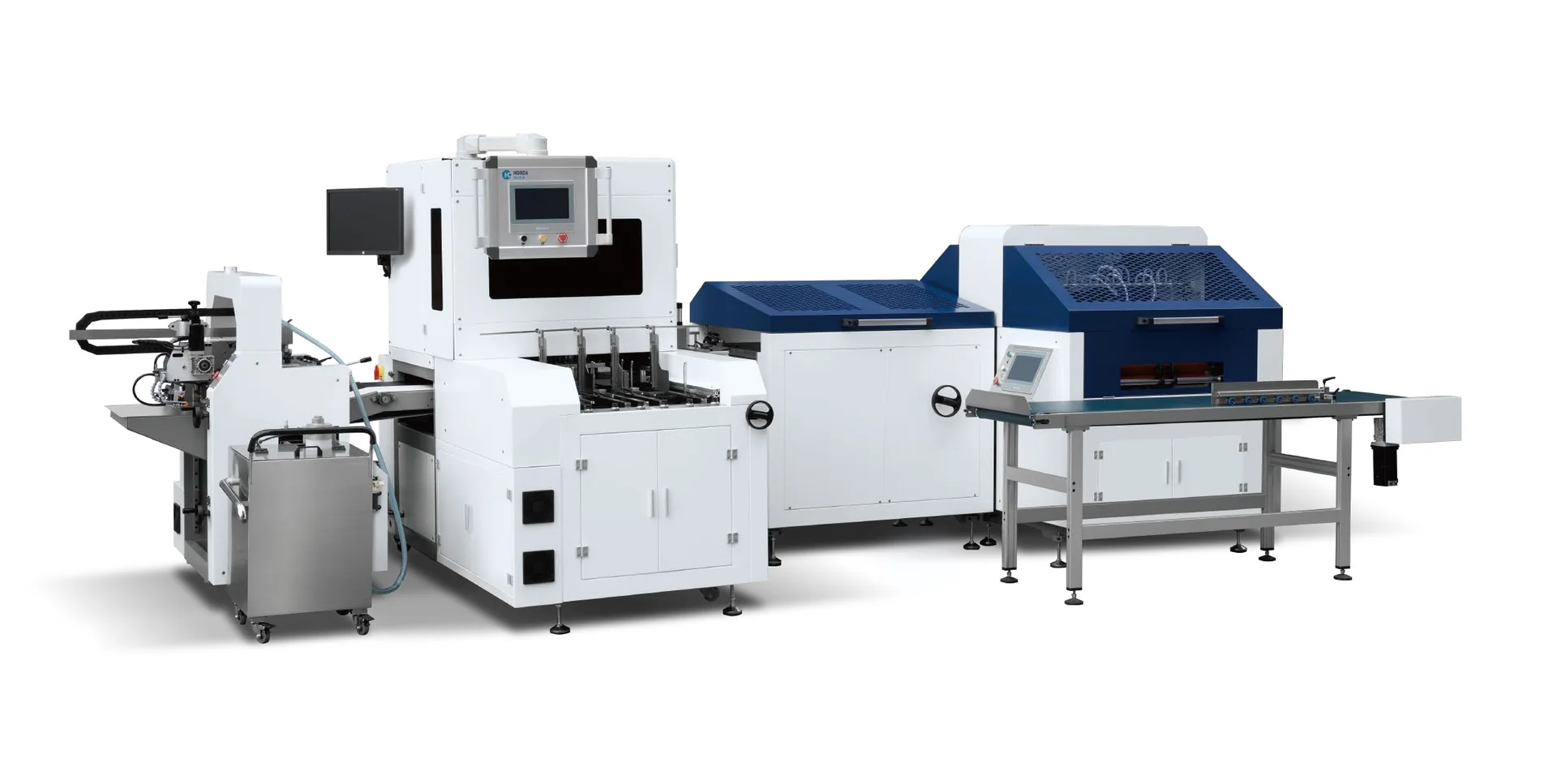
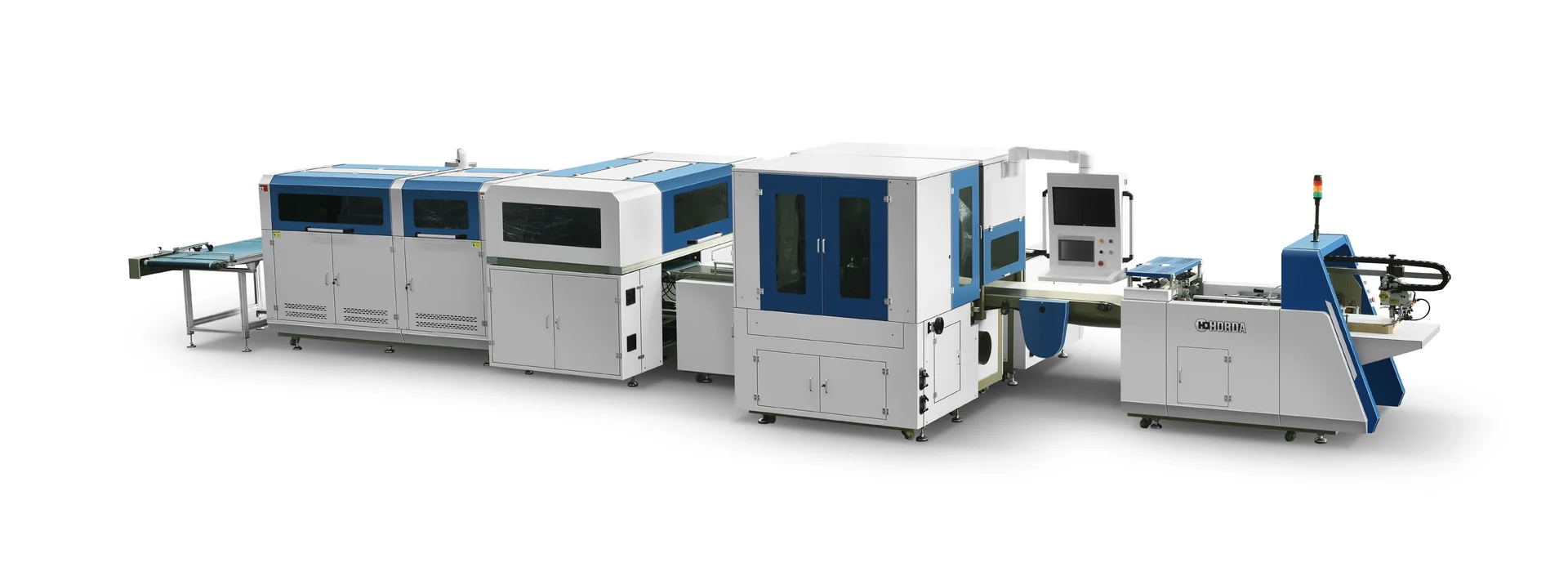
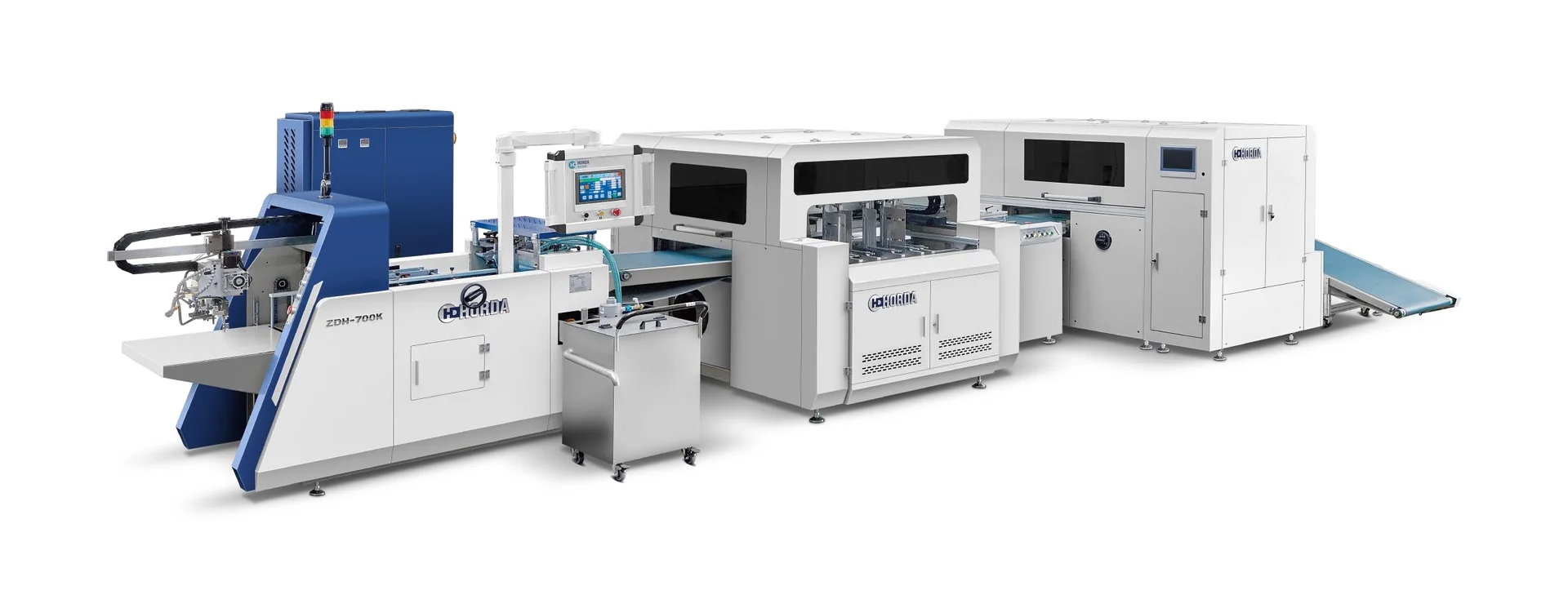
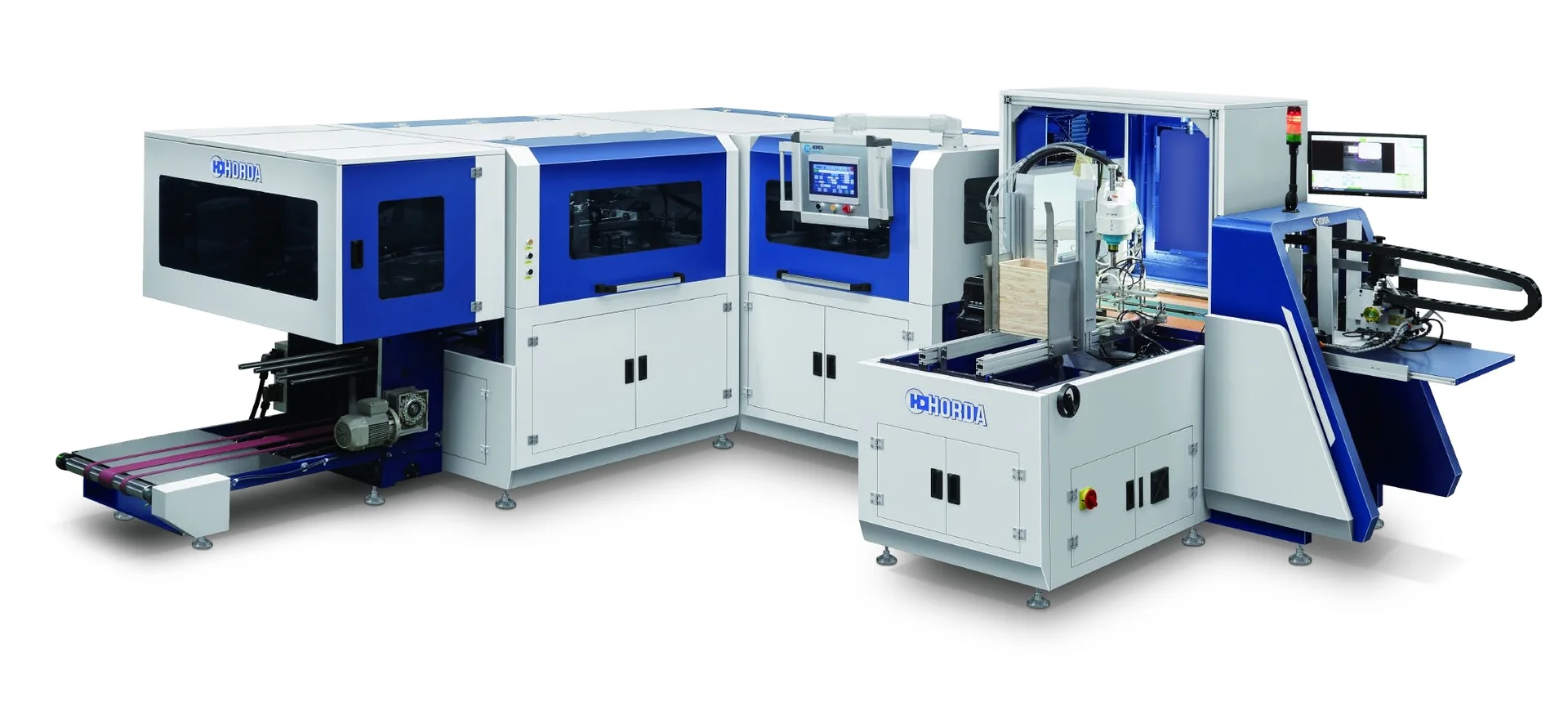
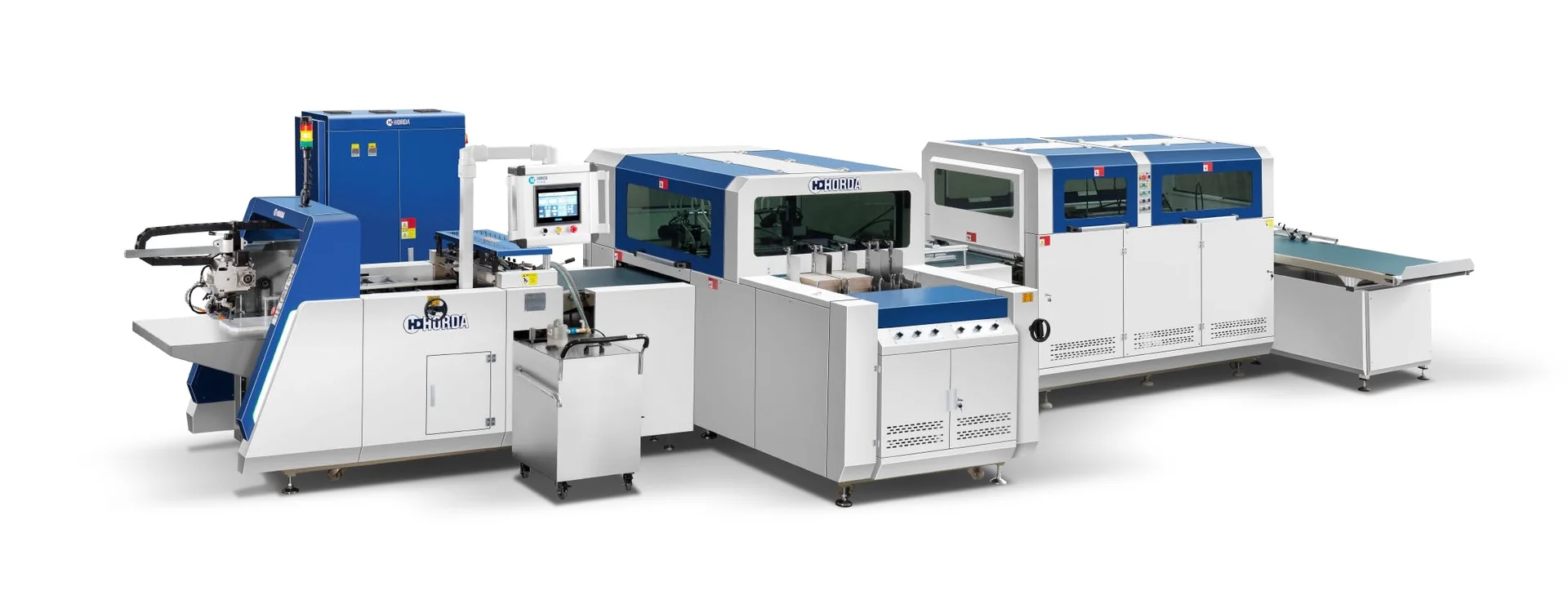
Choosing an automatic case making machine should start with the cases you need to produce—not with the largest size or fastest speed in a catalogue. Define your product dimensions, board and covering materials, registration requirement, required accepted output, job mix and factory constraints first. Then compare those requirements with the documented operating range of the exact machine configuration you are considering.
This distinction matters because a machine can look suitable on one headline specification and still be a poor fit for the actual production mix. A maximum size does not tell you whether the machine covers your smallest SKU. A rated speed does not tell you how many acceptable cases you will produce across different materials and changeovers. And a positioning technology label does not prove that the proposed configuration will meet your registration requirement.
A practical buying process therefore has five stages: define the real production job, confirm exact-model fit, establish the correct output basis, validate representative products, and put the same requirements into every supplier RFQ.
Define the Production Job Before You Compare Machines
A useful machine comparison starts with a production specification, not a list of preferred machine features.
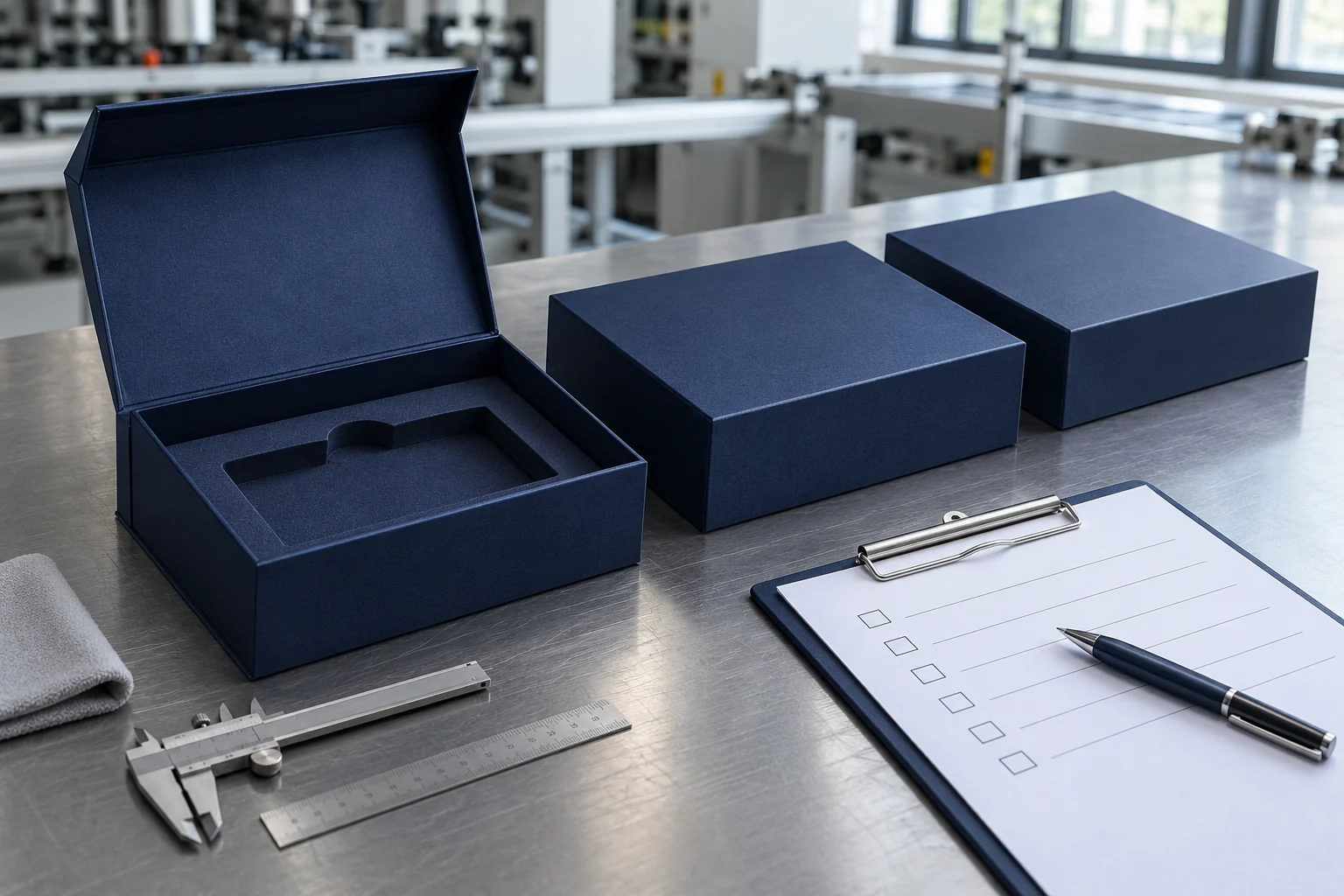
For each important SKU, record what the machine will actually receive and what an acceptable finished case must look like. Depending on the construction, this can include overall dimensions, board arrangement, covering material, registration requirement and the expected range of work rather than only an average product.
The extremes matter. If one model in your range is substantially larger, smaller or more registration-sensitive than the rest, checking only a typical SKU can create a false sense of fit. The same applies when one covering material behaves differently from the material used during a demonstration.
A buyer-side input sheet can be structured like this:
| Buyer input | What to record | Why it affects selection |
|---|---|---|
| Product structure | Case/cover construction and board arrangement | Defines the process the machine must perform |
| Dimensional range | Smallest and largest relevant products, with the dimension definition made clear | Determines whether the entire SKU range falls inside the exact model’s documented window |
| Board | Thickness, number of pieces and relevant geometry | Can change whether a configuration is mechanically compatible |
| Covering material | Material type, weight/thickness where applicable, surface condition and any special characteristics | Feeding, gluing and positioning requirements can depend on the actual substrate |
| Registration | Whether printed artwork must align to the board/case and what finished result is acceptable | Drives the positioning requirement |
| Production mix | SKU count, batch sizes and change frequency | Affects the practical importance of setup and changeover |
| Output requirement | Required acceptable pieces over a defined production period | Prevents rated speed from being mistaken for delivered production |
| Quality basis | What makes a finished case acceptable or rejectable | Gives sample trials and FAT activity a usable acceptance basis |
This is also the point to separate the case-making operation from surrounding processes. A standalone automatic case maker should not be assumed to perform inner lining, box assembly, insert placement, product packing or other downstream operations unless those functions are explicitly part of the selected line.
That boundary matters when comparing throughput. A case maker’s documented speed is not automatically the throughput of a complete rigid-box or packaging line.
Check Size and Material Fit Against the Exact Model
The safest way to use a specification table is to treat every number as belonging to a specific model and document revision.
HORDA’s February 2026 catalogue illustrates why. Its automatic case-making models have different maximum and minimum product sizes, rated speeds, positioning figures, power ratings and machine dimensions. The catalogue does not support treating the widest value found anywhere in the range as a capability of every machine.
For example, the dated catalogue lists:
| HORDA catalogue model | Maximum / minimum product size | Board thickness | Catalogue rated speed |
|---|---|---|---|
| ZFM-700K | 450 × 720 / 90 × 180 mm | 1.0–3.0 mm | 20–35 pcs/min |
| ZFM-1000K | 600 × 1050 / 140 × 240 mm | 1.0–3.0 mm | 20–30 pcs/min |
| ZFM-1350A | 750 × 1350 / 140 × 240 mm | 1.0–3.0 mm | 15–25 pcs/min |
These figures are useful as dated examples of why exact-model matching matters, not as a substitute for the current specification supplied with a quotation. HORDA’s catalogue notes that machine structures and technical parameters may change and asks users to obtain the latest details.
The selection process should therefore ask two separate questions.
First, does every production-critical SKU fit inside the proposed model’s documented dimensional and construction limits?
Second, are the materials you intend to run covered by the current information for that exact configuration?
The second question is particularly important when specifications from different document revisions disagree. The available evidence does not support publishing one universal covering-paper weight range for all current HORDA automatic case makers. Treat covering paper, board thickness, board count and other material limits as model-specific RFQ confirmation points instead of extrapolating a portfolio-wide capability.
A specification comparison is useful only when the rows are genuinely comparable. A buyer should not combine a maximum size from one model, a speed from another and a positioning figure from a third to create a machine that does not actually exist.
Match the Positioning Method to the Registration Requirement
Positioning should be selected from the product requirement backward.
HORDA’s catalogue shows different positioning approaches within its case-making equipment. The ZFM-700/1000K and ZFM-1350A are identified as photoelectric-detection machines with servo positioning, while the ZFM-700/1000B-II is identified as a CCD/visual-positioning automatic case maker.
That does not justify a rule such as “CCD is always better” or “photoelectric positioning is sufficient for every printed cover.” The relevant question is whether the proposed positioning system, under the selected configuration, can meet the registration requirement of the buyer’s real work.
Start by defining the problem:
- Is the covering sheet plain or printed?
- Does artwork need to register to board edges or another reference?
- Which products in the SKU range are most sensitive to visible misregistration?
- What finished result will be treated as acceptable?
- Will those products and materials be included in the machine trial?
Once the requirement is clear, compare it with the positioning method and documented performance of the exact machine. Any accuracy figure should remain attached to that model and source rather than becoming a generic claim for the whole product family.
The final check is physical validation. If registration is a purchase-critical requirement, include a representative printed job in the sample trial and evaluate the finished result using an acceptance criterion agreed before the test.
That is more informative than choosing a machine simply because its technology name sounds more advanced.
Turn Rated Speed Into an Accepted-Output Requirement
Speed is one of the easiest specifications to compare incorrectly.
A catalogue value usually describes a machine’s documented or rated operating speed under the manufacturer’s stated basis. A buyer’s production requirement is different: it concerns how many acceptable products must be produced over a defined working period with the buyer’s actual jobs.
Those two numbers should never be treated as synonyms.
For procurement purposes, distinguish at least three layers:
| Output term | What it tells you | What it does not tell you |
|---|---|---|
| Catalogue/rated speed | The documented speed basis for the specified machine | Guaranteed sustained production on every SKU |
| Running performance on a defined job | What the machine demonstrates with a particular format/material/setup | Performance across the buyer’s full product mix |
| Accepted output | Good products achieved against an agreed quality and time basis | A value that can be inferred from headline speed alone |
This distinction becomes important when jobs change.
A production mix with repeated size changes can place more importance on setup and changeover than a long run of one product. Different materials or registration requirements may also change the conditions under which the buyer considers the output acceptable. Upstream material preparation and downstream bottlenecks can limit complete-line production even if the case maker itself is capable of a higher rate.
For that reason, write the output requirement in operational terms instead of asking only for “maximum speed.”
A stronger RFQ statement would define:
- the products or representative SKU groups involved;
- the required acceptable-output basis;
- the quality condition under which a piece counts as accepted;
- the expected production pattern or batch mix;
- whether changeover time is included or reported separately;
- whether the figure refers to the case maker alone or a complete connected line.
If a supplier provides a catalogue speed, keep that figure labeled as a catalogue or rated value until a different production basis has actually been demonstrated and documented.
Do not convert a rated pieces-per-minute figure into a promised shift output without evidence covering the production conditions behind that calculation.
Account for Changeover, Utilities, and Line Interfaces
After basic size, material and positioning fit is established, the next question is whether the machine fits the factory and the production mix.
Changeover is a job-mix question
Changeover matters differently in different operations. A plant producing long runs of one case size may care less about frequent setup than a high-mix plant running many short batches.
The useful RFQ question is therefore not simply, “What is the changeover time?”
Instead, ask the supplier to define:
- which parameters must be changed between representative products;
- what parts of the setup are recipe- or servo-controlled;
- what requires manual adjustment;
- what starting and ending conditions are assumed for any quoted changeover time;
- which sample products should be used to demonstrate the change.
Without that basis, a changeover number is difficult to compare. The currently validated evidence is not sufficient to state one universal changeover time for HORDA automatic case makers, so this article should treat changeover as a verification item rather than a guaranteed performance claim.
Separate machine dimensions from required installation space
The HORDA catalogue provides model-specific machine dimensions, weights and power figures. Those values help with early layout screening, but a machine envelope is not the same thing as the final floor-space requirement.
Installation planning may also need space for operators, service access, material staging, infeed and collection, as well as any upstream or downstream equipment.
Similarly, a power value in a technical table does not define the complete electrical installation requirement. The RFQ should request the applicable voltage/frequency, connection requirements and other utilities for the actual machine configuration.
Where compressed air, adhesive systems or other utilities are relevant, request their current requirements directly instead of assuming them from industry practice.
Define the hand-offs around the machine
A case-making machine receives prepared materials and delivers a case or cover at a defined stage of manufacture. What happens immediately before and after it can determine whether the planned production flow is realistic.
Ask:
- What condition must the board and covering material be in at the machine infeed?
- How are finished cases collected or transferred?
- Is inner lining a separate process?
- Is the proposed quotation for a standalone machine or an integrated line?
- Which machine controls the bottleneck when equipment is connected?
This prevents a machine-level specification from being mistaken for a complete production-line commitment.
Validate the Shortlist With Representative Samples and Acceptance Criteria
A specification review can eliminate unsuitable machines, but it cannot prove that the remaining configuration will produce every important job to the buyer’s satisfaction.
That is the role of a representative sample trial—and, when included in the procurement process, a properly defined factory acceptance test.
The key word is representative. Testing only an easy, mid-range product tells you little about the edges of the production window.
A useful trial set should be selected deliberately. Depending on the product mix, that may include the smallest or largest critical format, a registration-sensitive printed cover, or another SKU whose material or construction makes it important to the purchase decision.
The exact sample quantity, run duration and numeric acceptance thresholds should not be invented from a generic checklist. They need to be defined for the project.
Before testing, record:
- the exact product drawing or dimensions;
- the board and covering materials being supplied;
- the configuration being tested;
- the required positioning or finished-quality result;
- the output basis being observed;
- which observations determine pass, conditional acceptance or further adjustment;
- which data or documentation will be retained after the trial.
PMMI’s OpX FAT guidance similarly emphasizes resolving acceptance criteria, expectations and responsibilities between equipment suppliers and end users before or during the FAT process.
A successful demonstration shows what happened under the demonstrated conditions. It does not automatically create a contractual guarantee for every format, material or production condition.
If a particular performance result is important to the purchase decision, put its test basis and acceptance requirement into the RFQ or subsequent purchase documentation instead of relying on an informal demonstration.
Build an RFQ That Makes Machine Offers Comparable
The purpose of an RFQ is not simply to ask, “What machine do you recommend and how much does it cost?”
A useful RFQ gives competing suppliers enough common information to respond to the same production problem. PMMI’s OpX RFP guidance similarly frames a structured request as a way to clarify project requirements and reduce misunderstanding between equipment users and OEMs.
For an automatic case making machine, the technical RFQ can be organized into six groups.
1. Product and dimensional data
Provide:
- case or cover type;
- drawings or clearly defined dimensions;
- minimum and maximum production-critical SKUs;
- board arrangement or construction details where relevant;
- any dimensional feature that may affect machine fit.
Do not send only one “typical” product if the purchase must support a much wider SKU range.
2. Materials
Identify the materials intended for production, including:
- board specification and thickness;
- number of board pieces where relevant;
- covering paper or other covering material;
- printed versus unprinted material;
- surface treatments or unusual material conditions that may affect handling;
- adhesive information when the project requires supplier review of the gluing process.
The goal is not to force the buyer to predict machine compatibility. It is to give the supplier enough information to confirm or qualify it.
3. Positioning and quality requirements
State whether the product has artwork or another feature requiring controlled registration.
Describe what the finished result must achieve rather than specifying “CCD required” before the engineering need has been established.
If a tolerance or other measurable criterion is contractually important, include the project’s actual requirement and ask the supplier to state whether the proposed configuration can meet it and how that will be validated.
4. Output and production pattern
State:
- the required accepted-output basis;
- normal batch sizes;
- number of recurring SKUs;
- expected change frequency;
- whether output refers to the standalone case maker or the complete line;
- any production scenario that should be demonstrated during evaluation.
Ask the supplier to identify whether a quoted figure is catalogue speed, demonstrated speed or another output basis.
5. Factory and integration information
Provide relevant site constraints and request the corresponding machine data:
- available floor area;
- access restrictions where relevant;
- electrical supply;
- required machine power and connection information;
- other utilities applicable to the selected configuration;
- upstream material source;
- downstream process or equipment;
- required layout/interface drawings.
Keep machine dimensions and installation-space requirements as separate fields.
6. Sample, FAT, documentation, and commercial scope
If a sample trial or FAT is required, state that early and define what the test is intended to prove.
Ask the supplier to return:
- exact proposed model and configuration;
- current technical specification or datasheet;
- stated exclusions and assumptions;
- sample requirements;
- proposed validation/FAT scope where applicable;
- utility and layout information;
- documentation supplied with the machine;
- commercial responsibilities covering delivery, installation, commissioning, training, warranty and service as applicable to the quotation.
Those commercial responsibilities should be read from the actual quotation or order terms. They should not be assumed from a generic buying guide.
Automatic Case Making Machine RFQ Checklist
Before sending the RFQ, confirm that you can answer—or explicitly ask the supplier to resolve—the following:
- What exact products must the machine make?
- What are the smallest and largest production-critical formats?
- How is each relevant dimension defined?
- What board construction and thicknesses are required?
- What covering materials will be used?
- Which products require printed-artwork registration?
- What finished-quality or positioning criterion matters?
- What does “required output” mean for this project?
- Is output required for the standalone machine or a complete line?
- What is the batch-size and changeover pattern?
- Which representative products should be included in a trial?
- What makes the trial or FAT acceptable?
- What floor-space, access and utility constraints apply?
- What upstream and downstream processes must interface with the machine?
- Has the supplier identified the exact proposed model/configuration?
- Are the specification revision and assumptions clear?
- Are installation, commissioning, training, warranty and service responsibilities stated in the commercial offer rather than assumed?
A strong RFQ does not guarantee that two machines will be equivalent. It makes their differences visible.
That is the goal of the entire selection process: move from attractive headline specifications to a documented configuration that fits the buyer’s actual products, output definition, factory conditions and acceptance criteria.
Next Step
If you are preparing an automatic case making machine RFQ through Raymon Machinery, send the product drawings or dimensions, SKU range, board and covering-material information, registration requirement, required output basis, representative samples and relevant factory constraints.
Raymon Machinery can use that project information as an inquiry and quotation channel for equipment manufactured by HORDA. Final model suitability, current specifications and commercial responsibilities should be confirmed against the selected configuration and the applicable quotation or order documentation.