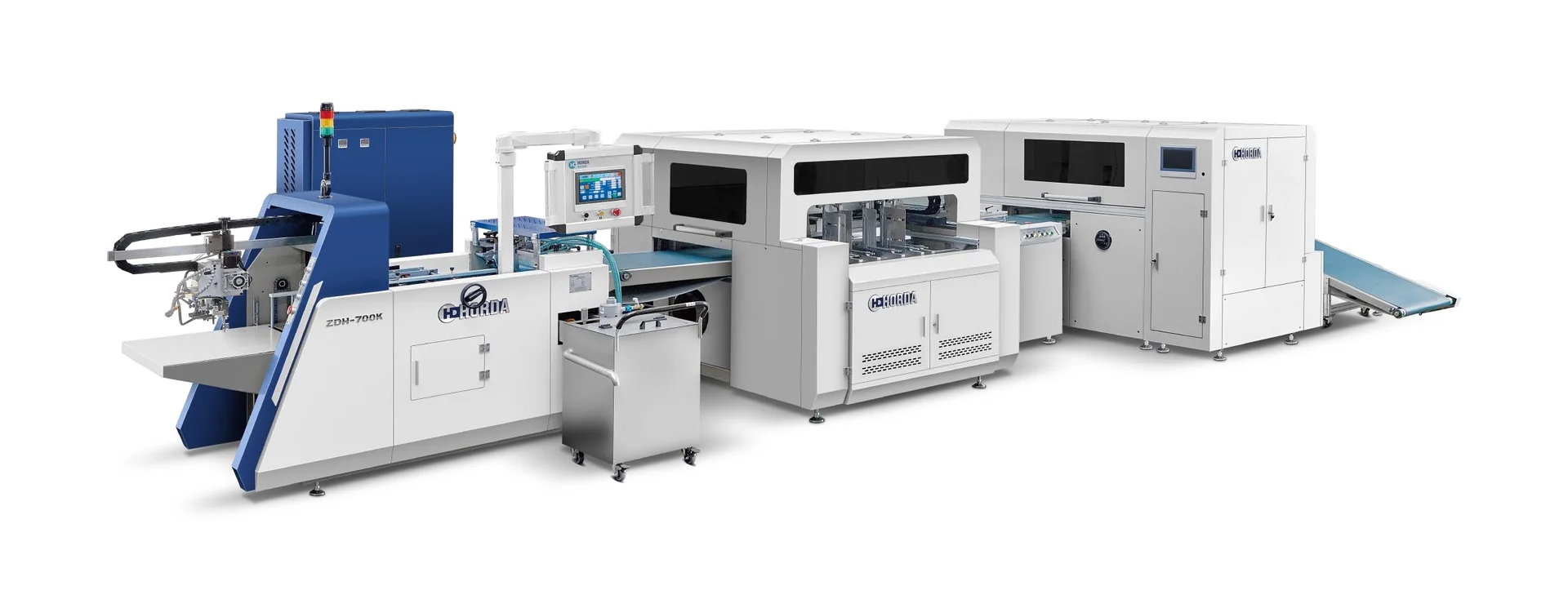
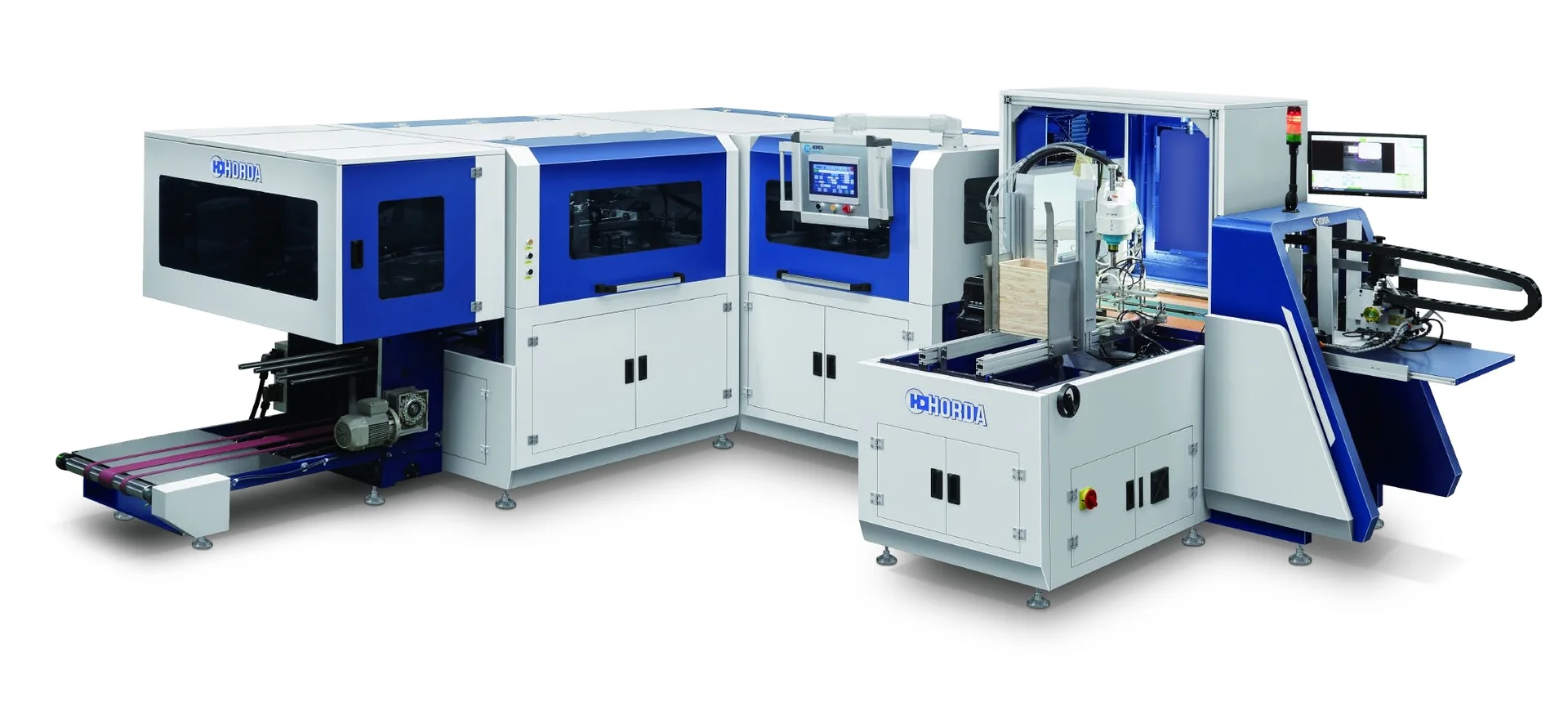
Before a packaging machine is handed over for routine production, your team should be able to perform the normal tasks they are actually expected and authorized to perform, recognize acceptable output and abnormal conditions, know when to stop and escalate, and use the current operating information that will remain at the plant.
That is a more useful acceptance standard than simply asking whether an operator attended a training session.
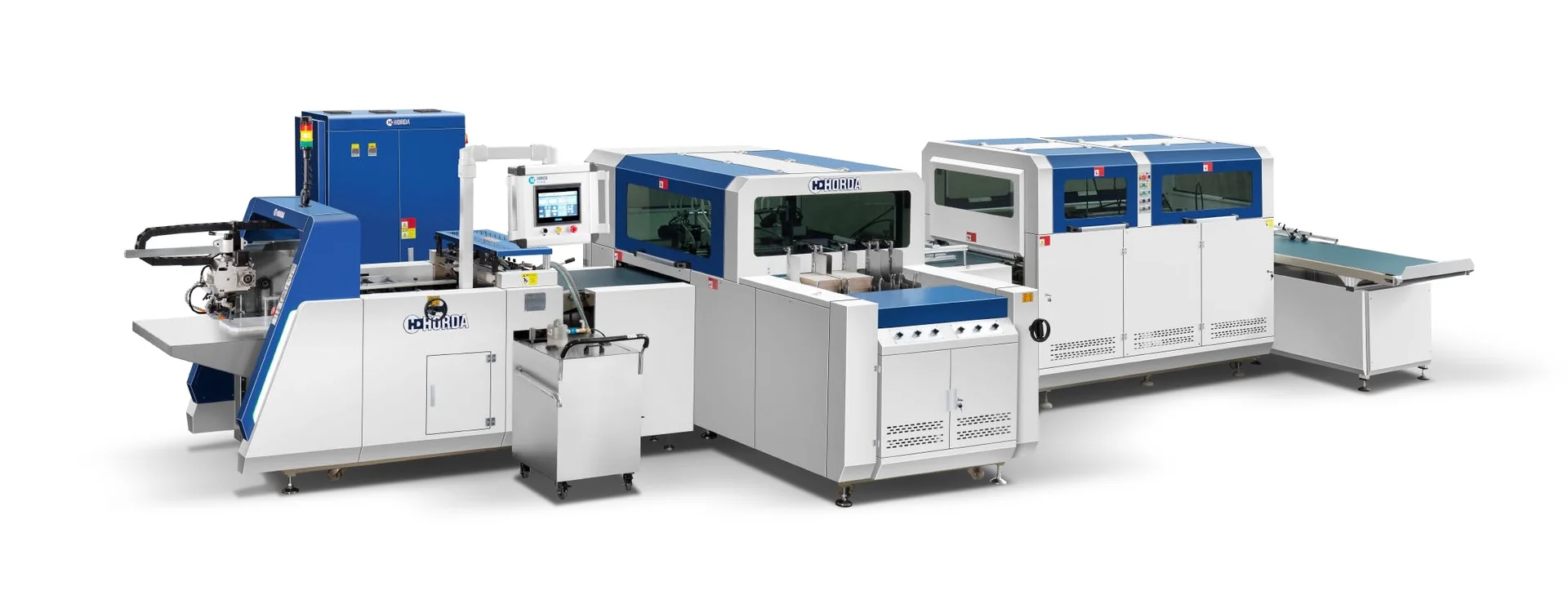
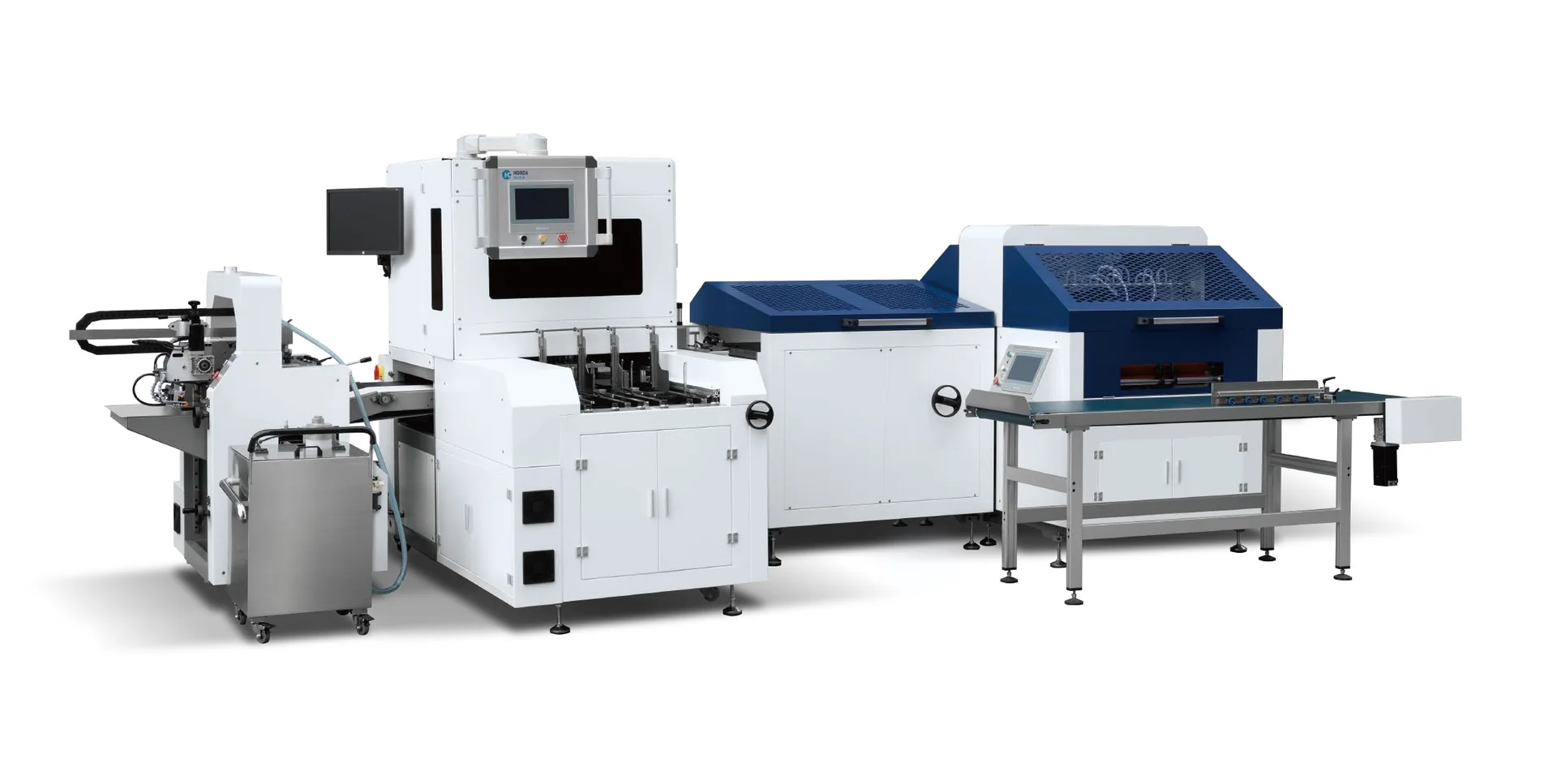
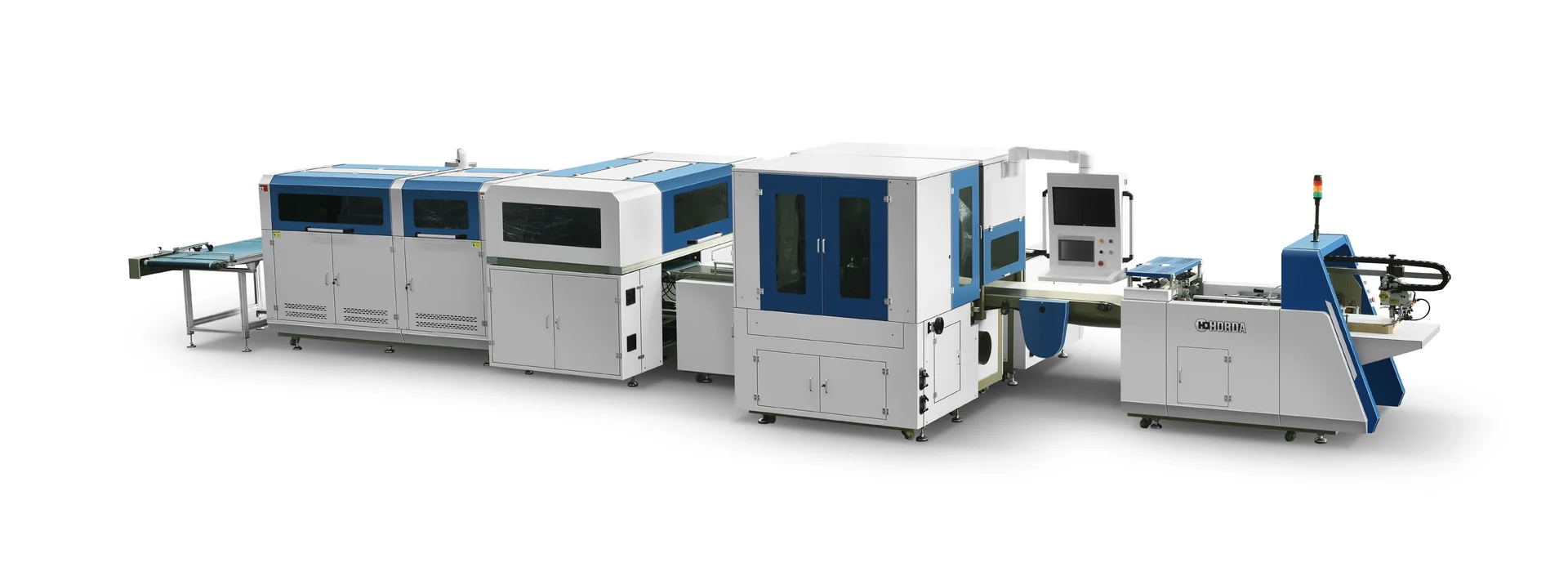
This article is a buyer-side handover checklist, not a substitute for the operating instructions for a specific machine. The required competencies depend on the selected machine, configuration, production route, employee role and plant procedures. HORDA’s catalogue illustrates why that distinction matters: case-making and inner-laminating equipment and BK frame-stretching equipment follow different process routes, so practical training content cannot safely be copied from one machine family to another.
The buyer’s task is therefore to define what each role needs to learn, decide how readiness will be checked, and close any training or documentation gaps before handover is signed off.
Treat Operator Training as a Handover Acceptance Task
Training is an activity. Handover acceptance is a decision.
Those two things should not be confused. A supplier can explain a control interface, demonstrate a production cycle and answer questions, but attendance by itself does not tell the buyer whether the people who will run the equipment can carry out their assigned work correctly.
A practical handover review asks a different set of questions:
- Can the operator carry out the agreed normal production sequence using the current machine instructions?
- Does the person responsible for setup or changeover understand the tasks assigned to that role?
- Can the team recognize when output or machine behavior has moved outside the normal condition they were trained to expect?
- Do they know which situations may be handled within their role and which require stopping and escalating?
- Can they find and use the operating information that will remain available after the trainer leaves?
- Are unresolved training items recorded rather than hidden by a general “training completed” signature?
The objective is not to create a universal operator examination. Different machines and factories assign responsibilities differently. Instead, the buyer should define the competencies that matter for the actual project and agree how those competencies will be demonstrated or otherwise verified.
This distinction also protects the article from becoming a substitute for an operating manual. The manufacturer documentation and plant procedures remain the authority for specific control sequences, settings, maintenance permissions and safety procedures.
Build a Role-Based Training Matrix Before the Session
“Train our operators” is usually too broad to be a useful handover requirement.

A machine may involve people who run normal production, people who perform job setup or changeover, and people authorized to carry out maintenance or hazardous-energy control. One employee may cover more than one role in a small plant, while a larger factory may divide those responsibilities among several departments.
The important point is not the job title. It is the task and authorization attached to that role.
For example, a production operator may need to understand normal start, run, stop and quality-observation tasks. A setup lead may require additional knowledge of product changeover or job preparation where those activities are assigned to that person. Maintenance personnel may require a different level of technical knowledge and authorization.
Do not assume that a task belongs to an operator simply because it occurs near the machine.
For U.S. plants, hazardous-energy requirements provide a useful example of why this distinction matters. OSHA’s hazardous-energy standard distinguishes affected employees from authorized employees who lock out or tag out machines or equipment to perform covered servicing or maintenance. That does not mean every packaging-machine operator falls into the same regulatory role; it means the plant must define responsibilities rather than treating “operator” as permission to perform any intervention.
| Competency domain | Production operator | Setup / changeover lead | Maintenance / technical role | Evidence before handover |
|---|---|---|---|---|
| Normal machine operation | As assigned for the selected machine | Understand normal operating state | Understand interfaces relevant to technical support | Demonstrate or explain agreed normal sequence |
| Job preparation | Where part of the operator role | Usually a primary responsibility where assigned | Support where technical intervention is required | Complete an agreed representative setup |
| Changeover | Only tasks authorized for that role | Perform applicable approved changeover tasks | Support technical adjustments outside operating scope | Complete or explain the agreed changeover route |
| Product-quality observation | Recognize normal versus abnormal output | Confirm setup-related quality condition | Diagnose technical causes when within maintenance scope | Identify agreed quality checks and escalation point |
| Alarms / abnormal conditions | Recognize, stop or respond only within approved instructions | Same, plus role-specific recovery where documented | Investigate interventions assigned to maintenance | Explain what may be reset and what requires escalation |
| Cleaning / routine care | Only items permitted by current instructions and site procedure | Same | Technical maintenance as authorized | Identify permitted tasks and boundaries |
| Hazardous-energy work | Not assumed | Not assumed | Only according to employer authorization and applicable procedure | Confirm role and site procedure |
| Documentation | Use current operating information | Use setup/changeover references | Use maintenance and technical information | Locate the current applicable information |
This matrix is intentionally generic. It defines the questions the buyer should close, not the permissions of any particular HORDA model.
Train the Real Production Cycle on Representative Jobs
Machine training becomes more useful when it follows the actual production route rather than treating the machine as a collection of unrelated buttons.
HORDA’s 2026 catalogue illustrates this clearly. Its QZFM-700/1000K case-making and inner-laminating line shows board feeding, gluing, paper feeding, cover making and formation, overturning, inner-paper feeding and gluing, inner laminating with positioning, and collection. The BK-500/800 frame-stretching process instead includes wooden-frame feeding, canvas feeding, positioning, horizontal and vertical stretching and nailing, and output.
That difference has a direct training consequence: practical instruction should be built around the selected machine’s real process, not a generic packaging-machine sequence.
For the buyer, the most useful training job is usually one that is representative of intended production. It should expose the team to the normal decisions they will actually make—loading or preparing inputs, establishing the approved operating condition, monitoring production, recognizing output changes, completing the assigned end-of-job steps, and performing an applicable job change where changeover is part of the trainee’s role.
The representative job does not need to prove every future product. It needs to be relevant enough to show that the trainee understands the agreed operating responsibilities.
Normal production
During normal production training, the operator should understand the process state expected for that machine and job. The purpose is not memorization of a demonstration. The operator needs to know which observations matter, where approved instructions are found, and what changes should cause the operator to pause rather than continue producing uncertain output.
This is where machine-specific documentation matters. A generic article cannot safely specify which HMI screen to open, which value to change or which reset sequence to use. Those details should come from current documentation for the exact machine and configuration.
Job setup or changeover where applicable
Changeover deserves separate attention because it can shift the machine from one known production condition to another.
If a production team will perform changeovers, the training scope should identify which steps belong to the operating or setup role, which adjustments are documented for that role, and which changes require technical support. A buyer should not accept a vague statement that “changeover was covered” if the people responsible for the next production job cannot reproduce the approved process.
The same principle applies when the plant expects frequent job changes: train the responsibilities that will actually occur, but do not infer undocumented setup permissions from a general demonstration.
Teach Quality Checks and Abnormal-Condition Response
An operator does not need to become a maintenance technician to contribute to process control.
Operators are often the first people to see that production no longer looks or behaves like the accepted condition. Training should therefore connect machine operation with the quality observations the operator is expected to make.
The exact observations depend on the process. On case-making or lining equipment, the relevant condition may involve feeding, positioning, wrapping, folding, laminating or the appearance of the finished work. On frame-stretching equipment, the relevant observations belong to a different production route. Those examples should not be turned into universal defect limits or automatic diagnoses.
The operator should know what normal output looks like for the approved job, what changes require attention, what actions are permitted within the operator role, and when the correct action is to stop and escalate.
That prevents two opposite errors.
The first is under-training: an operator knows how to start the machine but does not know what process or product signals matter.
The second is over-authorization: an operator sees an abnormal condition and attempts technical adjustments, jam clearing or maintenance work that has not been assigned or documented for that role.
Training should therefore cover the decision boundary, not just the control interface.
A buyer can test this by presenting realistic questions during handover:
- If output no longer matches the approved sample or expected condition, what should the operator check first?
- Which observations should be recorded before calling technical support?
- Which alarm or stop conditions have documented operator actions?
- Which conditions require the operator to stop rather than repeatedly reset the equipment?
- Who owns the next action when the issue is outside operator scope?
The correct answers must come from the selected machine documentation and the plant’s procedures. The value of the questions is that they expose whether the role boundary is actually understood.
Set Clear Boundaries for Cleaning, Routine Care, Jams and Maintenance Escalation
The phrase “operator maintenance” can create unnecessary ambiguity unless the tasks are defined.
Some cleaning or routine-care activities may be part of normal operating responsibility. Other tasks can expose personnel to moving machinery, stored energy, electrical hazards or unexpected startup and therefore belong under specific servicing or energy-control procedures.
For U.S. facilities, OSHA’s hazardous-energy rules are especially relevant to this boundary. The standard’s servicing-and-maintenance definition includes activities such as setting up, adjusting, inspecting, lubricating, cleaning or unjamming when employees may be exposed to unexpected energization, startup or release of hazardous energy. Whether that standard applies to a particular task depends on the task, the exposure to unexpected energization, startup or hazardous energy, and any applicable exception in the standard. The employer’s energy-control procedures then govern how covered work is controlled; it does not mean every cleaning or adjustment task automatically requires the same method.
Training should make that boundary practical.
An operator should leave handover knowing which routine tasks are permitted under normal instructions, which machine states are required before those tasks, and which situations require escalation. Maintenance personnel should receive the level of technical and safety instruction appropriate to their authorized responsibilities.
Verify Competence Before Handover
A sign-in sheet tells you that someone attended. It does not necessarily tell you whether the person can perform the agreed task.
For a buyer, competency verification should therefore be tied to the responsibilities defined before training.
Verification does not require an invented universal test score. Depending on the task, useful evidence might include performing a normal production sequence, completing an assigned setup, explaining the response to an abnormal condition, locating the correct instruction, or showing that the trainee knows when a task must be escalated.
A simple acceptance record can use three states:
- Accepted: the agreed competency was demonstrated or otherwise verified to the project’s satisfaction.
- Open: the competency has not yet been verified, the required production condition was unavailable, or the relevant documentation is incomplete.
- Retraining / repeat verification: instruction occurred, but the agreed task needs to be repeated before closure.
The exact acceptance method belongs to the project. The important principle is to avoid turning “training completed” into a blanket statement when some competencies remain unverified.
Role-Based Training Acceptance Matrix
| Competency to verify | Responsible role | Verification method to agree | Result | Open action |
|---|---|---|---|---|
| Normal operating sequence | Defined project role | Representative production run or other agreed verification | Accepted / Open / Repeat | Record gap |
| Setup / job preparation | Assigned setup role | Demonstration on agreed job where applicable | Accepted / Open / Repeat | Record gap |
| Changeover | Assigned role | Agreed representative changeover where applicable | Accepted / Open / Repeat | Record gap |
| Quality observation | Operator / quality role | Identify approved condition and escalation trigger | Accepted / Open / Repeat | Record gap |
| Abnormal-condition response | Relevant role | Explain or demonstrate documented permitted response | Accepted / Open / Repeat | Record gap |
| Cleaning / routine care | Authorized role | Demonstrate only documented permitted tasks | Accepted / Open / Repeat | Record gap |
| Maintenance / energy-control boundary | Relevant personnel | Confirm role, procedure and escalation boundary | Accepted / Open / Repeat | Record gap |
| Use of manuals / job aids | Relevant roles | Locate and use current applicable information | Accepted / Open / Repeat | Record gap |
This matrix should be adapted to the selected equipment. It should not be used to invent responsibilities that the manufacturer documentation or employer procedures do not assign.
Close the Handover Package: Documents, Access and Open Items
Good training can still fail operationally if the information used during the session disappears when the trainer leaves.
HORDA’s current operational-training page describes initial on-site commissioning training, training manuals and debugging videos. Its shipping and commissioning guidance also refers to operator training on operating methods, precautions and maintenance points. These are manufacturer statements about HORDA’s support approach; they do not establish the exact training deliverables, duration, language, travel terms or commercial scope for every Raymon Machinery inquiry or order.
That focus on retained knowledge is also consistent with PMMI’s 2025 operator-training research, which identifies knowledge capture and documentation, training design and delivery, and accessible training content as recurring packaging-line priorities.
Before accepting the training portion of handover, the buyer should therefore check what information is actually part of the project and whether the plant can access the current version.
Depending on the machine and supply scope, the review may include:
- the current operating or training manual supplied for the equipment;
- job aids or approved operating procedures used during training;
- applicable setup or changeover references;
- alarm or troubleshooting information that is actually supplied for operator use;
- maintenance information appropriate to authorized technical personnel;
- approved settings, recipes or configuration records where these are part of the documented supply;
- video or digital training resources if provided;
- trainee and competency records required by the plant or project;
- an open-items list showing what still needs clarification, repeat training or documentation.
This is a confirmation list, not a claim that every item is automatically supplied with every machine.
Version control matters as well. If the trainer uses one instruction while the plant later retains an older or different document, the training record can look complete while the operating reference is not aligned with what was taught.
The practical handover question is therefore not merely “Did we receive documents?”
Do the people responsible for the machine have access to the current information they need for the tasks they are expected to perform?
Put the Training Scope in Writing Before Acceptance
The easiest time to remove training ambiguity is before the final handover meeting.
Where training is commercially important to the purchase, define the expected scope in the RFQ, quotation review, order documentation, commissioning plan or other agreed project document rather than relying on assumptions.
Useful items to confirm include:
- selected machine and configuration covered by the training;
- intended trainee roles;
- normal production tasks to be covered;
- setup and changeover responsibilities where applicable;
- quality observations expected from operators;
- abnormal-condition and escalation topics;
- cleaning and routine-care boundaries;
- maintenance or hazardous-energy responsibilities that require separately authorized personnel;
- representative products, samples or materials required for practical training;
- documentation and training resources expected at handover;
- language or communication requirements;
- location and format of the training;
- who provides the training;
- any agreed evidence or sign-off used to close the training scope;
- open-item and retraining procedure;
- commercial items such as timing, travel, personnel count or other inclusions where they matter to the project.
Do not assume that training duration, number of trainees, language, travel, certification or other commercial details are included simply because operator training is mentioned in general manufacturer literature. Those terms should be confirmed against the current quotation or order.
Common training mistakes to prevent before handover
Several problems can be avoided simply by making the training requirement more specific.
Treating attendance as acceptance.
A signed attendance sheet can be useful as a record, but the buyer still needs a way to determine whether the agreed operating competencies have been understood or demonstrated.
Training one role and assuming everyone has the same responsibilities.
Production operation, setup and technical maintenance are not automatically the same job.
Using a demonstration that does not represent the intended work.
If practical training never reaches the tasks the plant expects to perform, the team may still have unanswered questions when real production starts.
Teaching normal operation but not the escalation boundary.
Operators need to know not only what to do when production is normal, but also what they are not authorized to do when it is not.
Mixing operator tasks with maintenance interventions.
This creates both training ambiguity and potential safety risk. The boundary should be tied to the current machine documentation and plant authorization.
Leaving documentation until the end.
Training is harder to retain when the plant does not know which current manual, job aid or resource should be used after handover.
Signing off while open items still exist.
If a competency could not be verified, a document is missing or repeat training is required, record it as an open item instead of hiding it inside an overall “complete” status.
What to Send Before the Training Scope Is Finalized
To make the training discussion specific before commissioning or handover, send the information that changes what the team actually needs to learn:
- the selected machine and confirmed configuration;
- the intended product, representative materials or samples, and the production route the machine will perform;
- the people or roles expected to operate, set up, clean or maintain the equipment;
- the job changes or changeovers those roles are expected to perform;
- plant-language, operating, maintenance and safety procedures that affect training responsibility;
- the handover evidence, open-item process and project-specific acceptance requirements you expect to use.
For HORDA-manufactured equipment presented through Raymon Machinery, these inputs can be used during quotation or project discussion to clarify the applicable equipment and training requirements. Final training scope, service responsibility and commercial inclusions should be confirmed in the current quotation or order rather than assumed from a general support page.
The result should be straightforward: by handover, the buyer should know who was trained for which task, what evidence shows the agreed competency was covered, what information remains at the plant, and which items are still open.
That is a much stronger basis for production handover than a single line saying “operator training completed.”