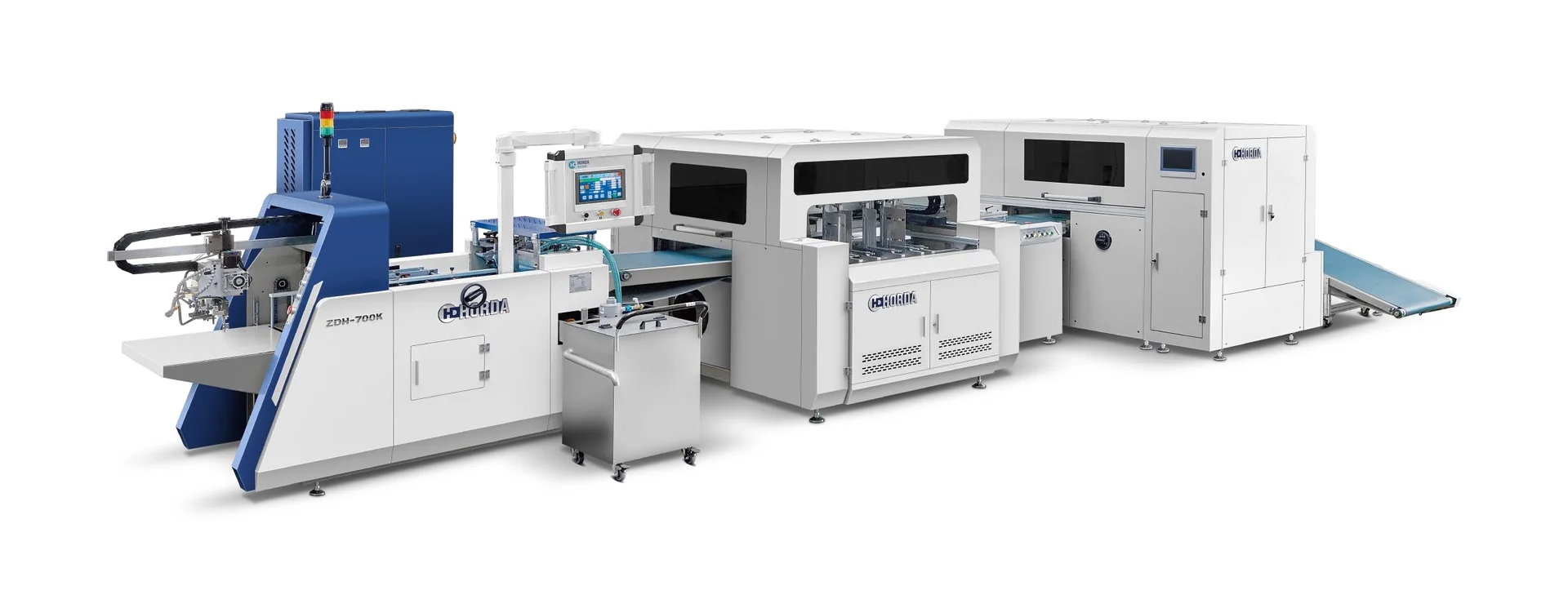
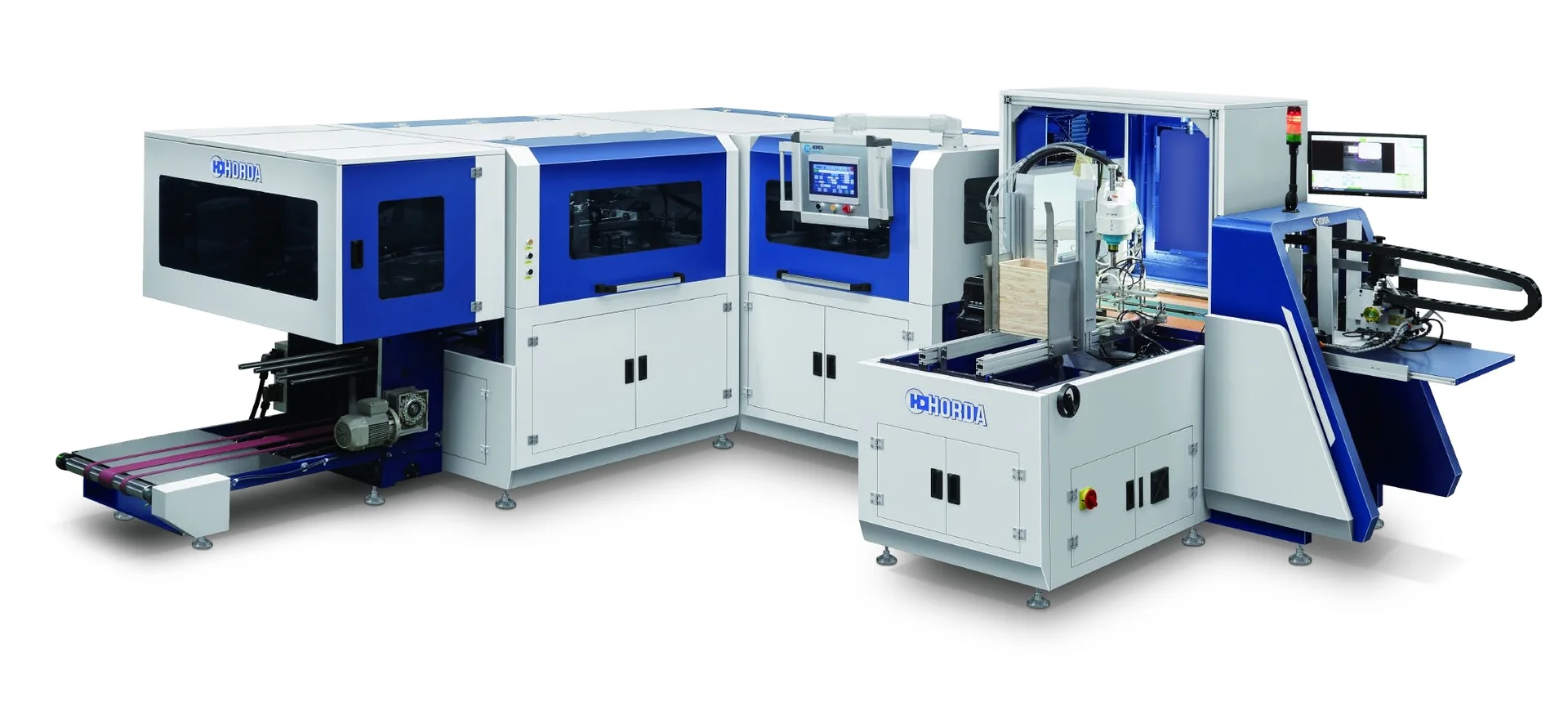
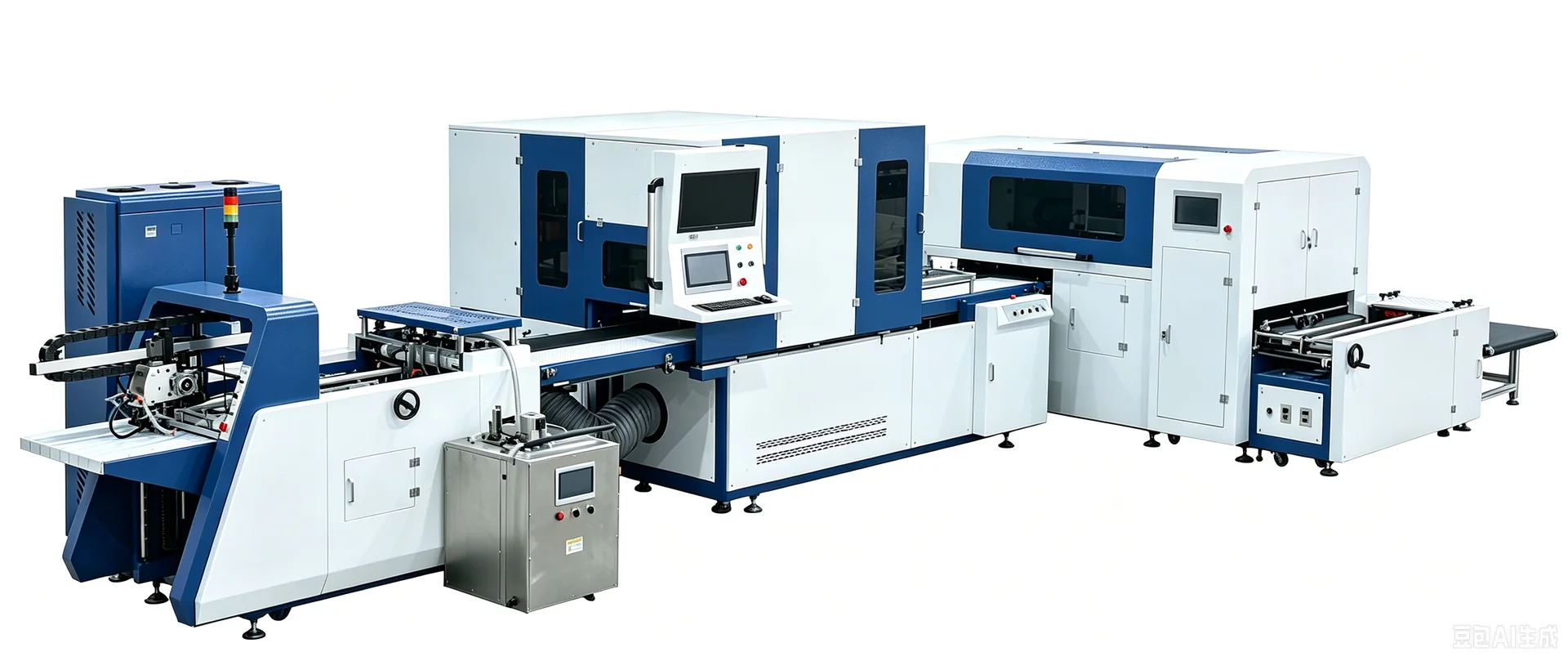
A useful rigid box machine RFQ should describe the production job and the acceptance basis—not simply ask for a machine model, a maximum speed, and a price. Define the product structure, workpiece dimensions, materials, required process scope, output and quality basis, positioning requirement, site constraints, interfaces, samples, documentation, and commercial responsibilities. Then require the supplier to state the offered configuration, deviations, inclusions, exclusions, and supporting data against those requirements.
That approach makes quotations easier to compare because each supplier is responding to the same production problem. It also creates a cleaner path from quotation to sample trial and, where applicable, factory acceptance testing. A catalogue specification can describe documented machine capability, but it should not automatically become the buyer’s accepted-output requirement or contractual acceptance criterion.
Start With the Production Job, Not a Machine Model
The first question in an RFQ should not be, “Which machine do you recommend?” It should be, “Which operations must this project perform?”
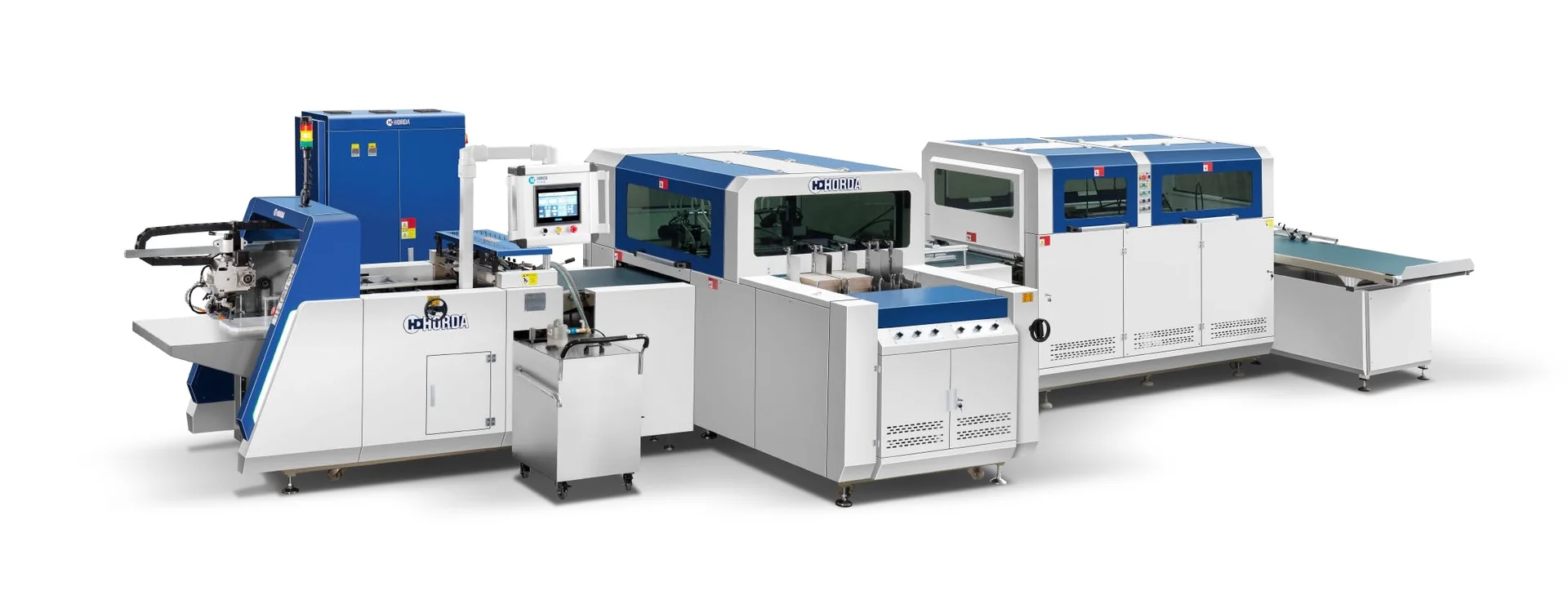
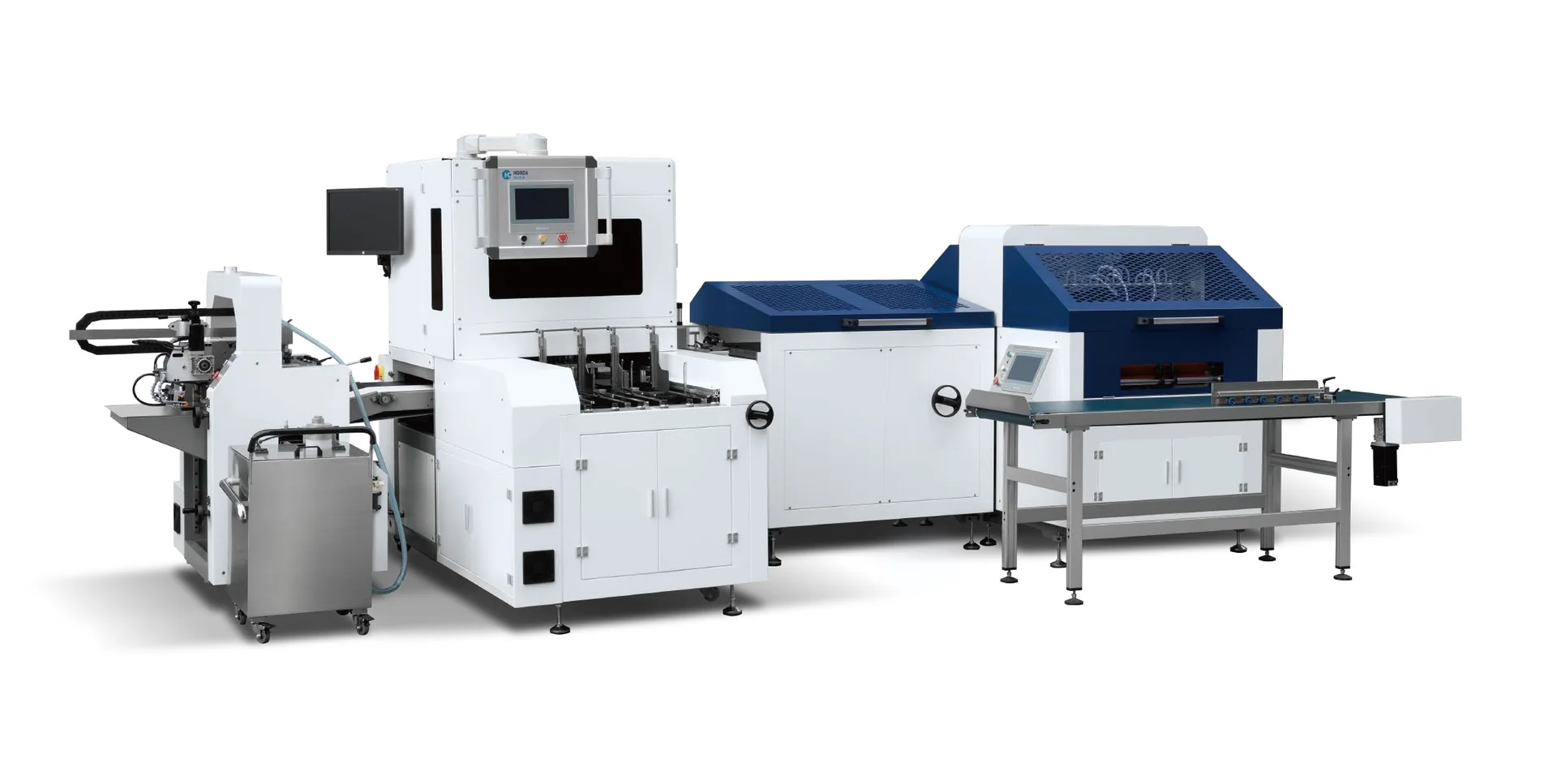
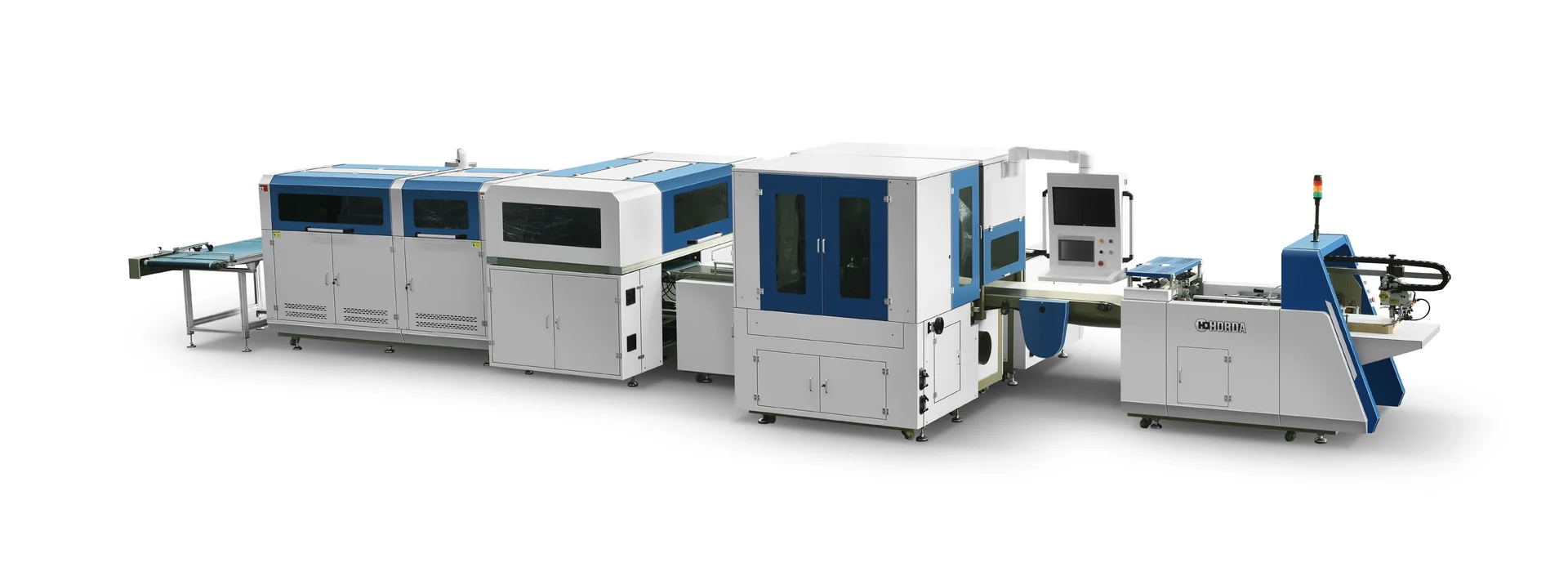
“Rigid box machine” can describe very different scopes. A project may require only case making. Another may require case making plus inner-paper lining. A broader production route may also include subsequent box forming, assembly, insert placement, or other operations that are not automatically part of a case-making machine.
Manufacturer documentation reflects this distinction. HORDA documentation, for example, separates automatic case making, inner laminating, and other box-production operations, while integrated QZFM lines combine case making with inner-paper laminating. That does not mean every case maker performs final rigid-box assembly.
An RFQ should therefore define the process boundary in writing. State:
- what comes into the machine;
- what operation or operations the quoted equipment must perform;
- what condition the product should be in when it leaves the equipment;
- which upstream or downstream steps are already available;
- which operations are explicitly outside the requested scope.
For example, “produce wrapped hard cases from cut board and covering paper” is a clearer starting point than “quote one rigid box machine.” If inner lining is also required, state that separately. If downstream forming or assembly will be handled by another machine or manually, say so.
This prevents one supplier from quoting a case maker while another quotes a larger line and both proposals appearing to answer the same RFQ.
Define the Product, Flat Workpiece, and Dimensional Range
Finished-box dimensions alone may not give the machine supplier enough information to evaluate the application.
Case-making equipment works with flat board pieces, covering sheets, spine sections, side boards, or other workpiece geometry before the finished box exists. Manufacturer specification tables may therefore use terms such as maximum product size, minimum product size, board quantity, minimum spine width, or minimum side-board width. Those terms should not be assumed to mean the same thing as the external length, width, and height of a finished rigid box.
The safest RFQ method is to provide a dimensioned drawing and ask the supplier to confirm which machine-input dimensions are being used in the quotation.
For each representative product, provide the dimensions that actually describe the workpiece:
- finished box or finished case dimensions for product identification;
- flat case or covering-sheet dimensions where available;
- board-piece dimensions and arrangement;
- spine or hinge geometry where applicable;
- number of board pieces;
- special shapes, round corners, windows, cutouts, or irregular geometry;
- minimum and maximum sizes expected in normal production.
Do not submit only one nominal SKU if the machine will run a family of products. The supplier needs the operating range, not just the easiest sample.
At the same time, do not copy a dimensional range from one model into the RFQ as though it were a universal rigid-box-machine capability. HORDA’s own model tables show that size fields and other specifications differ among exact models. Your RFQ should state what your production requires, while the supplier should state what the offered machine is documented to support.
Buyer requirement: workpiece drawing and dimensional range.
Supplier response: offered model, supported range, relevant dimension convention, and any restriction or deviation.
That distinction is important because a quotation can otherwise appear compliant while the buyer and supplier are measuring different things.
Specify Board, Covering Paper, Adhesive, and Surface Conditions
A description such as “greyboard with printed paper” is usually too broad for technical quotation work.

Material behavior affects feeding, gluing, positioning, folding, wrapping, and the validity of a machine trial. The RFQ should describe the materials the machine will actually encounter rather than relying on a generic product category.
For the board, provide the known type and thickness range. If multiple board constructions are used, identify them separately. Include the number of pieces in the case construction where it affects the job.
For the covering material, provide information such as:
- paper or other covering-material type;
- grammage or thickness where relevant;
- coated, laminated, printed, embossed, or otherwise finished surface;
- grain direction where it is controlled by your process;
- representative production material rather than only an ideal sample.
For adhesive, state whether there is an existing adhesive requirement, an established factory process, or a requirement for the supplier to recommend and validate a compatible process. Do not assume that a generic adhesive description proves compatibility with every board, covering material, coating, environmental condition, and machine configuration.
The RFQ should make a clean distinction between documented machine ranges and application-specific material suitability. Manufacturer documentation may list board thickness, paper weight, and related model parameters. Those figures are useful for screening, but they do not by themselves prove that a particular coated paper, adhesive, print finish, or combination will run at the required quality level.
Where compatibility cannot be established from current exact-model documentation, treat it as a sample-validation item.
That gives the supplier a clear task: confirm documented limits first, then identify which material combinations require physical testing.
Define Output and Quality on an Acceptance Basis
“Machine speed: at least 30 pieces per minute” may look precise, but without the operating conditions it can still be a weak RFQ specification.
A manufacturer-documented speed and the buyer’s required accepted output are not the same quantity.
A catalogue speed belongs to a particular machine and documentation context. Accepted output is the quantity of conforming product the buyer expects under stated production conditions. Size, substrate, positioning requirements, process stages, job mix, operator actions, and the definition of an acceptable product can all change the practical result.
Write both values separately.
Manufacturer-documented or rated speed: the current published or quoted specification for the offered model.
Required accepted output: the target number of conforming pieces under defined product, material, quality, and test conditions.
Do not turn a catalogue maximum into an acceptance guarantee simply by copying it into the RFQ.
The same discipline applies to positioning accuracy and product quality. Instead of writing “high precision required,” identify what needs to remain aligned and how the result will be judged. Depending on the product, that may involve printed-paper-to-board registration, dimensional consistency, wrap alignment, edge condition, or another agreed characteristic.
Do not invent a universal tolerance or reject-rate percentage. A useful RFQ defines the measurement category and asks the supplier to respond with the offered performance and proposed verification method. The final numeric acceptance value should come from the actual product requirement, current machine documentation, approved samples, drawings, or an agreed project specification.
A practical sequence is:
Required result → measurement method → operating conditions → acceptance value → verification stage.
If one of those is still unknown when the RFQ is issued, mark it for supplier proposal or later project agreement instead of hiding the uncertainty behind words such as “high accuracy” or “stable production.”
State the Required Process Modules, Positioning Method, and Job Mix
Buyers often over-specify technology and under-specify the result.
For positioning, for example, HORDA documentation includes machines using photoelectric detection with servo positioning and other configurations using CCD or visual positioning. That supports treating positioning architecture as a machine-configuration variable. It does not support a universal claim that one positioning technology is always better for every application.
The RFQ should begin with the production requirement:
- What feature must be registered?
- How consistent must the result be?
- What type of printed or unprinted covering material will be used?
- How much variation exists between jobs?
- Are irregular or special shapes involved?
- What acceptance method will be used?
Then require the supplier to state the positioning method used by the offered configuration and provide the applicable documented accuracy or capability.
The same approach works for other machine functions. Identify which functions are mandatory, which are optional, and which can be supplier-proposed.
Job mix also belongs in this section. A plant producing one stable, high-volume format presents a different operating requirement from a plant changing among many case sizes and materials. The RFQ should describe expected job variety and changeover frequency even when an exact changeover time is not yet available.
Avoid writing an unsupported changeover-time requirement simply because a short number looks commercially attractive. Instead, describe the actual production pattern and ask the supplier to explain the adjustment points, tooling or setup requirements, stored recipes if applicable, and the expected changeover procedure for the offered configuration.
The objective is not to prescribe every engineering solution. It is to give the supplier enough information to propose a configuration that can later be evaluated against the job.
Document Utilities, Layout, Operators, and Line Interfaces
A machine can fit the product and still fail to fit the factory.
The RFQ should therefore contain site and interface information before the quotation is treated as complete.
Exact-model documentation may provide items such as electrical power, machine dimensions, and machine weight. Other conditions may depend on the final configuration and project. Ask the supplier to return the current requirements for the offered machine rather than relying on assumptions from another model.
Useful site inputs include:
- available installation area;
- access route for bringing the equipment into the factory;
- available electrical supply;
- compressed air or other utilities where applicable;
- adhesive preparation or handling requirements where applicable;
- material infeed and finished-product discharge direction;
- operator-access constraints;
- maintenance-access expectations;
- upstream equipment or manual feed condition;
- downstream equipment or manual receiving condition.
If the equipment will become part of a production line, define the handoff rather than simply saying “connect to our existing line.”
What product state arrives from upstream? At what orientation? Is accumulation required? What condition must be delivered downstream? Which party is responsible for interface design, control signals, conveyors, or intermediate handling?
Do not assume these responsibilities are included because they are common in other projects. Make the quotation state them.
The same applies to staffing. If your factory has an operator constraint, state the constraint. Do not present an unverified staffing number as an inherent machine requirement or promise. Ask the supplier to state the normal operating and setup responsibilities for the offered configuration.
Build the RFQ as a Buyer–Supplier Response Matrix
A good RFQ should make it difficult for a supplier to answer an important requirement with a vague brochure statement.
The most useful format is a two-sided technical matrix. Each important buyer requirement should have a corresponding field for the supplier’s offered value, compliance status, deviation, scope, and evidence.
A working structure is below.
| RFQ item | Buyer should provide | Supplier should return |
|---|---|---|
| Product / case type | Finished-product description and drawing | Suitability statement for offered configuration |
| Required process scope | Case making, lining, or other explicitly required steps | Included operations and exclusions |
| Dimensional range | Representative and min/max job drawings | Supported range and dimension convention |
| Board | Type, thickness range, board arrangement | Supported range and restrictions |
| Covering material | Type, weight/thickness if relevant, surface finish | Supported range and conditions |
| Adhesive/process condition | Existing requirement or material/process constraint | Proposed process and confirmation needs |
| Positioning / registration | Feature to be aligned and required result | Offered positioning method and documented capability |
| Rated/documented speed | Not a buyer acceptance target | Current documented specification for offered model |
| Required accepted output | Target plus product/material/quality conditions | Compliance, assumptions, and proposed verification basis |
| Quality requirements | Measurable characteristics or approved sample basis | Offered capability, deviations, test method |
| Job mix / changeover | Number of formats, material changes, frequency | Adjustment/tooling/setup method |
| Electrical/site data | Available supply and factory constraints | Required supply and machine connection details |
| Other utilities | Available utilities where relevant | Exact offered-machine requirements |
| Footprint/access | Available area and access limitations | Machine dimensions, weight, service/access requirements |
| Upstream interface | Incoming product state and equipment | Required interface and scope |
| Downstream interface | Required outgoing state | Required interface and scope |
| Samples | Representative production materials/products | Required sample quantities/conditions to be agreed |
| Documentation | Buyer/project documentation requirements | Documents included or available |
| Installation/commissioning | Required scope | Included/excluded responsibility |
| Training | Required personnel or topics | Offered scope, location, duration if confirmed |
| Warranty/service | Buyer requirement | Offered contractual terms |
| Spare parts | Required commissioning/startup or critical-spares expectation | Included/recommended parts and terms |
| FAT/acceptance | Required verification topics | Proposed method and deviations |
| Deviations | — | Explicit list of every non-compliant or conditional item |
This matrix should not be treated as a universal contract form. Adapt it to the project. Its purpose is to expose assumptions early.
A supplier should be able to answer each important requirement with something more specific than “yes.” Where possible, ask for one of four responses:
Then ask for the relevant datasheet, drawing, sample result, or other supporting document where the requirement depends on documented machine capability.
That structure also makes later quotation comparison more disciplined. You are comparing responses to the same requirement rather than comparing different brochure layouts.
Prevent RFQ Mistakes and Hand Acceptance Items Into Sample Trial and FAT
RFQ problems can begin as small ambiguities. The RFQ does not need to predict every later issue, but it should prevent important requirements from disappearing between quotation and acceptance.
Common problems include:
| RFQ mistake | Why it creates risk | Better RFQ action |
|---|---|---|
| Only finished-box dimensions are supplied | Supplier may interpret the machine workpiece differently | Provide drawings and ask the supplier to state its dimension convention |
| Only one ideal sample is supplied | The quotation may not represent the production range | Provide representative jobs and min/max requirements |
| “Standard greyboard and paper” is written without detail | Material compatibility assumptions remain hidden | State board, covering, surface and relevant adhesive/process information |
| Catalogue maximum speed is copied as required production | Rated capability and accepted output become confused | State documented speed separately from required accepted output |
| “High accuracy” is requested without a measurement basis | Supplier and buyer may evaluate different defects | Define what is being registered or measured |
| Technology is prescribed without the required result | An option name replaces the engineering requirement | Specify the result first and request the supplier’s proposed method |
| Utilities and interfaces are omitted | Scope may differ between quotations | Require exact offered-machine utilities and interface responsibilities |
| Supplier deviations are not requested | Conditional compliance may remain buried in proposal text | Require a dedicated deviation schedule |
| FAT is mentioned only as “machine must pass FAT” | No one knows what will later be demonstrated | Identify acceptance topics in the RFQ and agree detailed criteria later |
| Installation, training, warranty, or service are assumed | Commercial scope can be misunderstood | Require each responsibility to be stated explicitly in the quotation |
The purpose of this section is not to claim that each omission will cause a specific cost or delay. The engineering problem is simpler: if the requirement is not defined, two suppliers can reasonably make different assumptions, producing quotations that are difficult to compare on the same basis.
Acceptance-critical items should therefore be traceable.
RFQ requirement → supplier response → supporting document → sample or material validation where needed → agreed FAT/acceptance check → final commercial agreement.
Not every requirement needs a FAT test. Some items can be confirmed from current drawings or documentation. Some need representative material trials. Others are contractual responsibilities rather than machine-performance tests. The important point is to decide where each requirement will be closed instead of leaving it permanently “to be confirmed.”
Final RFQ Check Before You Send It
Before issuing the RFQ, check whether an engineer who has never seen your project could answer these questions without guessing:
- What product or case is being produced?
- Which operations are included in the requested machine scope?
- What drawings and dimensional range define the work?
- What board, covering materials, finishes, and relevant process conditions will be used?
- What quality or registration result is required?
- What is the difference between the required accepted output and the manufacturer’s documented speed?
- What jobs and changeovers must the equipment support?
- What site, utility, and access constraints apply?
- What enters the machine and what must leave it?
- Which requirements need documents, samples, trials, or later acceptance testing?
- Which installation, training, warranty, service, spare-parts, and shipping responsibilities need a written supplier response?
- Does the quotation need a formal deviations list?
If several answers are missing, the RFQ is probably not ready for a meaningful machine comparison.
One final rule is particularly useful: do not freeze a catalogue value into the purchasing specification unless you know it belongs to the exact offered model and current document revision. Manufacturer documentation can change, and HORDA’s catalogue itself advises buyers to request current details when machine structures or technical parameters are revised. The safest RFQ asks the supplier to return the current offered data against your production requirement.
A technically strong RFQ does not need to be long for its own sake. It needs to make the production job, supplier response, and later verification path unambiguous.
Next Step
When you are ready to request a rigid-box-machine quotation, prepare the product drawings, dimensional range, board and covering-material information, required process scope, accepted-output target, quality/registration requirements, representative samples where relevant, site constraints, and the items you expect to verify before acceptance.
Use those inputs as the project basis for a quotation request. The exact machine configuration, performance values, installation scope, warranty, service responsibilities, and other commercial commitments should then be confirmed in the current supplier quotation or order documentation rather than assumed from a general guide.