
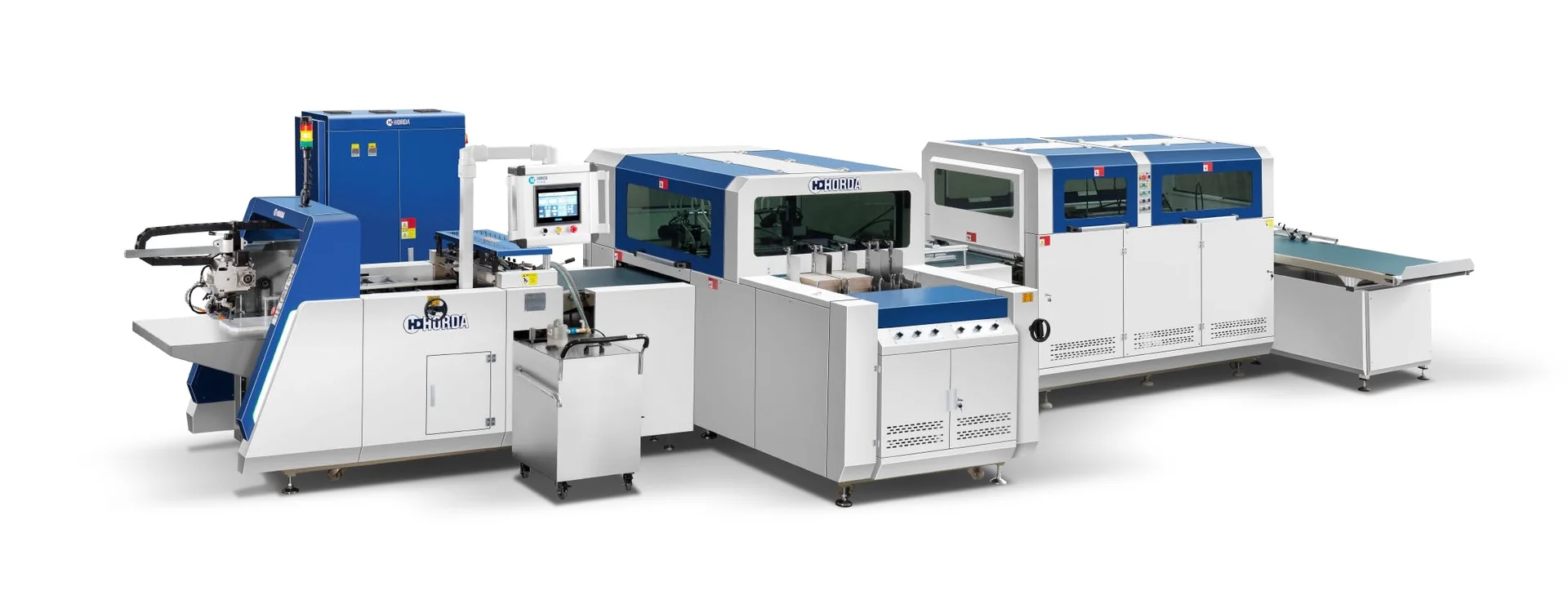
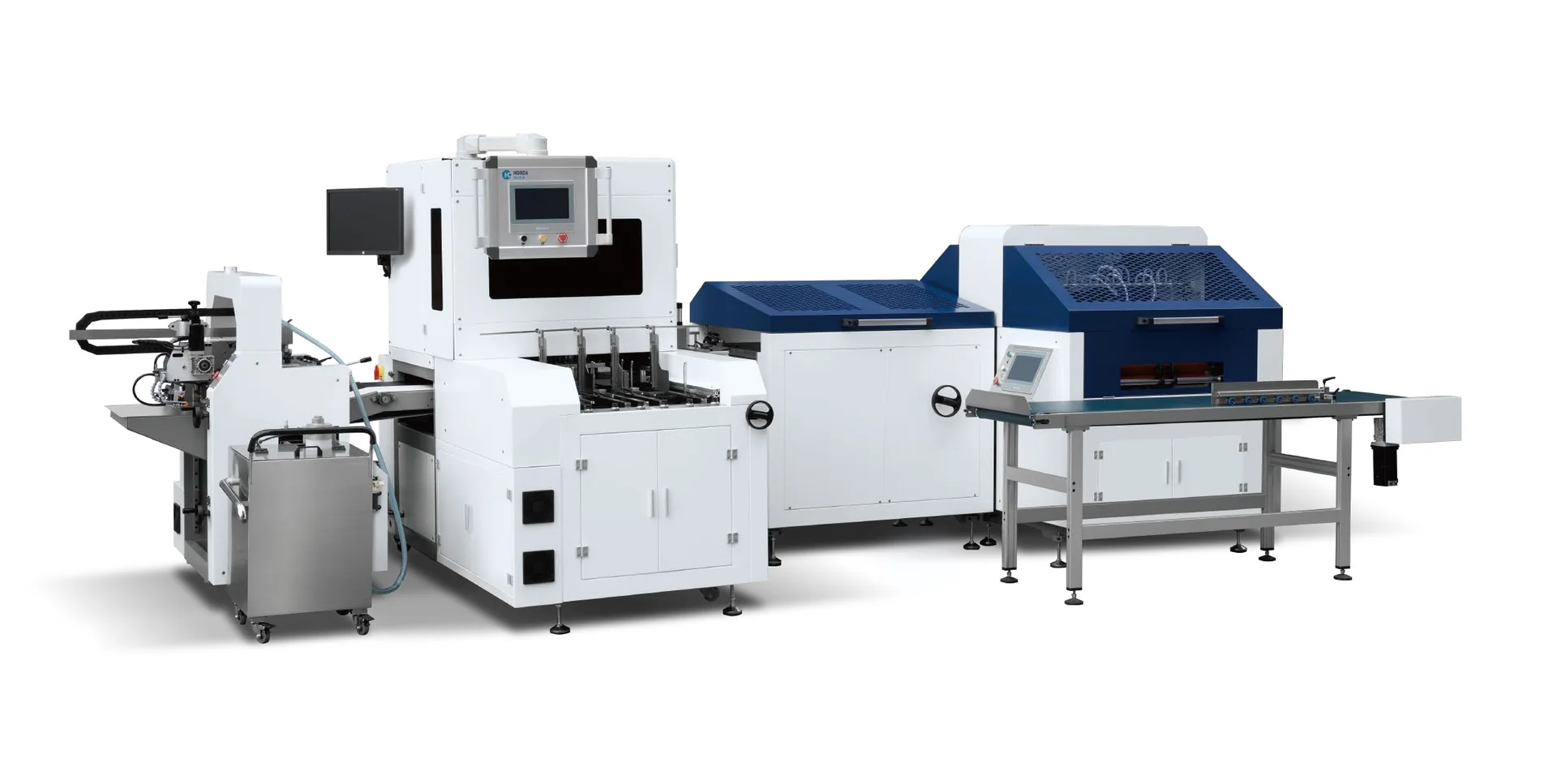
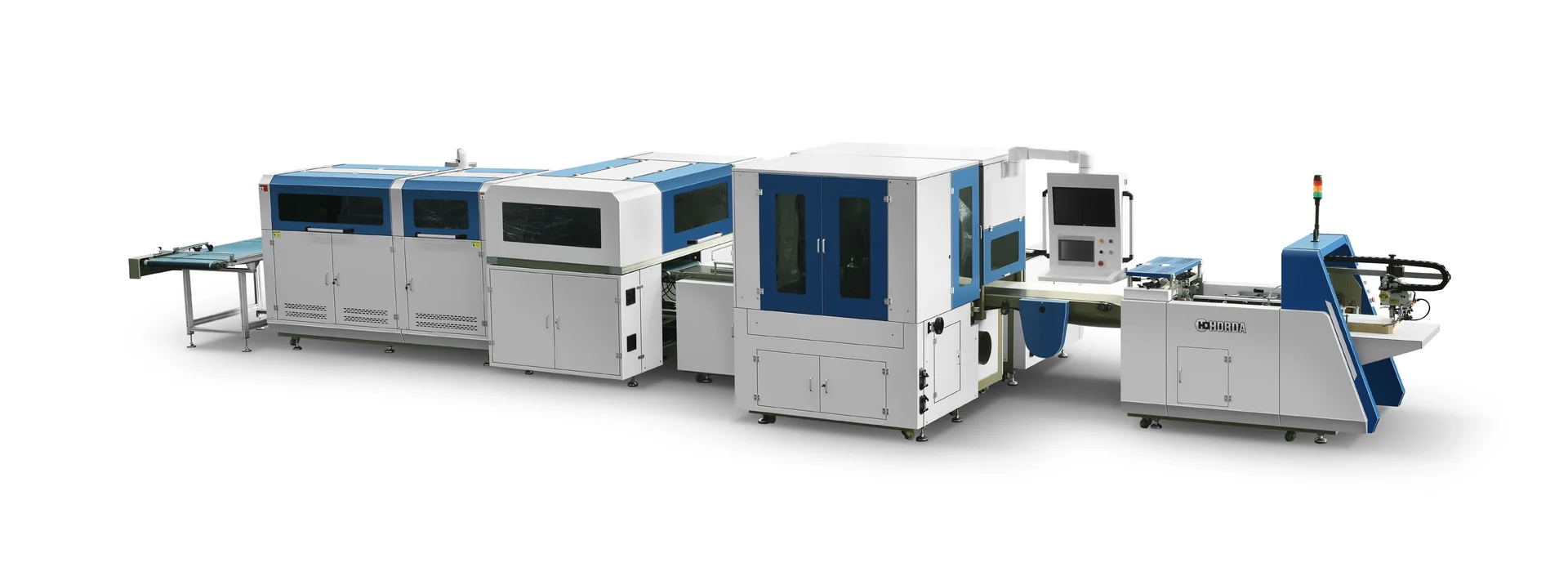
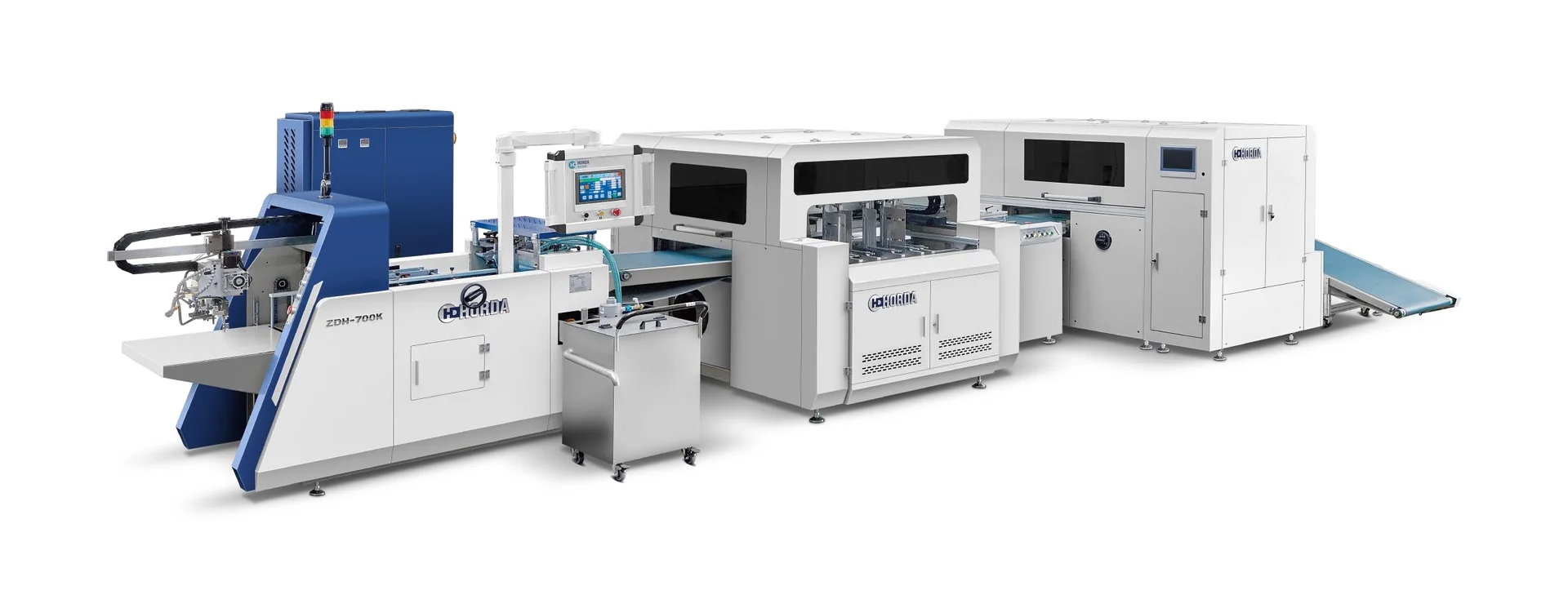
A small-batch rigid box production setup should not be selected by asking which machine has the highest catalogue speed. The better starting point is your actual job mix: what box structures you make, how often sizes and materials change, which production steps must be automated, how much accepted output you need, and what has to be reset or verified between jobs.
For a buyer, this changes the purchasing question from “How fast is the machine?” to “Can this configuration repeatedly produce my mix of short runs with acceptable changeover effort, quality control and process hand-offs?”
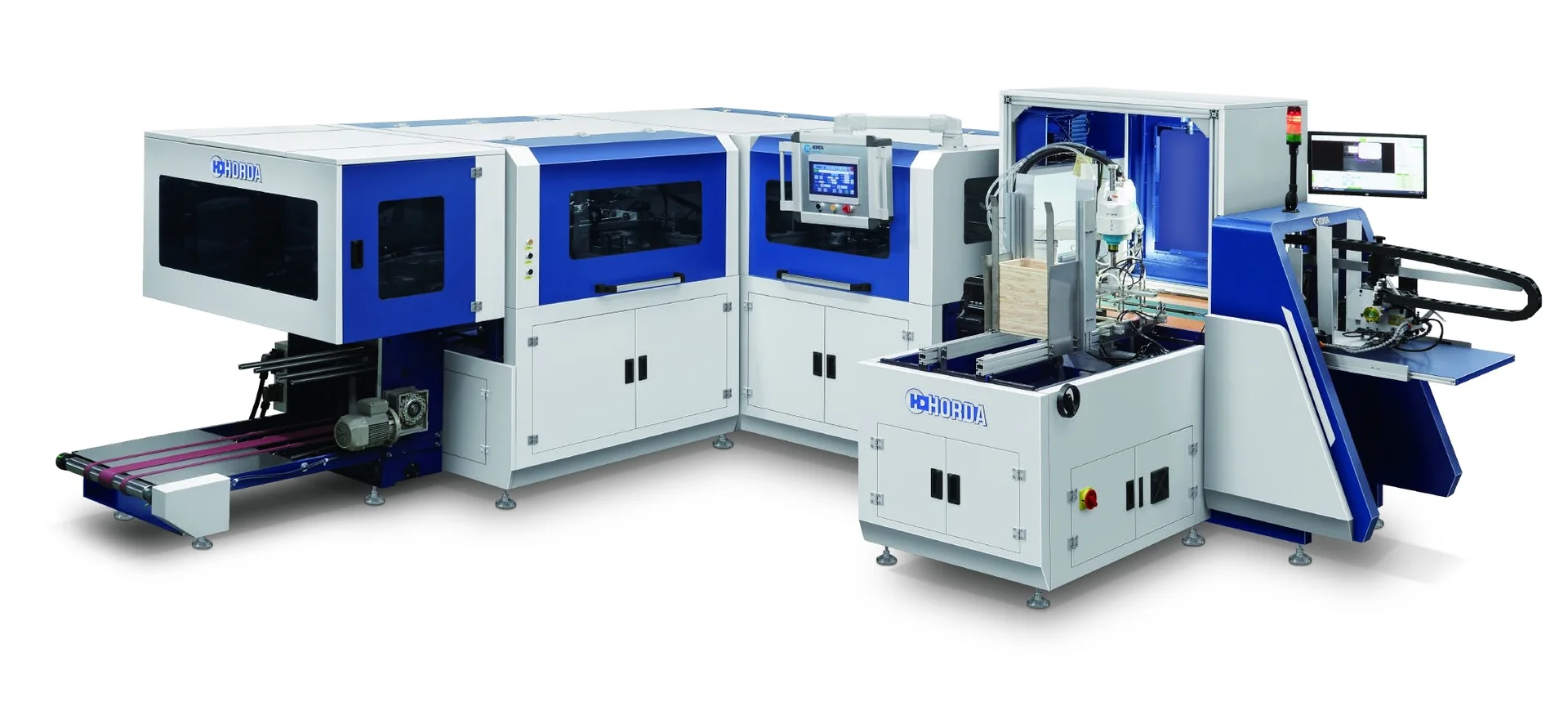
That distinction matters because rigid-box production may involve several operations rather than one universal machine. HORDA documentation, for example, separates case making, rigid-box forming, inner laminating and assembly in a book-type box production route, while other configurations integrate selected stages. The right small-batch setup therefore begins with the product and production route, then moves to capacity, changeover and equipment selection.
What a Small-Batch Rigid Box Setup Actually Needs to Optimize
“Small batch” is most useful as an operating condition, not as an arbitrary number of boxes per order. A factory running shorter jobs with frequent specification changes has a different equipment problem from a plant running one stable product for long periods.
Five variables usually drive the decision:
| Production input | Why it changes the equipment decision |
|---|---|
| Box structure and required operations | Determines which process modules are actually necessary |
| Job quantity and frequency | Changes how much production time is available between setups |
| Dimensions and materials | Determines whether the selected model can physically process the work |
| Change from one job to the next | Determines what must be adjusted, reset or verified |
| Required accepted output | Determines whether the configuration provides enough usable production capacity |
The interaction between these variables is more important than any one of them in isolation. A machine can have a high rated speed but still be a poor fit if the production schedule requires repeated changes that consume a significant part of the available shift. Conversely, a highly integrated configuration may reduce some hand-offs but still be unsuitable if the required formats, materials or box structures are outside its documented scope.
For that reason, small-batch equipment selection is fundamentally a fit and configuration problem.
Start With the Box Structure and Required Process Route
Before comparing machine models, define what the finished product actually requires.
At minimum, document the box or case structure, component dimensions, board construction, covering material, lining requirement and any separate forming or assembly operation. This prevents a common procurement mistake: assuming that “rigid box production equipment” refers to one standardized machine architecture.
HORDA’s documented equipment illustrates why process mapping matters. Its ZFM series is presented as automatic case-making equipment, while ZTC machines perform inner laminating. QZFM configurations integrate case making with inner laminating. HORDA also documents DFM-1000B as a different, collapsible-box-specific configuration that combines case making, wing making and inner lamination.
Those are different process boundaries, not simply different automation levels.
A useful first-stage equipment map therefore looks like this:
| Required operation | Procurement question |
|---|---|
| Case/cover making | Does the selected machine support the required case construction, board arrangement and format? |
| Inner lining | Is lining a separate operation or integrated into the selected production route? |
| Box forming | Is forming performed by separate equipment, and what input condition does it require? |
| Assembly | Is assembly part of the machine scope or a separate downstream operation? |
| Special structures | Does the job require wings, hinges, magnets, inserts or other operations outside the confirmed machine scope? |
The objective is not to maximize the number of functions purchased. It is to define a route in which each necessary process has a clear owner and each hand-off has a defined input and output condition.
That is especially important in small-batch work because a poorly defined hand-off can become a recurring source of setup work whenever the job changes.
Size Capacity Around Accepted Output and the Real Job Mix
Catalogue speed is useful, but it is not the same as accepted production output.
HORDA publishes model-specific production-speed ranges for its case-making and inner-laminating equipment. Those figures are legitimate machine specifications when tied to the correct model, but they should not be converted directly into an hourly or shift-level saleable-output promise.
A small-batch capacity review needs at least three different quantities:
Rated or catalogue speed is the documented machine specification.
Running accepted rate is the number of acceptable pieces produced during actual machine running time under a defined job and acceptance condition.
Shift accepted throughput is the number of acceptable pieces produced over the complete scheduled production period, including the effect of job changes and other planned interruptions.
Keeping those values separate prevents false capacity calculations.
Then:
These are planning relationships, not HORDA performance claims. The actual values must come from the buyer’s production plan and representative machine trials.
Build an order-and-run matrix
Before requesting a quotation, list representative jobs rather than submitting only an annual volume.
For each job or job family, capture:
- required quantity;
- box structure;
- dimensions;
- board and covering material;
- lining or other required process stages;
- quality or positioning requirement;
- expected production frequency;
- which job normally runs before or after it.
This reveals whether the project is dominated by long stable runs, many short jobs, a few difficult formats, or frequent material changes. Two factories with the same annual volume may therefore require very different equipment configurations.
Make suppliers state the output basis
When comparing proposals, ask suppliers to separate:
- catalogue/rated machine speed;
- demonstrated running speed for your sample or comparable material;
- accepted output during the agreed test;
- complete-line throughput where multiple machines are involved.
A complete line should not be evaluated by simply using the highest speed printed for one module. Upstream feeding, downstream forming, inspection, transfer and changeover all affect what the complete production route can deliver.
Specify Changeover by What Actually Changes Between Jobs
“Fast changeover” is not a useful purchasing specification unless the buyer defines what is changing.
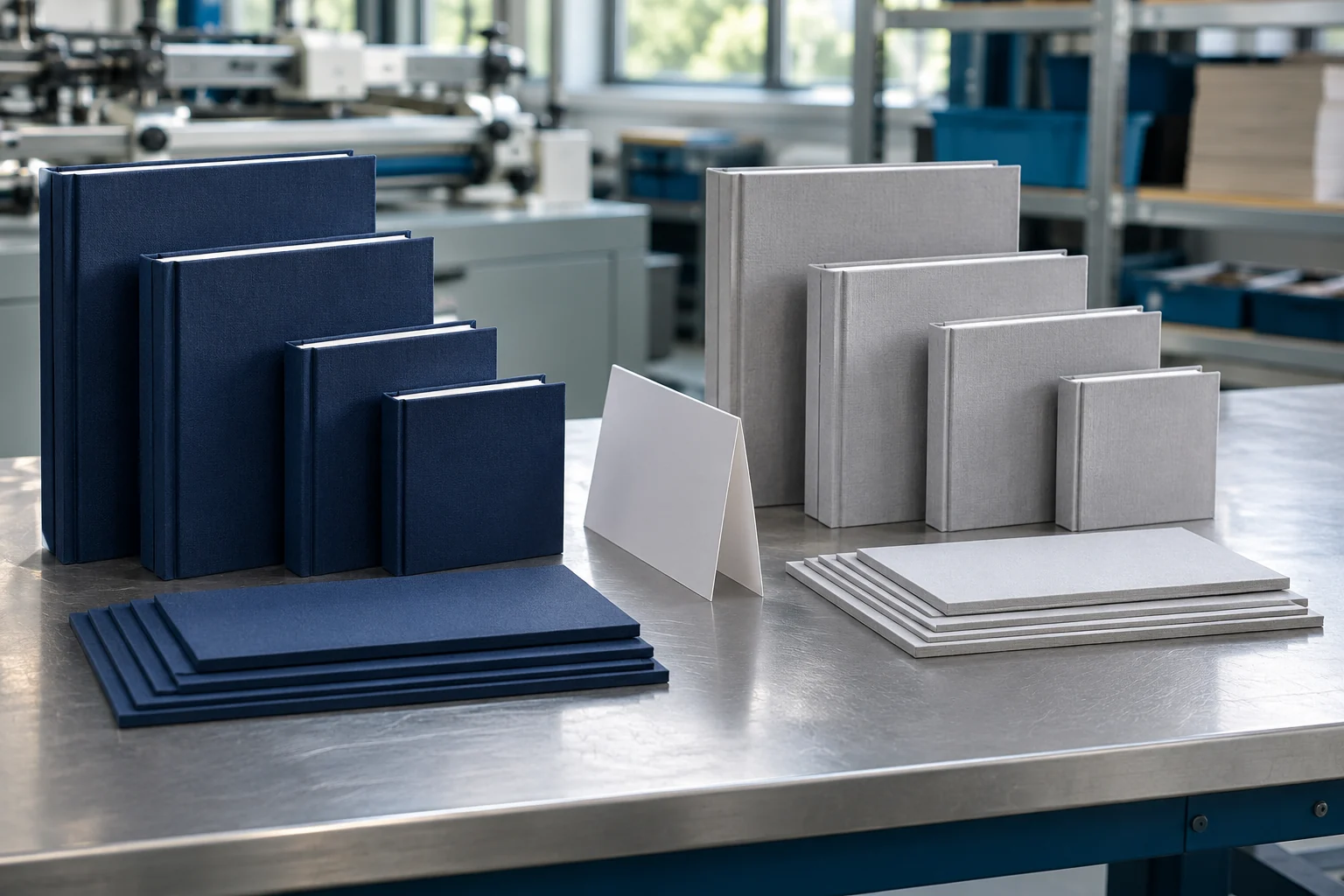
A representative changeover should be written as a transition:
Job A → Job B
Then list the differences between them.
Depending on the selected machine and product, relevant differences may include:
- finished format and board dimensions;
- number or arrangement of board pieces;
- covering or lining material;
- positioning or registration requirement;
- feeding settings;
- tooling or guides where applicable;
- adhesive/process settings where applicable;
- production mode or selected process modules.
Not every machine requires every adjustment, which is why a generic changeover-time claim should not be transferred from one configuration to another.
HORDA’s catalogue provides one useful but narrowly bounded example. It describes DFM-1000B, a collapsible-box cover and wings machine designed for small-batch customized work, as supporting mode switching within 10 minutes after specifications have been preset. That is evidence for DFM-1000B under the stated condition—not evidence that every HORDA case-making or rigid-box configuration changes jobs within 10 minutes.
For other configurations, the safer buying method is to specify the changeover you need demonstrated.
Separate adjustment time from production acceptance
A machine being mechanically ready does not necessarily mean the next job is producing accepted output.
For procurement purposes, define the endpoint clearly. One useful endpoint is the first output that meets the agreed acceptance criteria for Job B.
That allows the changeover test to include not only physical adjustment, but also the restart and confirmation required before production is truly ready to continue.
Do not invent a universal acceptance threshold. Depending on the project, acceptance may involve dimensions, positioning, wrapping or lining quality, appearance, or another agreed sample criterion.
A changeover trial should therefore record:
- the defined Job A condition;
- the defined Job B condition;
- when the changeover starts;
- the adjustments actually performed;
- when Job B restarts;
- when the first accepted Job B product is confirmed.
That record is much more useful for capacity planning than an undefined statement such as “quick setup.”
Choose the Automation Boundary, Not Just the Automation Level
Small-batch buyers often frame the decision as “manual versus automatic” or “standalone versus fully automatic.” A more useful question is: Which stages should be integrated for this particular production mix?
HORDA documentation shows several architectures. Standalone ZFM equipment covers case-making operations. ZTC equipment covers inner laminating. QZFM combines case making and inner laminating into an integrated line. The catalogue also documents the DFM-1000B route for a specific collapsible-box structure.
An integrated configuration may reduce some inter-machine transfers. A modular configuration keeps operations separated and may allow the buyer to configure individual stages independently. Neither arrangement is automatically the correct choice for every small-batch plant.
Compare the options against the same production requirement:
| Decision factor | What to examine |
|---|---|
| Required operations | Which stages must the equipment actually perform? |
| Product range | Can the exact model handle the required structures and dimensions? |
| Materials | Are board, paper and other substrates within documented ranges or sample-validated? |
| Changeover pattern | What changes from one representative job to the next? |
| Hand-offs | Where must operators or conveyors transfer work between stages? |
| Accepted output | Can the complete route meet the required accepted production target? |
| Plant constraints | Do equipment dimensions, utilities and operating access fit the site? |
This comparison should not be turned into a labor-saving or ROI claim without project evidence. An integrated line having fewer hand-offs does not, by itself, establish a specific headcount reduction or payback period.
For a small-batch buyer, the useful outcome is a production architecture that matches the job mix without purchasing unnecessary functions or leaving critical process steps undefined.
Check Materials, Formats, Layout, Operators and Interfaces Before RFQ
The machine name alone is not enough to confirm fit.
HORDA’s catalogue shows different working ranges across case-making and inner-laminating models, including differences in maximum and minimum product sizes, board or cover thickness, paper ranges, positioning specifications, speed ranges, power and equipment dimensions. Those specifications must remain attached to the exact model from which they come.
Do not combine values from several models into one artificial “HORDA rigid box machine range.”
Before asking for a quotation, prepare a product-and-site data package.
Product and material data
Include:
- finished product or box structure;
- flat and component dimensions;
- greyboard thickness and board arrangement;
- covering-paper information;
- lining-paper information where applicable;
- specialty surfaces or materials that may affect feeding, gluing or positioning;
- representative material samples when compatibility is uncertain.
A material that is not confirmed in the available documentation should be treated as requiring model review or sample testing. Lack of confirmation does not automatically mean the material is incompatible.
Quality and positioning data
State what matters to the finished product.
For example, the project may need the supplier to evaluate registration, dimensional consistency or visible wrapping/lining quality. Use the actual product requirement rather than copying another buyer’s tolerance.
If a numerical acceptance limit is important, it should be agreed from the drawing, sample or project specification rather than invented for the article.
Site and interface data
The buyer should also provide, where relevant:
- available floor area;
- access and material-flow constraints;
- upstream input condition;
- downstream receiving condition;
- available electrical supply;
- compressed air or other utility requirements where applicable;
- adhesive/process requirements where applicable;
- staffing or operator constraints.
The exact requirements must be confirmed against the selected machine configuration. Even the HORDA catalogue notes that machine structures and technical parameters can change and that current details should be requested.
This is one reason an RFQ should contain real production data instead of asking a supplier simply to quote “a small-batch rigid box machine.”
Small-Batch Rigid Box Equipment Buying Checklist
By this stage, the buying decision should be much more specific than a machine category.
Use the following checklist to make supplier proposals easier to compare.
1. Define the product
Provide:
- box or case type;
- drawings;
- finished dimensions;
- flat/component dimensions;
- board construction;
- covering and lining materials;
- representative samples.
2. Define the process scope
Identify which stages the supplier is expected to cover:
- case making;
- inner lining;
- rigid-box forming;
- collapsible wings where relevant;
- assembly;
- other required operations.
Also state which processes will remain upstream or downstream of the proposed equipment.
3. Define the job mix
Do not provide only annual volume.
Include representative:
- batch quantities;
- number of job changes per shift/day/week as appropriate;
- product families;
- material changes;
- format changes;
- common Job A → Job B transitions.
4. Define the capacity requirement
State:
- required accepted quantity;
- shift pattern or available scheduled production time;
- whether the requirement applies to one machine or the complete line;
- how changeover time should be treated;
- what output must be considered acceptable.
Ask the supplier to keep catalogue rating, trial running speed and accepted production output separate.
5. Define the changeover test
Select one or more representative job transitions and specify:
- starting job;
- next job;
- dimensions and materials for both;
- settings or modules expected to change;
- start point for timing;
- endpoint for timing;
- acceptance condition for the first acceptable product.
If the supplier quotes a changeover time, ask what assumptions and preset conditions apply.
6. Define quality and sample acceptance
Provide:
- drawings or approved reference samples;
- critical dimensions or visible quality points;
- positioning requirements where relevant;
- material samples;
- defect conditions that should be rejected.
Do not borrow acceptance thresholds from an unrelated machine or project.
7. Define plant constraints
Confirm:
- available space;
- machine access;
- material flow;
- electrical supply;
- compressed air and other utilities where applicable;
- operator constraints;
- connection points between upstream and downstream equipment.
8. Define what must be demonstrated before purchase
For a sample trial or FAT, agree in advance:
- which product(s) will be run;
- which materials will be used;
- which configuration will be tested;
- what production data will be recorded;
- what quality criteria will be checked;
- whether a representative changeover will be demonstrated;
- what documents or results will form the acceptance record.
The acceptance criteria should come from the actual project. There is no responsible reason to invent a universal sample count, reject-rate threshold or FAT speed for every rigid-box machine purchase.
9. Clarify commercial responsibilities separately
Finally, confirm in the quotation or order who is responsible for items such as:
- installation;
- commissioning;
- training;
- spare parts;
- warranty;
- delivery scope;
- service response;
- site preparation.
Raymon Machinery is the independent equipment presentation and inquiry channel; the equipment discussed on the site is manufactured by HORDA. Manufacturer facts and commercial obligations should therefore be kept distinct and confirmed in the applicable documentation.
The Buying Decision in One Sentence
For small-batch rigid box production, the best equipment setup is not the configuration with the largest catalogue number or the highest advertised speed. It is the configuration whose documented process scope and working range match the product, whose changeover requirements fit the real job mix, and whose accepted output can be demonstrated against the buyer’s materials and acceptance criteria.
Before requesting a quote, prepare your drawings, materials, representative job matrix, target accepted output, changeover scenario and trial requirements. That gives the supplier enough information to recommend and validate a configuration instead of guessing from a generic machine description.