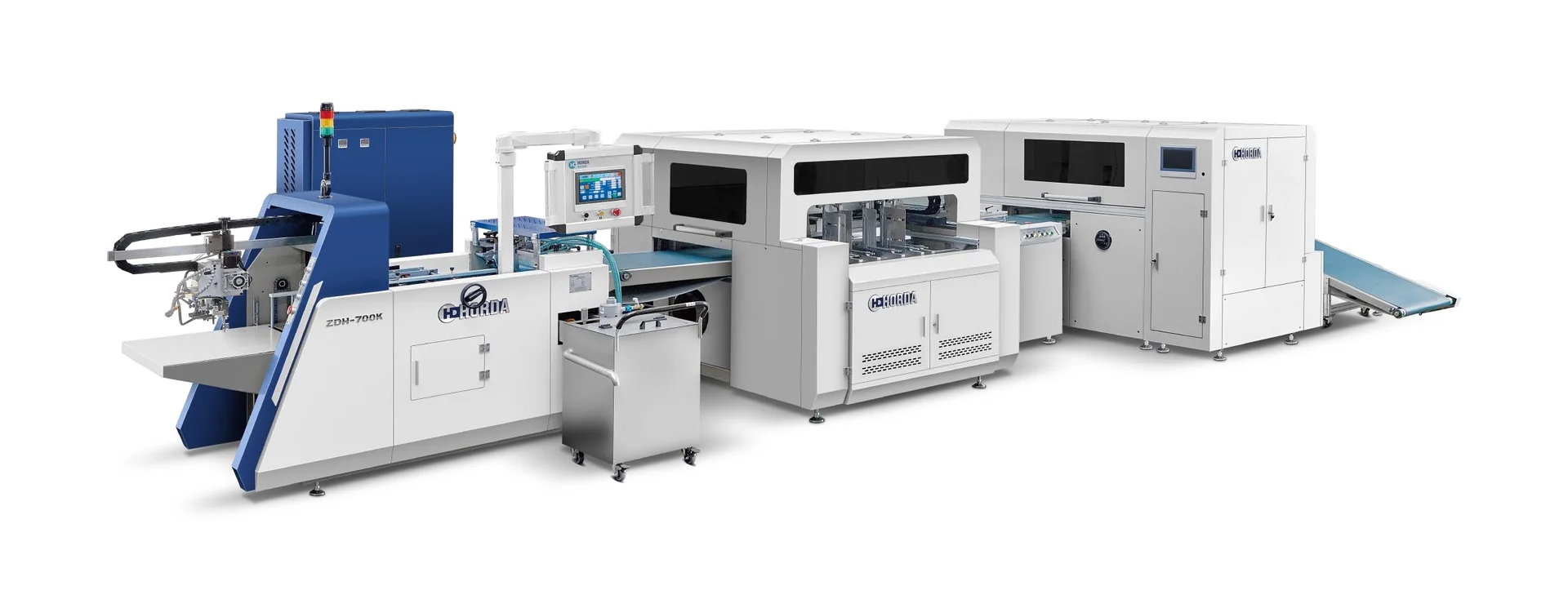
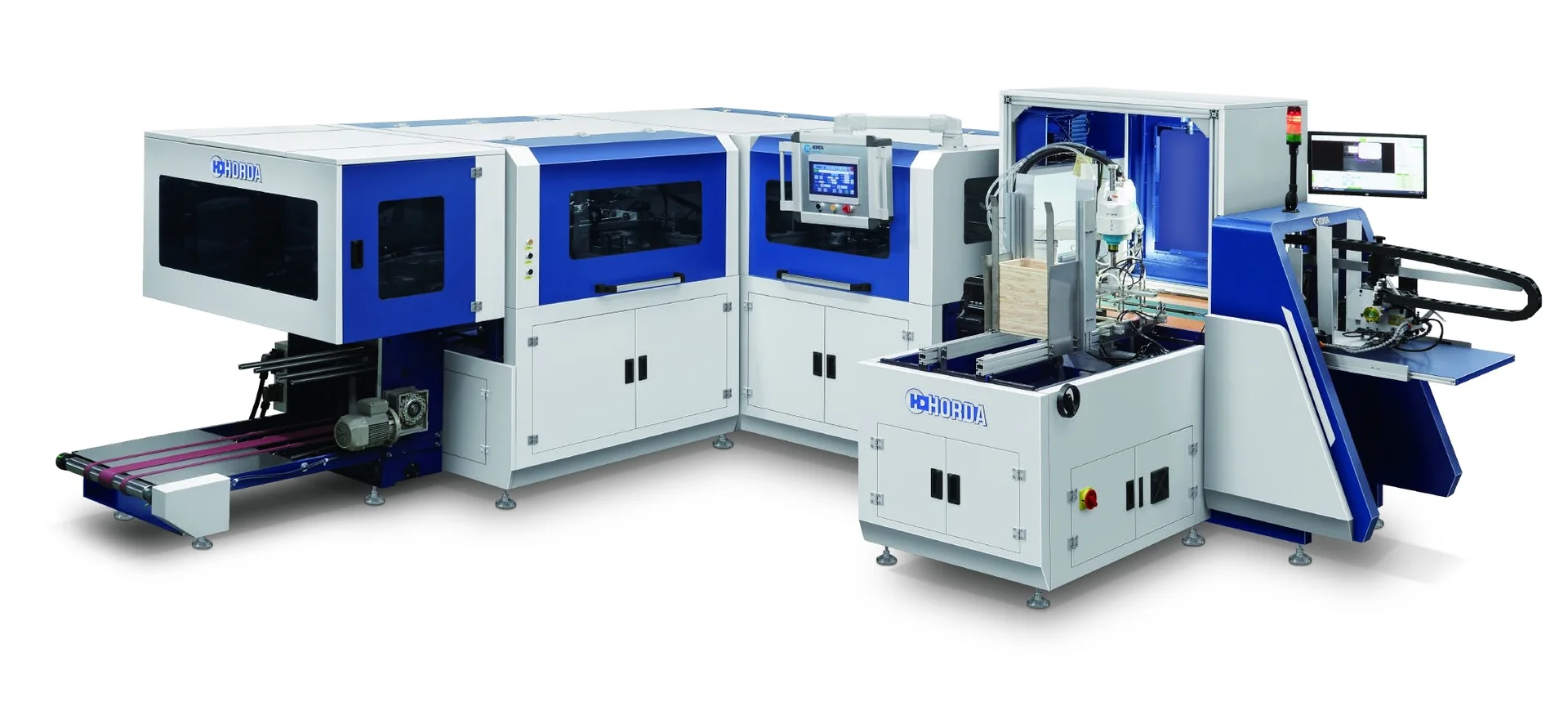
Choosing an automatic frame stretching machine starts with your frames, canvas and required accepted output—not with the highest speed shown in a catalogue. Define the complete size range you need to run, wooden-frame construction, actual canvas or covering material, production mix, finished-frame acceptance criteria and shift requirement. Then compare those conditions with an exact machine model and verify the proposed configuration with representative samples before treating it as suitable for production.
This distinction matters because a machine can fit the largest frame dimension on paper and still be a poor production match if the actual material, stretching and nailing route, changeover pattern, site constraints or accepted-output requirement have not been checked. A useful RFQ should therefore describe the job that must be produced, not simply ask for “a fast automatic canvas stretcher.”
Start With the Product You Need to Stretch, Not the Machine Catalogue
The first selection question is not “Which machine is faster?” It is “What range of finished frames must this machine produce reliably?”
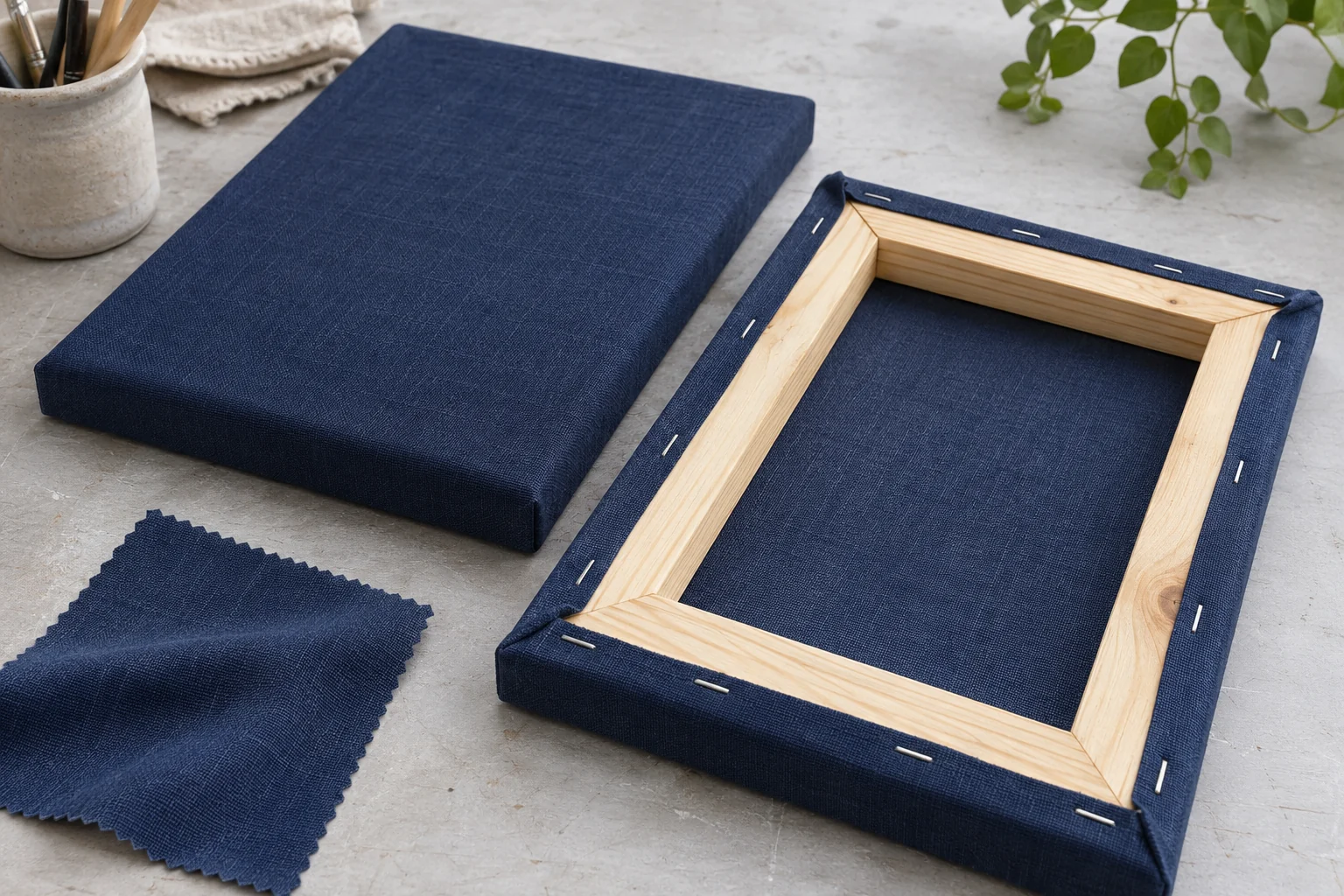
Build a production envelope from the jobs you actually plan to run. At minimum, include the smallest and largest finished frame dimensions, wooden-frame thickness and construction, representative canvas or covering material, and the formats that are most difficult to process. If a plant makes many SKUs, the extremes matter as much as the average product. A machine selected around one common format may still create problems when the production schedule moves to a small, large or less forgiving job.
HORDA’s current BK-series catalogue illustrates why exact-model matching matters. It lists the BK-500 with a 200 × 200 mm minimum size, 420 × 520 mm maximum size and 15–30 mm wooden-frame thickness. The BK-800 is listed with the same 200 × 200 mm minimum and 15–30 mm wooden-frame thickness, but with a larger 620 × 820 mm maximum size. The two models also have different catalogue speed, power, footprint and weight values. These are model-specific specifications and should not be blended into one synthetic specification for “BK-500/800.”
| Selection item | BK-500 catalogue value | BK-800 catalogue value | Buyer implication |
|---|---|---|---|
| Minimum product size | 200 × 200 mm | 200 × 200 mm | Confirm your smallest production SKU |
| Maximum product size | 420 × 520 mm | 620 × 820 mm | Match the largest required frame to the exact model |
| Wooden-frame thickness | 15–30 mm | 15–30 mm | Check the actual stretcher-bar construction used in production |
| Maximum speed | 8–12 pcs/min | 8–10 pcs/min | Treat as catalogue maximum speed, not guaranteed accepted output |
| Catalogue power parameter | 17.5 kW | 19 kW | Include in site-planning review; confirm full electrical requirements separately |
| Machine dimensions | 5000 × 4000 × 1700 mm | 6500 × 5000 × 1700 mm | Compare with available floor area and access requirements |
| Machine weight | 4500 kg | 5500 kg | Include in layout, handling and installation planning |
Source: HORDA BK-500/BK-800 technical catalogue data. Current official manufacturer reference: HORDA Automatic Frame Stretching Machine.
Dimensions alone are still not enough. The current exact-model material evidence establishes canvas-frame production, but it does not provide a universal BK-specific range for canvas composition, weight, thickness, coating, elasticity or tension behavior. Those variables should therefore be supplied with the RFQ and, where they may affect production, verified with representative samples rather than converted into unsupported compatibility claims.
A practical shortlist should consequently be built from the entire application envelope: frame dimensions, wooden-frame construction and the material that will actually be stretched.
Match the Machine’s Process Route to the Frame and Quality Requirement
The word “automatic” does not tell a buyer enough about how a frame will be processed. What matters is whether the automated sequence matches the job.
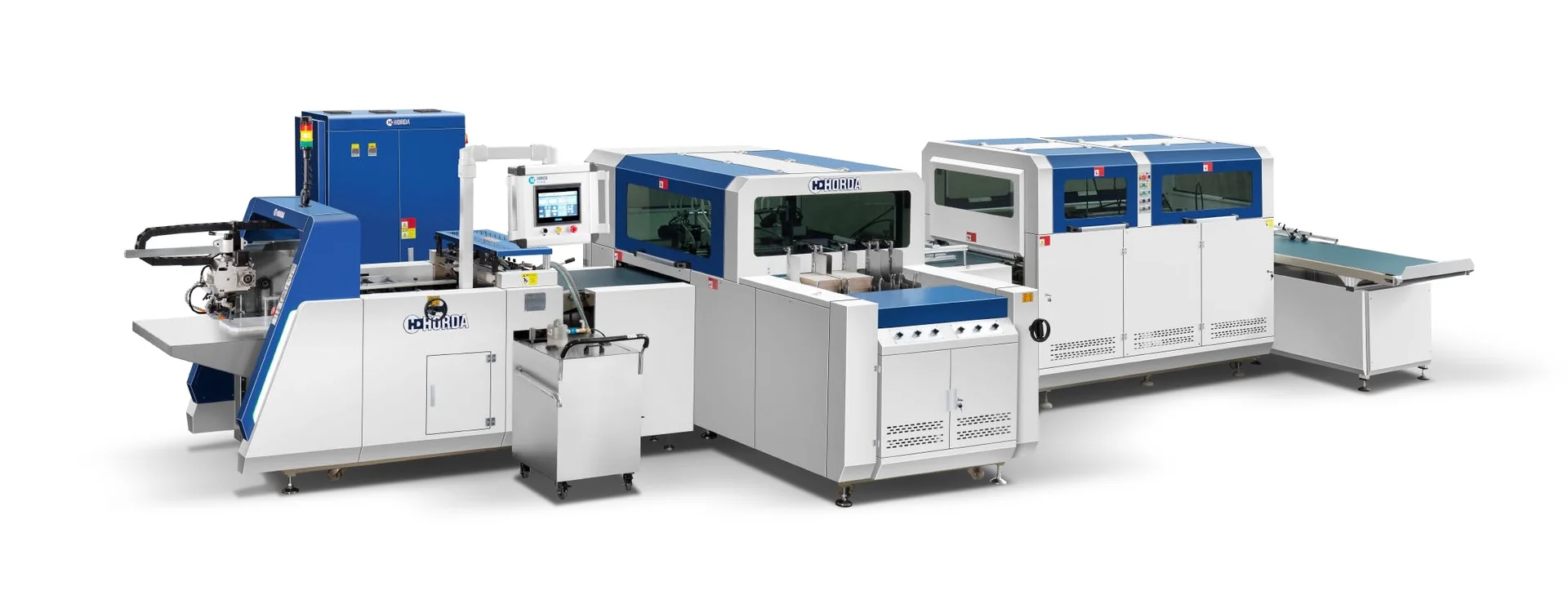
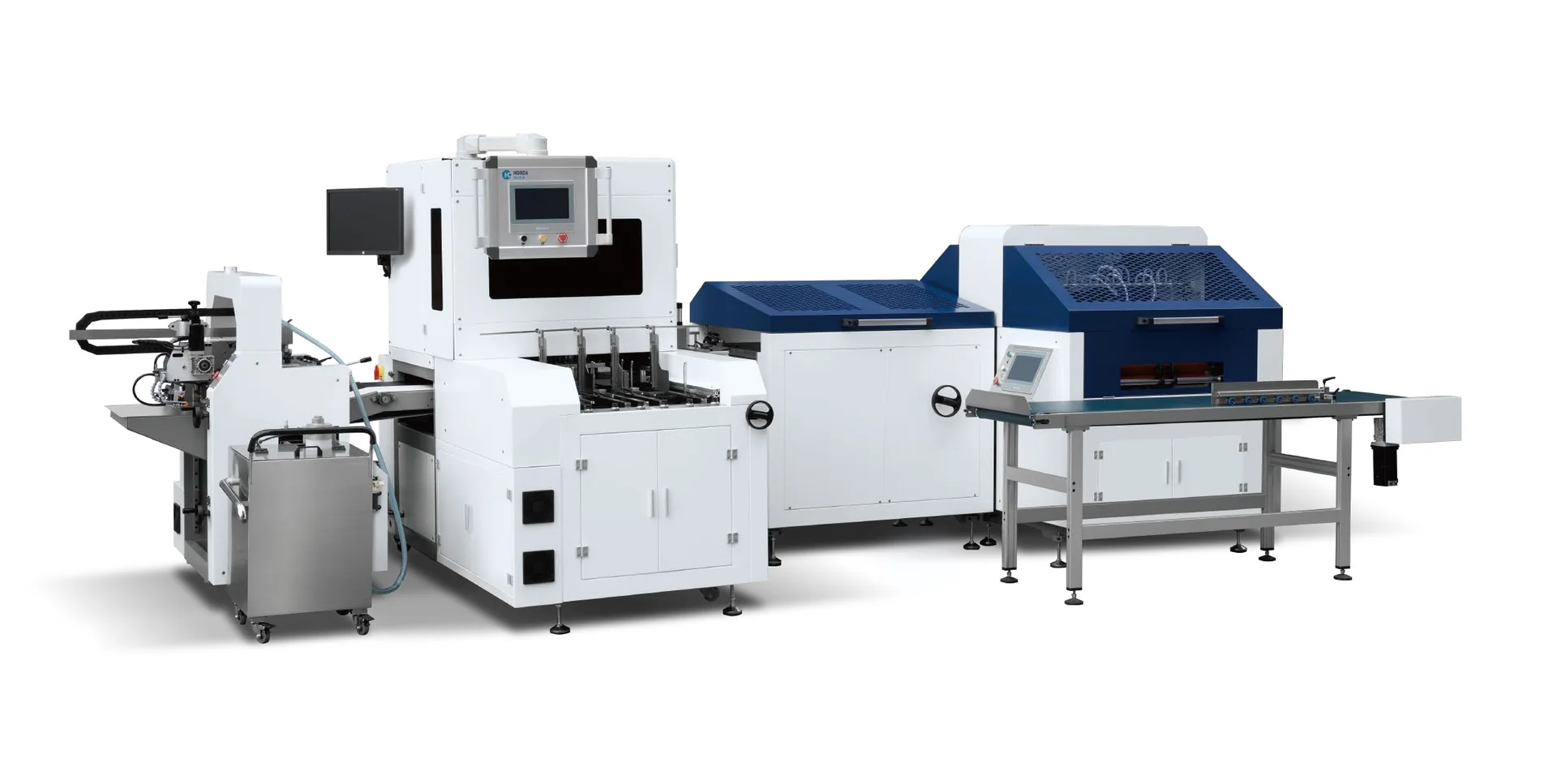
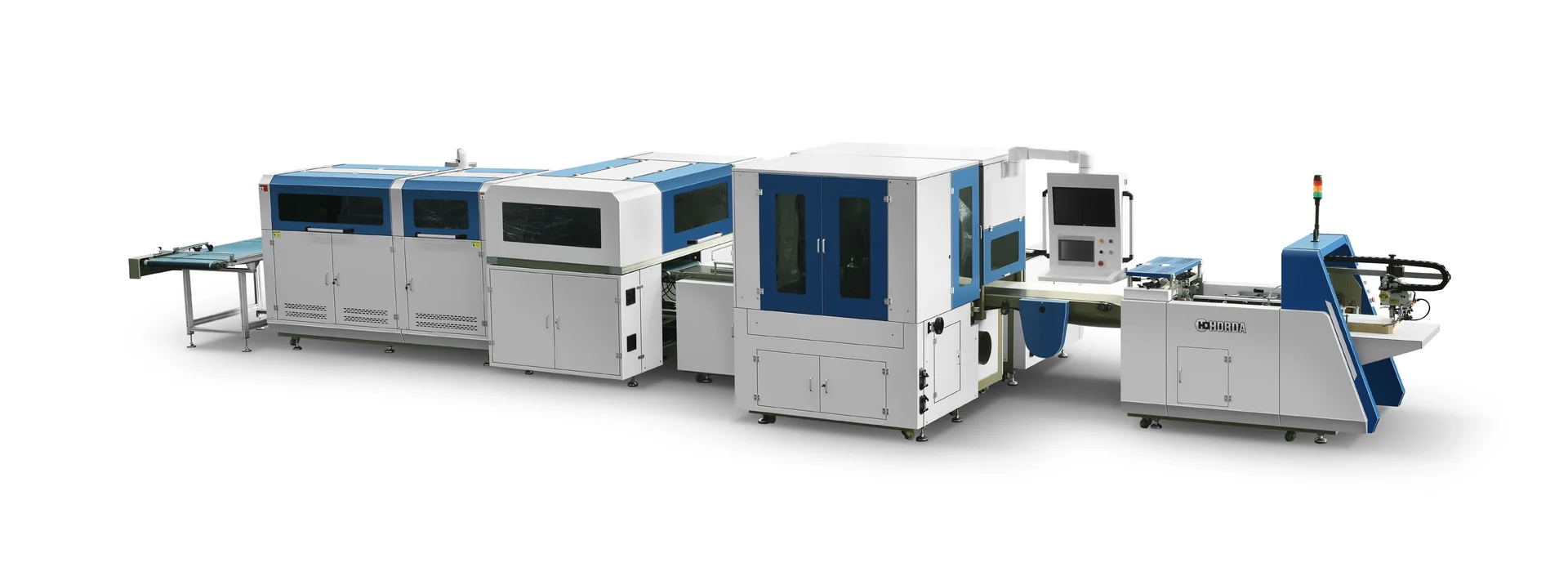
For the BK-500/800 series, HORDA’s catalogue identifies automatic feeding, visual robotic positioning, gripper stretching and nailing. Its process sequence shows wooden-frame feeding, canvas feeding, positioning, horizontal stretching and nailing, vertical stretching and nailing, and output.
That process information should be translated into production questions.
First, confirm how the frame and canvas enter the machine and what conditions they must be in before feeding. A technically capable stretcher can still be unsuitable for a plant if upstream preparation does not deliver material in the condition the machine expects.
Next, look at positioning and stretching as production functions rather than marketing features. The relevant question is not simply whether a machine uses vision or a robot. It is whether the proposed configuration can position and stretch the buyer’s representative frames and canvas in a way that produces the required finished result.
The same principle applies to nailing. The RFQ should identify the finished-frame requirement and any fastening details that materially affect configuration. The supplier can then confirm what the proposed machine includes and whether tooling, setup or configuration changes are needed.
This is also where sample evaluation becomes important. The current evidence supports the process functions, but it does not establish a universal numeric positioning tolerance, canvas-tension tolerance, reject rate or defect limit. Those values should not be invented. If the buyer has measurable tolerances, they should be provided as project acceptance criteria and tested against representative products.
Judge Output by Accepted Production, Not Maximum Speed Alone
Catalogue speed is useful for initial screening, but it is not the same thing as sustained accepted production.
HORDA lists the BK-500 at a maximum speed of 8–12 pieces per minute and the BK-800 at 8–10 pieces per minute. The exact model table governs these values; the higher BK-500 range must not be transferred to the BK-800.
For a buyer, the more useful question is:
How many acceptable finished frames must the line produce during the net production time available for this job?
For example, if a production plan requires 2,000 accepted frames during 400 net production minutes, the required accepted rate is 5 frames per minute. That is only an illustrative requirement calculation. It is not a prediction of what a HORDA machine will produce, because actual accepted output depends on the selected product, material, configuration, setup, changeovers, stoppages and quality acceptance conditions.
This is why a procurement specification should keep four quantities separate:
- the manufacturer’s catalogue or maximum speed;
- the buyer’s required accepted output;
- the conditions under which a sample or FAT output test will run;
- the finished-product criteria that determine whether an item counts as accepted output.
A machine can have sufficient theoretical speed but still fail the buyer’s production requirement if substantial time is lost to an unsuitable job mix or if the product does not meet the buyer’s quality standard at the required rate. Conversely, a buyer may not need the highest nominal speed if a lower-speed configuration comfortably meets the actual accepted-output target and other project constraints.
Do not fill this gap with assumed utilization, OEE or reject percentages. If those values matter to the investment decision, they need to come from the buyer’s production plan or a defined test—not from an arbitrary industry assumption.
Check Changeover, Site and Production-Integration Constraints Before You Shortlist
A machine that matches the product can still be the wrong production choice if it does not fit the plant.
Start with job mix. HORDA states that the BK equipment supports quick switching among multiple frame sizes, but the current validated evidence does not establish a universal changeover time that can safely be applied to every size pair, material and setup condition. For a high-mix operation, the better procurement question is therefore: Can the supplier demonstrate the change between two representative jobs that matter to us?
Specify both jobs. Record what settings, parts or tooling must change. Then observe the actual sequence during a sample trial or FAT if changeover performance materially affects the capacity decision.
Floor-space planning also deserves attention before quotation. The catalogue dimensions are approximately 5000 × 4000 × 1700 mm for the BK-500 and 6500 × 5000 × 1700 mm for the BK-800. Machine weight is listed at 4500 kg and 5500 kg respectively. Those numbers describe the machine, not the complete usable installation envelope. The buyer should still confirm access, maintenance clearance, material handling, operator movement and any required upstream or downstream space for the actual project.
The catalogue also gives power values of 17.5 kW and 19 kW for the two models. That does not establish the full electrical installation specification. Supply voltage, frequency, phase and any other utility requirements should be confirmed for the ordered configuration.
The same caution applies to staffing and compressed air. Those requirements are not established by the current exact-model evidence used for this article, so they should remain explicit RFQ questions rather than implied specifications.
Use Representative Samples to Verify the Shortlist
Once the specification screen produces a plausible machine configuration, representative samples should answer what the catalogue cannot.
A useful sample set should expose the machine to the jobs that could change the buying decision. That normally means considering the smallest and largest required frames, the materials actually planned for production and any format that is difficult because of construction or handling. If job mix is important, include at least the types of jobs that make changeover performance commercially relevant.
The buyer should also define what the trial is intended to prove before the test starts. “Run some frames and see how they look” is too vague for a major equipment decision.
For this application, the test objective may include confirming that the proposed configuration can feed the supplied frame and canvas, complete the required positioning/stretching/nailing sequence, produce a finished frame that meets the buyer’s agreed visual or dimensional requirements, and operate at an output condition relevant to the project.
The acceptance criteria should come from the real product requirement. If canvas tension, positioning, fastening pattern or another quality characteristic has a numeric specification, provide it. If the acceptance method is visual, define what constitutes an unacceptable wrinkle, loose area, damage or other relevant defect. Do not manufacture a tolerance just because a FAT checklist appears more technical when it contains numbers.
Test records should also preserve context. Record the machine configuration, sample identity, frame dimensions, material, relevant setup and the conditions used for any output observation. Without that context, a demonstration result can easily be misread as a general machine guarantee.
A supplier demonstration and a contractual acceptance test are not automatically the same thing. If FAT results will become part of the purchase acceptance basis, the RFQ and order documents should define that explicitly.
What to Put in an Automatic Frame Stretching Machine RFQ
The best RFQ is a compressed technical description of the production decision the buyer has already made. It gives the supplier enough information to recommend a configuration without guessing the application.
| RFQ input | What to provide | Why it changes the selection |
|---|---|---|
| Finished-frame range | Minimum, maximum and representative production sizes | Determines basic model/format fit |
| Wooden frame | Thickness, construction and relevant dimensions | Must fit the documented machine envelope and handling method |
| Canvas / covering | Material specification, supplier data where available and representative samples | Exact BK material limits are not fully documented; sample fit may need validation |
| SKU mix | Common jobs plus difficult/extreme jobs | Reveals whether one specification represents the real production mix |
| Target accepted output | Required accepted pieces per hour/shift plus net planned production time | Allows capacity to be judged independently from maximum catalogue speed |
| Changeover requirement | Representative job pairs and desired production pattern | Helps evaluate high-mix practicality without assuming a universal changeover time |
| Required process | Feeding, positioning, stretching, nailing and any special handling requirement | Confirms the proposed automation scope |
| Finished-frame acceptance | Dimensional, visual, fastening or other project criteria | Defines what qualifies as an accepted product |
| Sample/FAT plan | Samples to be tested, test objective and acceptance basis | Converts general capability into project-specific evidence |
| Site information | Available floor area, access restrictions and known utility conditions | Screens installation fit before order |
| Electrical confirmation | Request full requirements for the selected configuration | Catalogue kW alone is not a complete electrical specification |
| Commercial scope questions | Delivery, installation, commissioning, training, warranty and service requirements | These responsibilities must be confirmed in the quotation/order, not assumed |
For the most useful technical response, attach drawings or dimensional data and send representative samples where the material or construction could change machine behavior. State the required output as accepted product under defined conditions rather than asking whether the machine can “run fast.”
If the supplier recommends a specific model, compare that proposal back to the RFQ item by item. The objective is not to collect the largest number of features. It is to establish a traceable link between the production requirement, the proposed machine configuration and the evidence that supports the choice.
A Better Buying Decision Comes From Closing the Gaps Before the Order
An automatic frame stretching machine should be selected as a production system for a defined family of frames, not as an isolated specification sheet.
Start with the actual product envelope. Match it to exact-model dimensions and process functions. Treat maximum speed as a catalogue reference rather than a guaranteed shift result. Identify the changeover and site conditions that could limit practical use. Then use representative samples and predefined acceptance criteria to verify the shortlist.
By the time an RFQ is submitted, the buyer should be able to explain not only what machine they are considering, but what frames it must process, what materials it will see, what accepted output the project requires and how suitability will be demonstrated.
That produces a much stronger basis for comparing quotations—and reduces the risk of discovering a critical mismatch after the equipment has already been ordered.