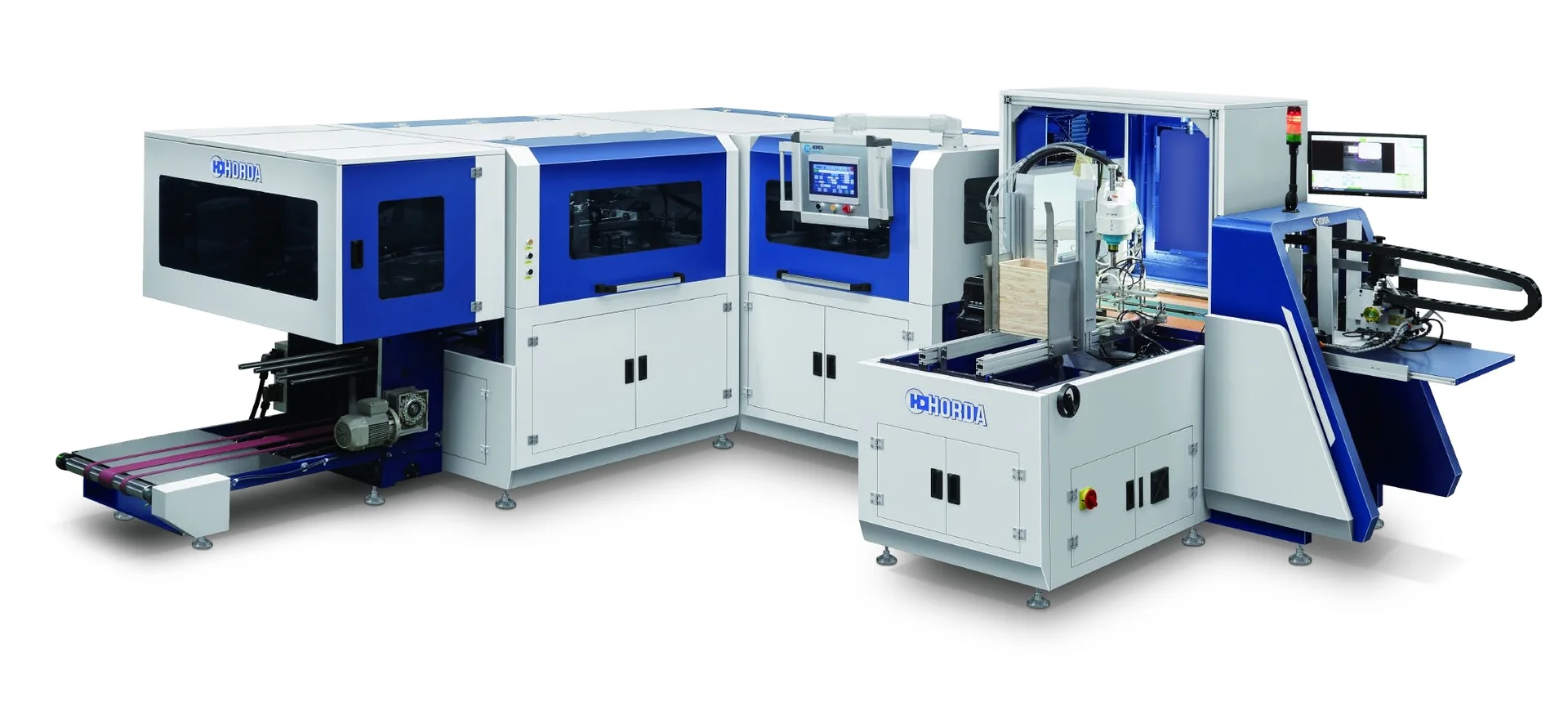
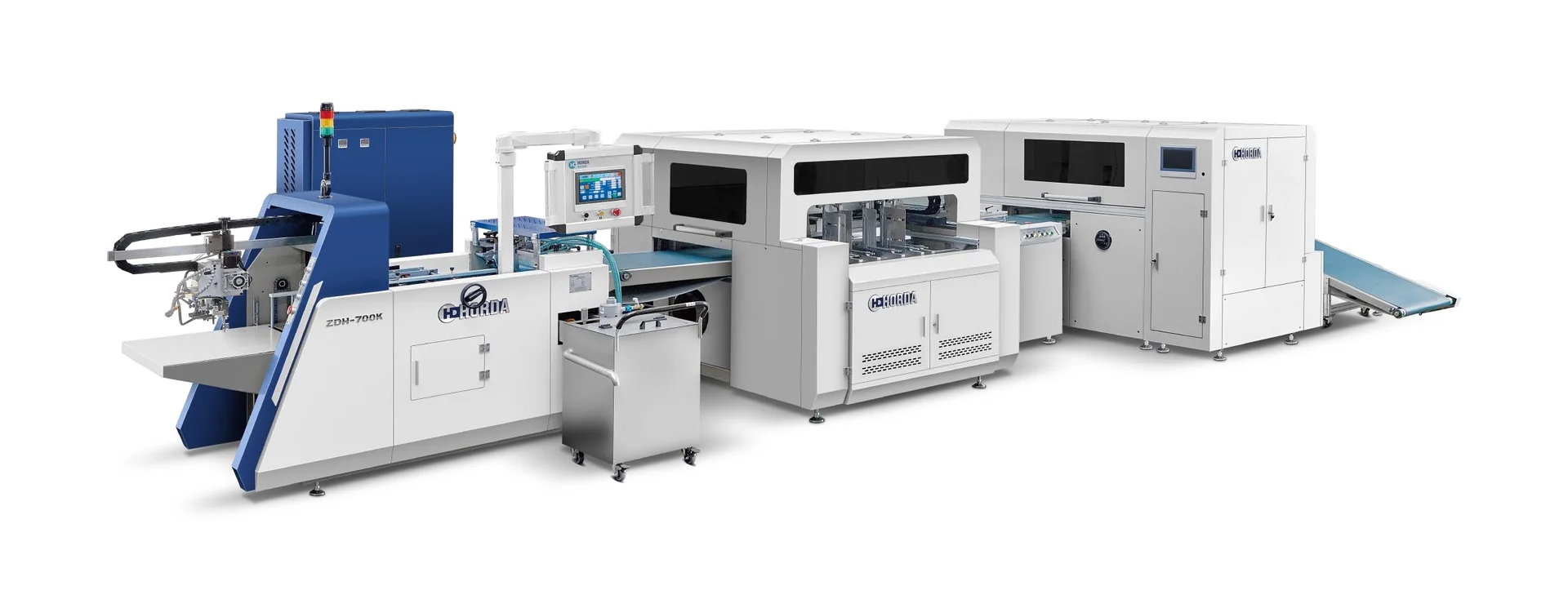
There is no defensible universal price or payback period for a collapsible box wing machine. The investment depends on what process scope is being quoted, what equipment and project items are included, and what the machine can contribute under your actual box formats, materials, job mix, staffing, shift pattern and quality requirements.
For the financial case, the most important distinction is between machine price, total project investment, and total cost of ownership. A low machine quotation can still become the more expensive project if it excludes equipment, integration or site requirements that another quote includes. Conversely, a higher acquisition cost does not automatically produce a better return. ROI and payback only become meaningful after the buyer establishes a like-for-like scope and converts verified production changes into annual economic value.
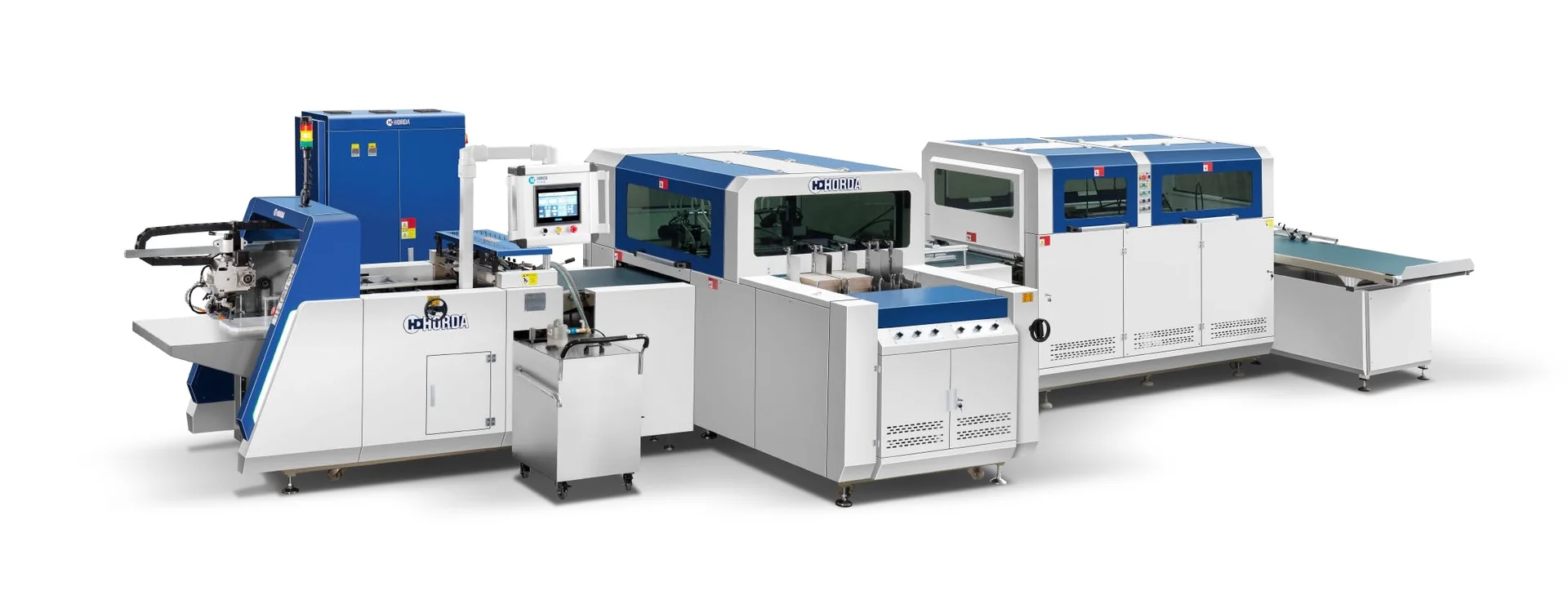
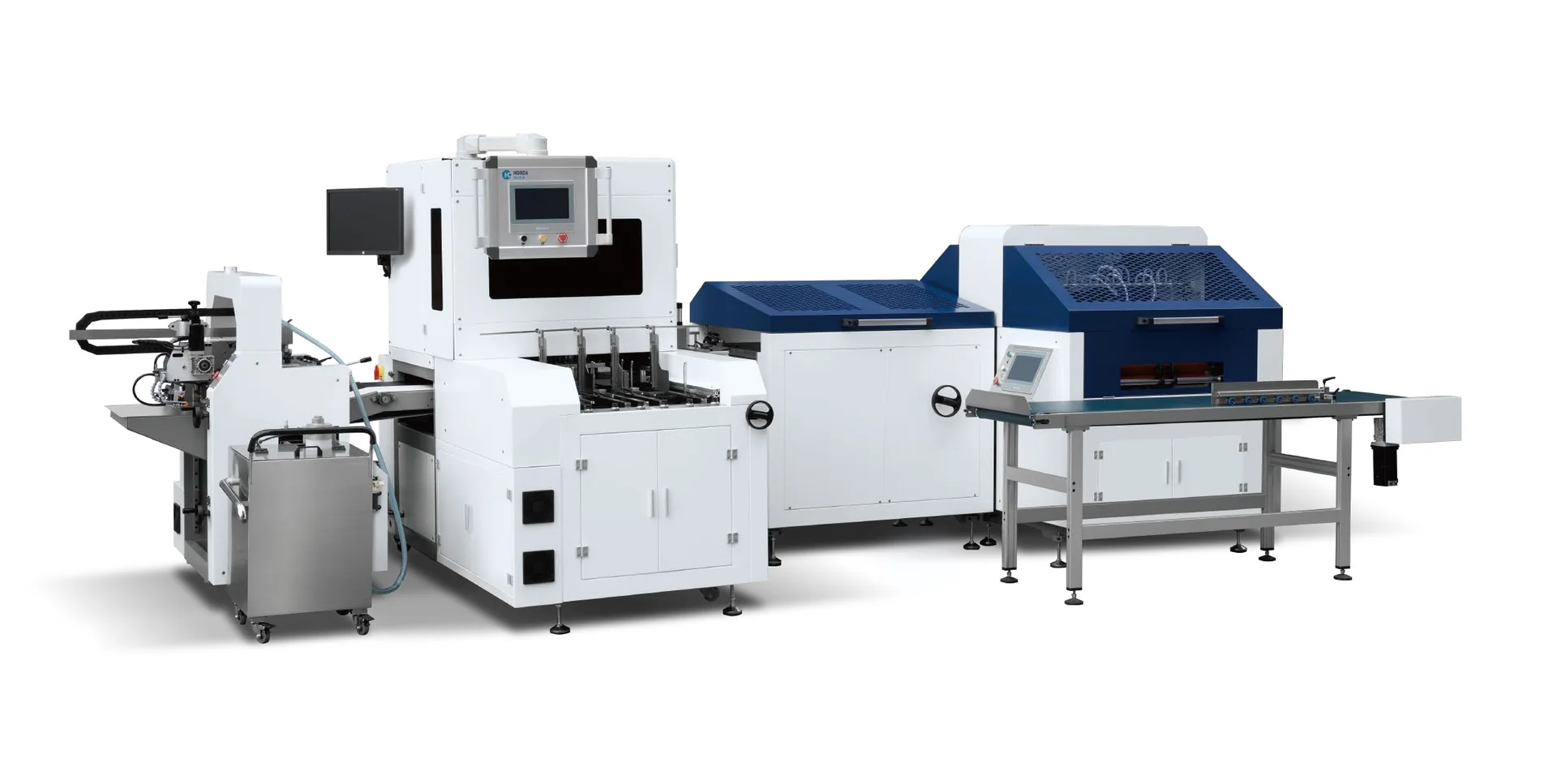
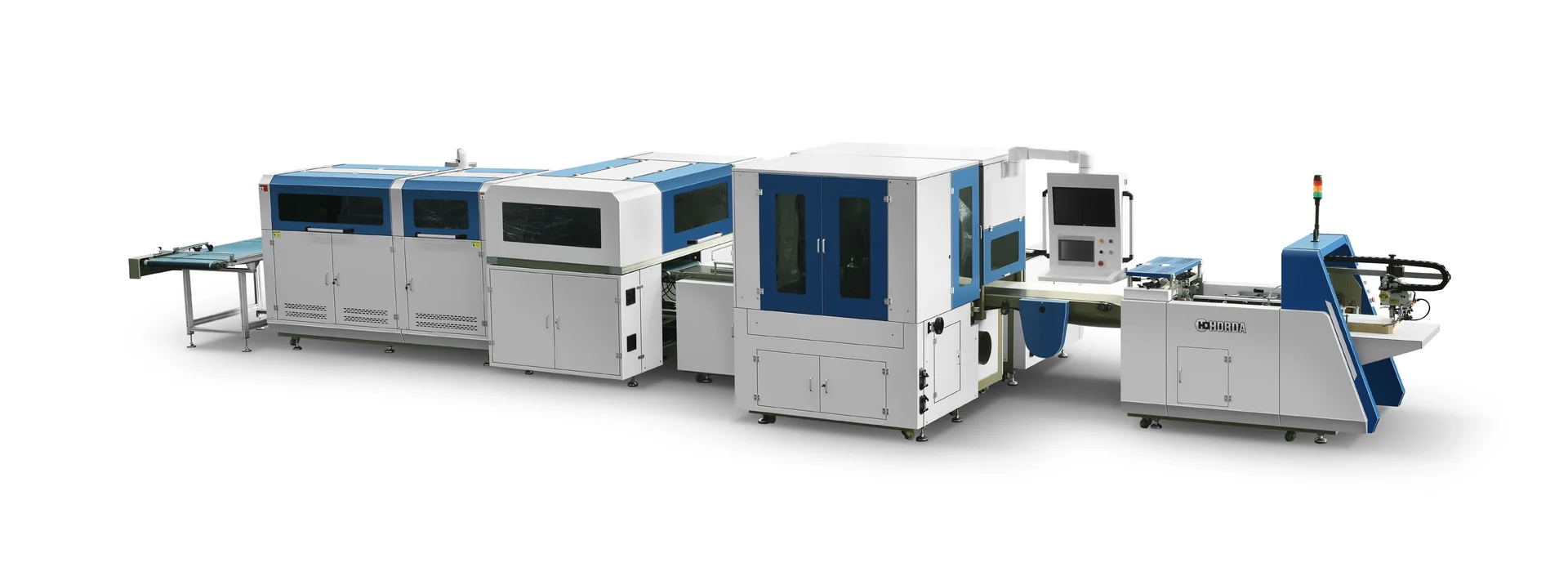
That discipline matters especially for collapsible-box wing equipment because “wing machine” can describe different levels of process scope. HORDA documentation, for example, identifies the ZDH-700B as a dedicated Collapsible Box Wings Making Machine, while the DFM-1000B combines case making, collapsible-box wing making and inner lamination. These are not equivalent investment scopes, so their quotations should not be compared as though only the purchase price were different.
Why a Machine Price Is Not Yet an Investment Cost
A quotation tells you what a supplier is offering. It does not automatically tell you what the complete project will cost or whether two offers contain the same production scope.
Start by asking what the quoted machine is expected to do. A dedicated wing-making machine may cover only the side-wing process, while another configuration may combine several operations. HORDA’s collapsible-box production-line material also separates case making, wing making, inner laminating, forming and locating into distinct process stages. That is a useful reminder that one machine’s quoted capability is not the same thing as the output or scope of an entire collapsible-box line.
A useful price comparison therefore begins with a scope normalization exercise:
| Comparison item | Why it matters |
|---|---|
| Machine/process scope | A dedicated wing-forming machine and a multi-process machine are solving different amounts of work. |
| Required box formats | Format requirements may change the appropriate configuration and therefore the investment basis. |
| Materials and board structure | They may affect feeding, handling, tooling or sample validation requirements. |
| Positioning/quality requirement | Tighter requirements may affect the configuration or acceptance plan. |
| Upstream/downstream interface | A machine that must connect with other equipment can create additional integration work. |
| Tooling or optional modules | Compare only options actually required and quoted. |
| Site/utilities work | Electrical, air, access, layout or other preparation costs belong in the project if they will actually be incurred. |
| Installation, commissioning or training | Include these only according to the actual commercial offer and responsibility split. |
| Initial spare parts | Add them when they are part of the planned purchase rather than assuming they are included. |
This table is a comparison framework, not a statement that every item applies to every machine. The quotation should identify the actual configuration and inclusions.
The practical rule is simple: do not compare two bottom-line prices until you can explain the difference in scope.
The Cost Drivers That Can Change the Quotation
The useful question is not “Which features make the machine expensive?” It is “Which production requirements cause the proposed equipment scope to change?”

Dedicated versus integrated process scope
Process scope is one of the clearest examples. If the project only needs an automated side-wing operation, the required equipment is different from a project intended to combine cover making, wing making and lining in one configuration.
That difference affects more than the initial quotation. It can also change the number of machine interfaces, floor-space planning, work-in-process movement and where labor remains in the production route. Those consequences must be evaluated against the buyer’s current process; they should not be inferred from the machine name alone.
Product and material requirements
Finished-box structure, required dimensions, board construction, covering material and surface condition can influence whether a proposed configuration is appropriate. The economic consequence is indirect but important: if the machine or tooling must change to handle the real production mix, that change belongs in the investment model.
This is also why a quotation based only on a generic statement such as “gift box” or “collapsible box” is weak input for financial approval. The supplier needs enough production information to quote the configuration that will actually be evaluated.
Output and quality requirements
A higher nominal machine speed has no economic value by itself. The value comes from accepted good output that the complete production route can sustain under the buyer’s materials, formats and quality criteria.
The same applies to positioning or registration specifications. A numerical accuracy claim does not automatically tell you how much sellable output the factory will gain. The financial model needs to connect the technical requirement to an accepted-product result.
Interfaces and project scope
A wing machine also sits inside a process. Board and covering preparation occur before it; other forming, locating, assembly or downstream work may occur afterward. If another stage constrains the line, increasing the nominal speed of the wing-making stage may have little effect on annual accepted output.
This is the central engineering reason a price article cannot be reduced to a list of specifications. The economics depend on the interaction between the selected machine and the rest of the factory process.
Build the Total Project Investment Before Calculating Payback
Once quotation scope is normalized, build the investment amount that will actually be used in the payback calculation.
Total project investment = equipment and required configuration + applicable tooling/options + applicable logistics and site costs + applicable installation/commissioning/training costs + planned initial spares + other confirmed one-time project costs
The words applicable and confirmed matter. Do not assume that freight, installation, training, spare parts or any other commercial item is included in a HORDA-manufactured machine or a Raymon Machinery inquiry simply because such items commonly appear in machinery projects. Commercial responsibilities must come from the current quotation or order.
For internal approval, it is often useful to maintain an inclusion sheet beside each supplier offer:
| Cost category | Quote A | Quote B | Buyer cost | Confirmed? |
|---|---|---|---|---|
| Base machine/configuration | ||||
| Required tooling/options | ||||
| Freight/logistics | ||||
| Duties/taxes where applicable | ||||
| Site preparation | ||||
| Installation/commissioning | ||||
| Training | ||||
| Initial spare parts | ||||
| Other one-time project costs | ||||
| Total project investment |
This worksheet prevents a common purchasing error: treating one offer as “more expensive” simply because it includes items that another supplier has left outside the quoted total.
Model the Annual Economic Benefit From Your Real Production Baseline
Payback is driven by the difference between the current process and the proposed process. That means the calculation begins in your own factory, not in a brochure.
Document the current state before estimating the future state:
- accepted good pieces per shift or year;
- working shifts and realistic scheduled hours;
- operators directly assigned to the relevant process;
- typical product mix;
- normal setup and changeover pattern;
- measured scrap or rework where reliable records exist;
- bottlenecks before and after the wing-making operation;
- recurring utilities, consumables, maintenance and other costs that materially change.
Then define the proposed state using information that can actually be validated.
Use accepted output, not catalogue speed
A machine may have a documented rated or maximum production speed, but that number is not automatically sustained good output for your production line. Materials, box dimensions, job mix, setup frequency, upstream supply, downstream capacity and quality acceptance can all change the usable result.
For ROI modelling, the more defensible input is therefore:
accepted good output under the intended production conditions
That output should ultimately be supported by the appropriate combination of current manufacturer data, sample trials, FAT evidence and the buyer’s operating assumptions.
Simply multiplying a catalogue maximum by minutes per shift and working days per year can produce a very precise number that is economically meaningless.
Treat labor as a before-and-after delta
The same discipline applies to staffing.
HORDA’s catalogue shows a collapsible-box production-line concept with line-level staffing and a cost-saving statement, but the page also notes that the specific site and operator plan depends on customer requirements. That complete-line illustration cannot be converted into a labor-saving percentage for a standalone wing machine.
Instead, calculate labor from the actual route:
current direct labor cost for the affected process
minus
expected direct labor cost for the proposed validated process
If the staffing requirement has not been validated for your configuration, leave the saving unclaimed until it is.
Use waste and rework only when you have evidence
Waste, rejects and rework may be economically important, but they are easy to overstate.
Do not assume that better positioning, greater automation or a newer machine automatically creates a specific scrap reduction. Use your current measured waste/rework baseline and compare it with trial or acceptance data that are relevant to the proposed configuration.
If that evidence does not exist yet, treat waste improvement as a sensitivity variable rather than guaranteed savings.
How to Calculate ROI and Simple Payback Without Inventing the Result
Once the investment scope and operating deltas are defined, the formulas are straightforward. The difficult part is keeping the assumptions defensible.
For this guide, use the following convention:
Annual net economic benefit =
annual verified labor benefit
+ contribution from verified additional accepted output
+ verified avoided waste/rework cost
+ other verified recurring benefit
− incremental utilities, consumables, maintenance and other recurring costs.
When valuing additional accepted output, use the economic contribution appropriate to your business rather than simply counting additional sales revenue. Otherwise the model may overstate the value of capacity.
Simple payback period = total project investment ÷ annual net economic benefit
Annual ROI, using this guide’s comparison convention = annual net economic benefit ÷ total project investment × 100%
The ROI definition should be stated explicitly whenever quotations or internal business cases are compared. Different organizations may use different accounting conventions.
An illustrative calculation
The following numbers are deliberately fictional. They are not a HORDA result, a Raymon Machinery result, a customer case or a predicted machine performance.
Assume a buyer builds this model:
| Illustrative input | Assumption |
|---|---|
| Total project investment | $180,000 |
| Annual direct-labor benefit | $40,000 |
| Annual contribution from additional accepted output | $28,000 |
| Annual avoided measured waste/rework cost | $7,000 |
| Additional annual utilities/maintenance/consumables | $9,000 |
| Annual net economic benefit | $66,000 |
Under those assumptions:
Simple payback = $180,000 ÷ $66,000 = approximately 2.7 years
Annual ROI convention = $66,000 ÷ $180,000 × 100% = approximately 36.7%
Those numbers have no value outside the scenario. The purpose is to show the calculation sequence.
If the assumed additional-output contribution falls from $28,000 to $10,000 while the other assumptions stay unchanged, annual net benefit becomes $48,000 and simple payback increases to approximately 3.75 years.
That change illustrates why the reliability of the input assumptions matters more than the number of decimal places in the final ROI figure.
TCO: What the Purchase Price Leaves Out
Simple payback answers one narrow question: how quickly the assumed annual benefit recovers the initial investment.
TCO asks a different question: what does the selected solution cost to own over the comparison period?
For a machinery comparison, a practical TCO framework may include:
- initial project investment;
- utilities and consumables;
- planned maintenance;
- replacement and spare parts actually expected within the study period;
- labor that remains with the process;
- downtime cost where the buyer has a defensible basis;
- setup/changeover cost where it materially affects productive time;
- measured waste and rework;
- service/logistics costs where they are expected and documented.
Not every category must appear in every project. What matters is that competing alternatives are evaluated over the same time horizon using the same accounting boundaries.
For example, comparing the acquisition cost of one machine against the five-year ownership cost of another would create a false result even if every number inside both calculations were individually correct.
TCO also helps expose a weakness of simple payback. A project may recover its initial investment quickly yet carry higher ownership costs later. Conversely, a machine with a longer simple payback may still be economically attractive over the buyer’s full planning horizon.
The article does not assign universal maintenance intervals, spare-parts lives, energy savings or service costs to the equipment. Those inputs require current model data, quotation terms and buyer operating assumptions.
Stress-Test the Assumptions Before You Approve the Payback
A capital model should show which assumptions are carrying the conclusion.
For a collapsible box wing automation project, useful sensitivity variables can include:
- accepted good output;
- scheduled utilization;
- number of shifts;
- direct labor difference;
- product mix;
- changeover frequency;
- measured waste/rework difference;
- upstream and downstream line constraints;
- incremental utilities and maintenance;
- the chosen ownership horizon.
Rather than approving one “best estimate,” calculate at least a conservative case and a base case using assumptions the project team can defend. A higher case can be useful as well, provided it is presented as a scenario rather than a promised outcome.
A simple sensitivity table can make the risk visible:
| Variable | Conservative case | Base case | Question to validate |
|---|---|---|---|
| Accepted output | Lower validated level | Planned validated level | What did the sample/FAT run demonstrate under relevant conditions? |
| Utilization | Allow more nonproductive time | Planned schedule | Is demand sufficient to use the capacity? |
| Labor | Count only confirmed role changes | Expected staffing plan | Which tasks actually disappear, move or remain? |
| Changeover | More frequent/longer | Normal job mix | Does the planned mix resemble the test assumptions? |
| Waste/rework | No saving until measured | Measured validated delta | Is the quality benefit documented? |
| Line balance | Constrained by adjacent stage | Balanced planned route | Where is the actual bottleneck? |
This analysis can change the decision even when the machine quotation does not change.
If the project only produces a favorable payback when every uncertain variable is set to an optimistic value, the right next step is not to make the spreadsheet more persuasive. It is to collect better evidence.
What to Put in the RFQ So the Financial Model Is Usable
A quotation is most useful when the supplier receives enough information to understand both the required machine scope and the production conditions behind the investment decision.
For a collapsible box wing machine project, prepare the following as applicable:
Product and material information
- finished box and side-wing structure;
- drawings or complete dimensions;
- board construction and thickness information;
- covering paper or other relevant materials;
- samples when available;
- important surface or quality conditions.
Production requirements
- target accepted output rather than only a desired maximum speed;
- shift pattern;
- typical lot sizes;
- product mix;
- changeover frequency;
- current process route;
- upstream input and downstream hand-off.
Quality and acceptance
- positioning/registration expectations where relevant;
- visible defect criteria;
- sample requirements;
- FAT objectives;
- the data or evidence you expect the supplier to provide.
Do not invent an acceptance threshold simply because one is needed for a spreadsheet. If the threshold is not yet defined, make defining it part of the project work.
Site and commercial scope
- available utilities;
- layout or access constraints;
- required interfaces with other equipment;
- requested tooling/options;
- destination and logistics assumptions;
- which party is expected to handle installation, commissioning and training;
- initial spare-parts requirement;
- quotation inclusions and exclusions.
Finally, give the supplier the exact configuration basis you want priced. If you are comparing a dedicated wing-making machine with a more integrated solution, ask each quotation to state the process scope explicitly.
That makes the financial comparison auditable rather than dependent on assumptions hidden in different quotations.
Before Approving the Investment
A collapsible box wing machine should not be approved because one supplier presents the lowest headline price or the shortest theoretical payback.
A stronger decision follows a traceable chain:
confirm the required process scope → normalize the quotations → establish total project investment → measure the current baseline → validate the proposed operating deltas → calculate annual net benefit → calculate payback and ROI → compare TCO → stress-test the uncertain assumptions.
If one link in that chain is unsupported, leave it as an open project input instead of converting it into a confident financial claim.
For a quotation request through Raymon Machinery, provide the box/wing structure, drawings or dimensions, materials, target accepted output, current production baseline, job mix, quality requirements, upstream/downstream interfaces and the commercial scope you want itemized. The resulting quotation and validation data can then replace generic assumptions in the ROI and TCO model.