

For an international packaging machinery purchase, EXW, FOB, CIF and DDP differ in where the seller delivers the equipment, when shipping risk transfers to the buyer, who arranges and pays for transportation, and which party handles export and import clearance. EXW places most transportation responsibilities on the buyer. FOB involves seller delivery on board a vessel at the shipment port. CIF adds seller-paid ocean freight and specified cargo insurance to the destination port, although risk transfers earlier. DDP requires the seller to deliver to the named destination with import clearance completed.
The best Incoterm is not necessarily the one with the lowest quoted machinery price or the most seller-paid freight. It is the term that fits the actual transport route, the parties’ importing capabilities, the agreed delivery point and the responsibilities each party can manage.
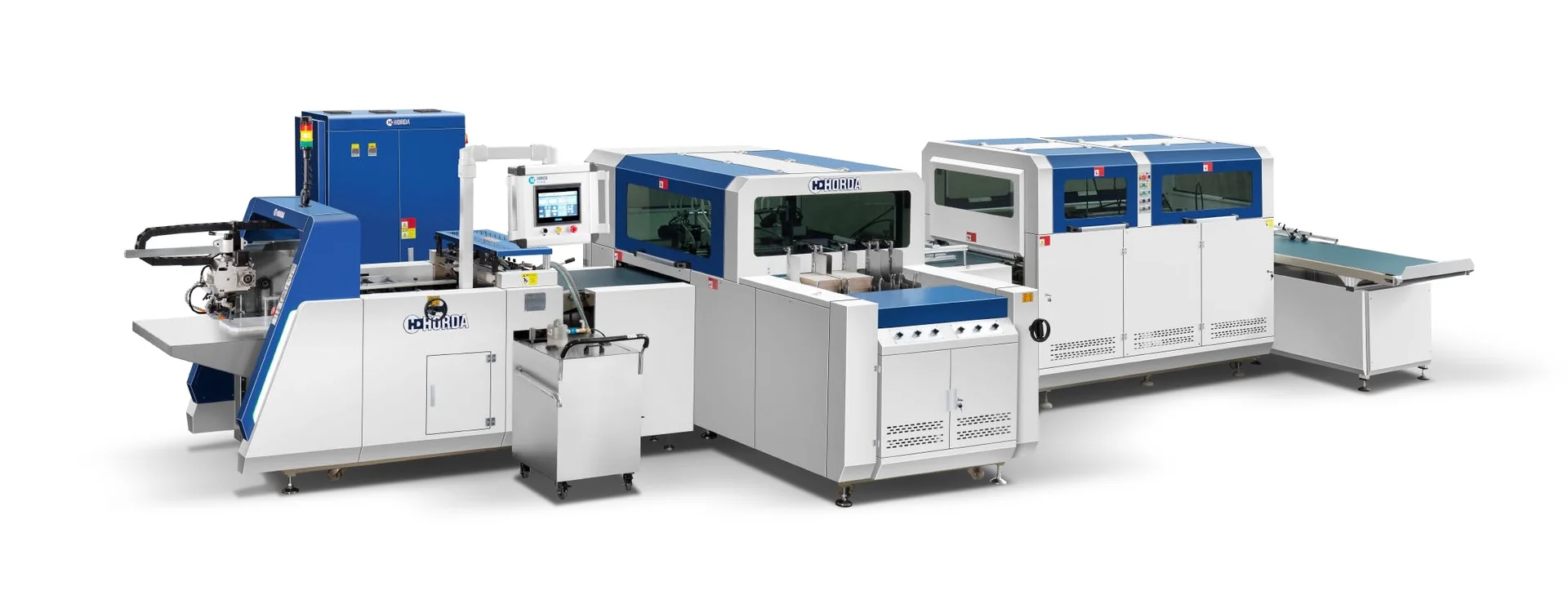
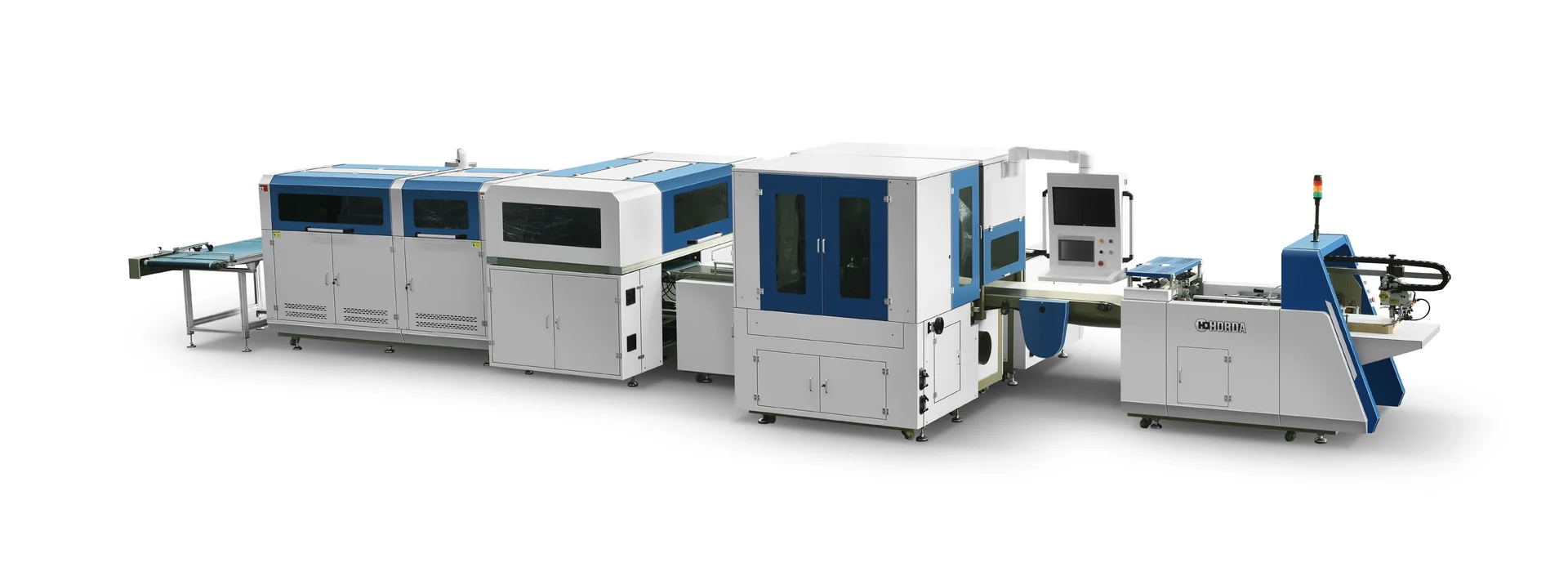
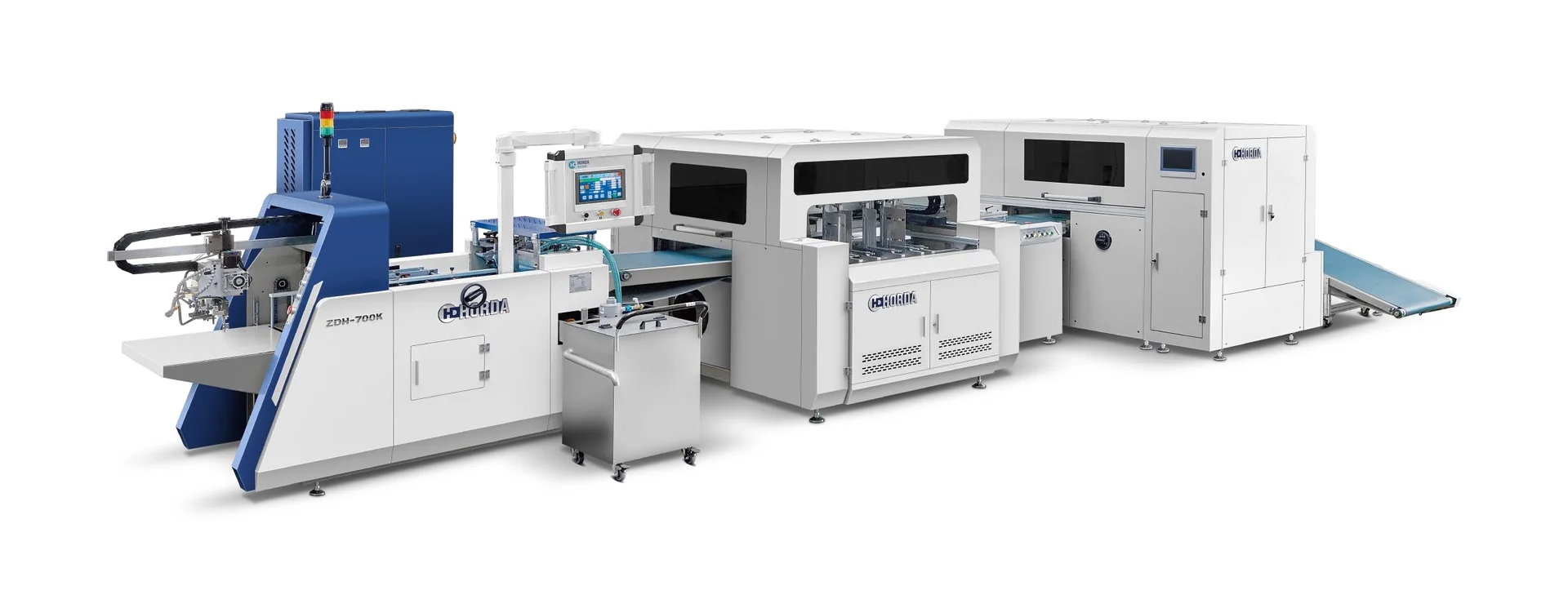
This matters when purchasing automatic case-making machines, inner-laminating equipment, collapsible-box machinery or integrated packaging lines. Equipment may be shipped in multiple crates or modules, with separate requirements for loading, securing, inland transportation, customs clearance and unloading at the destination factory. An Incoterm allocates important delivery responsibilities, but it does not replace the machinery packing specification, installation agreement or acceptance procedure.
The comparison below uses ICC Incoterms® 2020 and focuses on the questions packaging machinery buyers should resolve before accepting a quotation.
EXW vs FOB vs CIF vs DDP: What Changes in a Machinery Purchase?
The four terms allocate different parts of the shipment to the seller and buyer. Their commercial consequences become clearer when the delivery point, freight payment and customs responsibilities are compared separately.
| Incoterm | Delivery and risk-transfer point | Main international freight | Export / import clearance | Seller cargo insurance obligation |
|---|---|---|---|---|
| EXW — Ex Works | Equipment made available at the named delivery point, normally not loaded onto the collecting vehicle | Buyer arranges and pays | Buyer / Buyer, where applicable | None under the rule |
| FOB — Free On Board | Equipment placed on board the nominated vessel at the shipment port | Buyer arranges and pays | Seller / Buyer | None under the rule |
| CIF — Cost, Insurance and Freight | Equipment placed on board the vessel at the shipment port, although the seller pays carriage to the named destination port | Seller arranges and pays to the named destination port | Seller / Buyer | Seller must obtain the specified cover |
| DDP — Delivered Duty Paid | Equipment placed at the buyer’s disposal at the named destination, import-cleared, on the arriving vehicle ready for unloading | Seller arranges and pays to the named destination | Seller / Seller | None under the rule |
These are default allocations under Incoterms® 2020. A specific sales agreement may add provisions or allocate particular expenses differently, so its delivery clause and transport arrangements must be checked.
The first distinction is how much transportation responsibility the buyer accepts.
Under EXW, the seller makes the equipment available at the agreed location. The buyer generally must organize collection, loading, export formalities where applicable, international transportation and importation. Although EXW can appear attractive because the seller’s quotation excludes many transportation activities, the buyer needs a practical arrangement for those activities.
Under FOB, the seller handles delivery of the equipment on board the buyer-nominated vessel at the agreed shipment port, including export clearance. The buyer normally takes over the main ocean freight arrangements and subsequent importing responsibilities.
Under CIF, the seller arranges and pays for ocean carriage to the named destination port and procures the required cargo insurance. Import clearance and onward delivery generally remain the buyer’s responsibility.
DDP places substantially more delivery and customs responsibility on the seller. The seller must arrange delivery to the named destination and perform the required export and import clearance obligations, including applicable import duties and taxes under the rule, subject to the actual contract and applicable law.
A second distinction is transport mode. EXW and DDP can be used with any mode of transport, including multimodal shipments. FOB and CIF are intended for sea and inland waterway transport. For equipment transported in containers through multiple carriers and terminals, that distinction can affect whether the chosen rule reflects the actual handover.
These allocations describe the trade terms, not a particular supplier’s confirmed service package. The written quotation must still identify exactly which Incoterm is offered and where delivery is to occur.
Why Paying for Freight Is Not the Same as Bearing Shipping Risk
One of the most consequential mistakes in machinery importing is assuming that the party paying transportation charges automatically bears the risk of loss or damage throughout that transportation.
Incoterms separate several related but distinct questions: who must arrange carriage, who pays the carrier, where delivery occurs, and when the risk of accidental loss or damage passes from seller to buyer.
Delivery point versus named destination
Under FOB, the seller delivers when the equipment is on board the nominated vessel at the shipment port. The buyer then bears the transit risk under the rule.
Under CIF, the seller must pay for carriage to the named destination port. Yet delivery and risk transfer still occur when the equipment is on board the vessel at the shipment port.
For example, consider a hypothetical shipment of crated packaging equipment from China to a U.S. seaport under CIF. The supplier arranges the agreed ocean carriage and the required insurance to the destination port. If the equipment is damaged during the ocean voyage after it has been delivered on board, that loss is generally at the buyer’s risk under CIF, even though the seller paid for the sea freight.
The buyer may have rights under the cargo insurance obtained by the seller, depending on the policy terms and the cause of the loss. That is why the risk-transfer rule and the insurance agreement must be reviewed together, rather than treating freight payment as a substitute for either.
By comparison, DDP generally keeps transportation risk with the seller until the equipment is placed at the buyer’s disposal at the named destination, on the arriving means of transport ready for unloading. EXW transfers risk much earlier, when the seller has made the goods available at the agreed place in accordance with the rule.
Freight payment, insurance and risk transfer
CIF also illustrates why insurance responsibility is a separate question from shipping risk.
Under the default CIF provisions of Incoterms® 2020, the seller must obtain cargo insurance meeting the rule’s specified minimum standard, generally equivalent to Institute Cargo Clauses (C), for at least 110% of the contract price. These are minimum insurance requirements, not a guarantee that every type of machinery loss will be compensated.
A policy may exclude particular events, and a claim can depend on evidence of damage, the insured interests, the applicable exclusions and the policy’s claims procedures. Packaging machinery buyers should therefore examine whether the agreed cover addresses the risks associated with the actual route and equipment.
EXW, FOB and DDP do not themselves require the seller to procure cargo insurance. That does not mean insurance is unnecessary or cannot be purchased. It means the parties should decide separately who arranges it and what coverage is required.
Incoterms also do not determine when legal ownership of the equipment passes. Payment milestones, transfer of title, warranty obligations and remedies for breach belong in the sales contract or other applicable agreements.
For procurement purposes, the practical distinction is straightforward: a freight invoice tells you who pays for transportation; the delivery rule tells you when the contractual shipping risk transfers. Neither automatically confirms who will bear every eventual financial loss.
Which Incoterm Fits Your Transport Route and Import Responsibilities?
The appropriate term depends on the actual handover arrangement and the ability of each party to perform the obligations assigned to it.
A buyer should consider the transport mode, the point at which a carrier takes possession of the equipment, and who can complete export and import procedures before choosing the delivery term.
Check transport-mode suitability before selecting FOB or CIF
FOB and CIF are sea and inland waterway rules that use on-board vessel delivery as the relevant event.
That can create a mismatch when machinery is packed into containers and delivered to a container terminal before being loaded onto a vessel. The seller may physically hand the container to a terminal operator or carrier well before the on-board delivery event described by FOB or CIF. For a container shipment described as FOB, ask who controls the cargo and bears the risk between terminal receipt and actual on-board delivery; the terminal gate is not automatically the FOB delivery point.
In such circumstances, ICC guidance recommends examining alternatives such as FCA for arrangements where the buyer organizes main carriage, or CIP when the seller is responsible for carriage and insurance under the applicable multimodal rule.
FCA may also resolve a practical weakness of EXW. When delivery occurs at the seller’s premises under FCA, the seller is responsible for loading the goods onto the buyer’s collecting vehicle and for export clearance where required. Under EXW, those responsibilities ordinarily belong to the buyer.
That difference matters when a heavy or crated packaging machine must be loaded using equipment or personnel controlled by the seller’s facility.
There is no reason to choose a trade term solely because it is familiar to the purchasing department. The term should describe the handover the parties can actually perform and document.
Evaluate importer capability before requesting DDP
DDP may initially appear convenient for an overseas machinery buyer because the seller assumes responsibility for transporting the goods to the named destination and clearing them for import.
However, its feasibility depends on whether the seller can lawfully and practically perform the import obligations in the destination country.
For machinery entering the United States, U.S. Customs and Border Protection requirements apply to customs entry, identification of the importer of record, classification, valuation, duties and other import compliance matters.
The commercial designation DDP does not automatically establish that an overseas seller is the legally recognized importer of record or has the necessary broker, bond and customs arrangements. A non-U.S. seller may be able to act as importer of record under applicable conditions, but those conditions must be verified for the transaction.
Before accepting DDP, the buyer should obtain written confirmation of who will serve as importer of record, who has authority to instruct the customs broker, how duties and applicable taxes will be handled, and what happens if import clearance encounters a problem.
If the buyer is to handle import clearance but the seller is expected to arrange transportation to a named destination, DAP may be a more suitable term to examine. Under DAP, the seller delivers to the agreed destination ready for unloading, while import clearance generally remains the buyer’s responsibility.
The choice between DDP and DAP therefore depends not just on convenience but on the actual importing structure.
Incoterms cannot replace applicable customs law or establish regulatory eligibility. For a specific shipment, the final arrangement must be checked against the destination’s requirements and confirmed by the relevant importer and customs professionals.
How to Compare EXW, FOB, CIF and DDP Quotations on the Same Basis
A machinery quotation stated as EXW at the supplier’s factory cannot be compared directly with a CIF destination-port quotation or a DDP destination-factory quotation.
The quoted amounts represent different service and responsibility boundaries. Without adjusting for those differences, a buyer may select a nominally lower offer while overlooking transportation, clearance and handling costs that still need to be paid.
The comparison should start by establishing the same equipment scope and a common destination milestone.
For example, a procurement team might choose the receiving point at its U.S. factory, with the equipment delivered on the arriving vehicle ready for unloading, as the comparison milestone. That is a calculation boundary, not an assumption that every supplier has offered delivery to that point.
The team can then reconcile each quotation against the additional costs needed to reach the milestone.
| Cost category | What the buyer should obtain or verify |
|---|---|
| Equipment and agreed export packing | Exact machines/modules included, packing specification and any separately charged crates or protection |
| Origin collection and handling | Factory loading, inland trucking, export procedures and origin terminal charges |
| International movement | Main carriage, applicable surcharges, cargo insurance and the agreed carrier route |
| Destination import and terminal activities | Customs broker charges, applicable duties and taxes, terminal handling and possible storage-related charges |
| Inland destination delivery | Transport from the arrival location to the defined receiving point |
| Separately agreed site services | Unloading, rigging, installation or commissioning only if these are expressly included in the chosen comparison scope |
The procurement calculation can be expressed as:
Comparable delivery cost = quoted amount + buyer-payable costs excluded from that quotation + separately agreed costs required to reach the same comparison scope.
The calculation must avoid adding charges already included in the seller’s quotation. For import charges, ask the responsible importer or customs broker to verify the equipment classification, declared value, country of origin and applicable charges for the expected entry date. An Incoterm does not set the tariff classification or the duty rate; leave uncertain amounts as estimates rather than assuming a zero charge.
Consider a hypothetical comparison between two offers for the same packaging machinery configuration:
- Offer A: EXW at the supplier’s factory. The buyer must obtain estimates for the transportation and customs activities needed to move the machine from the pickup point to the selected U.S. destination milestone.
- Offer B: CIF at the U.S. destination port. The seller’s quote includes the specified main carriage and CIF insurance arrangements, but the buyer must still identify import clearance, applicable import charges, port-related expenses and onward inland delivery costs.
The buyer cannot conclude that either offer is less expensive until the missing cost items are estimated on a comparable basis.
A DDP offer may already include many of these expenses, but its quoted scope, import-clearance feasibility and destination handover must still be verified. Charges such as unloading or installation should not be assumed to be included merely because the delivery point is a factory address.
The same discipline applies to uncertainty. If terminal storage, customs examination, detention, demurrage or special handling costs have not been established, they should be documented as estimates, assumptions or potential exposures. An unknown expense should not be assigned a fabricated value simply to complete a spreadsheet.
Cost comparison also does not eliminate risk comparison. Two offers may have similar estimated delivered costs while assigning transit risk, insurance arrangements or customs responsibilities differently.
A useful procurement worksheet should therefore keep estimated cost, contractual responsibility and unresolved exposure in separate fields. This makes the comparison reviewable and helps identify which matters need clarification before a purchase order is issued.
Packaging Machinery Delivery Responsibilities Beyond the Incoterm
Packaging machinery has physical transport requirements that cannot be resolved by selecting a trade term alone.
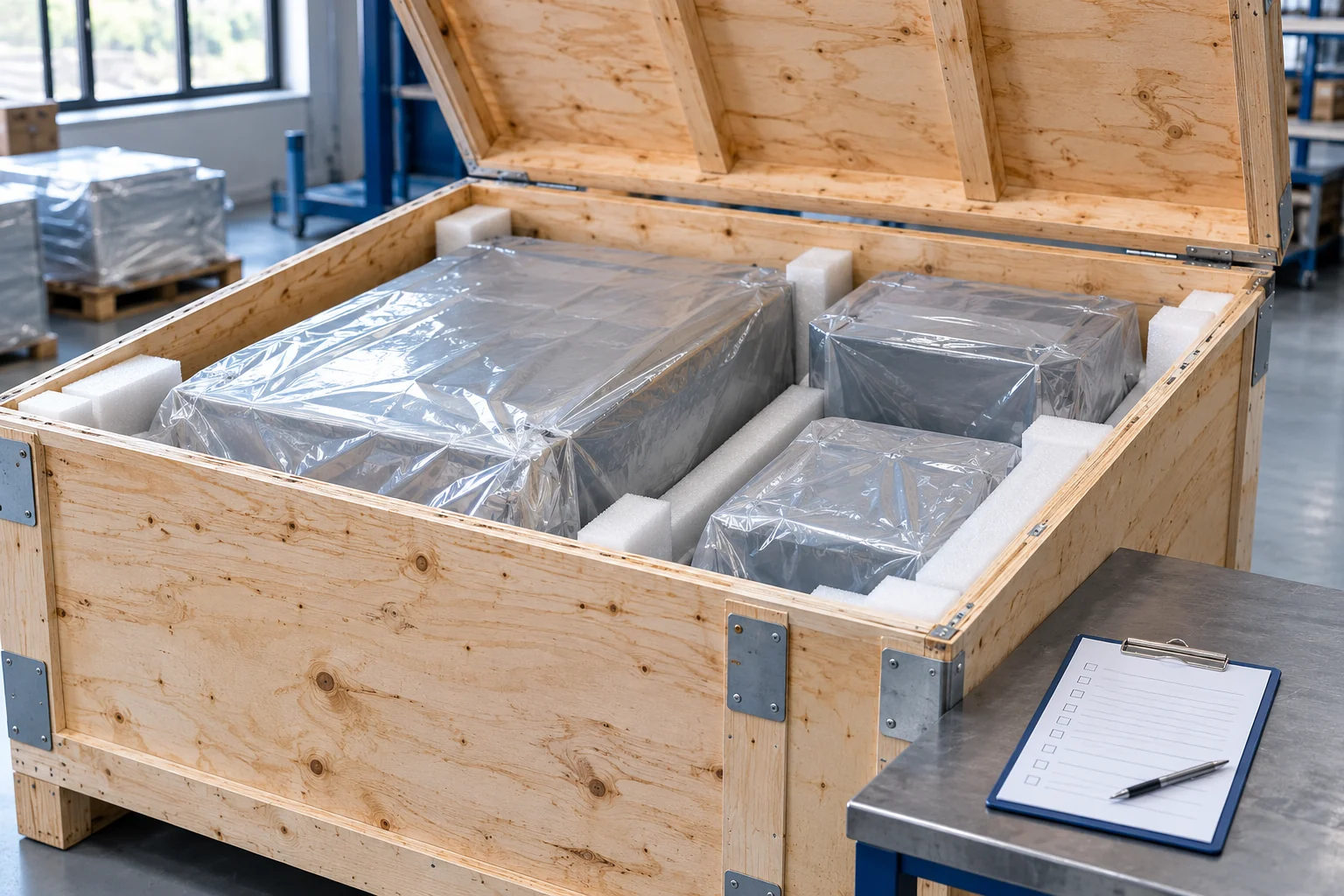
A shipment may contain several machine modules, electrical cabinets, conveyors or separately packed accessories. The exact package count, dimensions, gross masses and lifting arrangements depend on the equipment and the approved shipment configuration.
These details affect the type of transport unit required, how cargo can be handled, and what the destination facility must prepare. General guidance such as the IMO/ILO/UNECE Code of Practice for Packing of Cargo Transport Units explains important considerations for securing and handling cargo, but it does not establish the correct packing method for a specific machine.
Before shipment, the buyer should obtain the approved packing list and any necessary handling information for the actual equipment. These may need to identify package mass, dimensions, lifting points, centre-of-gravity considerations, transport securing requirements and receiving limitations, as applicable.
Incoterms do allocate certain ordinary packing and checking obligations. They do not, by themselves, provide a complete technical specification for export crates, corrosion or moisture protection, specialist lifting methods or destination rigging equipment.
The loading boundary also matters. With EXW, the buyer may bear the practical responsibility for loading the collecting vehicle unless the parties make another agreement. If machinery cannot be safely collected without the seller’s equipment or personnel, that issue should be resolved explicitly rather than left to an assumption about factory collection.
At the destination, delivery and unloading must be distinguished. Even under DDP, the default delivery point is generally the named destination with the equipment on the arriving vehicle ready for unloading. DDP does not automatically make the seller responsible for providing a forklift, crane, rigging team or production-floor positioning service. If unloading charges are already for the seller’s account under its contract of carriage, the default DDP cost allocation does not allow the seller to charge the buyer again for those same charges unless otherwise agreed.
Those activities need to be assigned separately, including the equipment required, available site access, unloading conditions, responsible personnel and associated charges.
The same separation applies to factory acceptance testing (FAT), site acceptance testing (SAT), installation and commissioning.
FAT may be an agreed inspection or acceptance activity before shipment, while SAT and commissioning may occur after the equipment reaches the buyer’s facility. Their scope, timing, documentation and acceptance criteria must come from the purchase contract and technical agreements, not from an assumed meaning of FOB, CIF or DDP.
For a HORDA-manufactured case-making or box-production machine, these responsibilities should be confirmed against the selected configuration and actual project documents. No general Incoterm establishes a particular manufacturer’s packing method, installation service or acceptance performance.
Common Incoterms Mistakes That Cause Unexpected Costs or Disputes
Several avoidable problems arise when the trade term is treated as a complete shipping agreement rather than one part of the equipment purchase contract.
| Common mistake | Why it matters | What to verify before ordering |
|---|---|---|
| Writing only “FOB” or “CIF” without a specific named port or place | The handover or freight destination may be insufficiently defined | Complete term, exact named location and Incoterms® edition |
| Using FOB or CIF for a shipment handed to a container terminal before loading | The agreed handover may not match the rule’s on-board delivery event | Actual carrier handover and suitability of FCA/CIP |
| Assuming CIF means the seller bears risk until the destination port | CIF freight payment and risk transfer occur under different rules | Shipment-port risk point and insurance policy |
| Treating EXW as an agreement that the seller will load the machine and clear it for export | Required loading and export arrangements may be missing | Collection equipment, loader responsibility and whether FCA is more suitable |
| Assuming DDP automatically includes factory unloading and installation | Delivery readiness and site services are different contractual responsibilities | Unloading, rigging, placement and commissioning scope |
| Selecting DDP without verifying U.S. importing arrangements | Customs obligations may not be executable as assumed | Importer of record, broker authority, duties and clearance process |
| Assuming every cargo insurance policy covers all equipment damage | Coverage, exclusions and claims procedures differ | Required insurance scope, insured value, beneficiary and claims documents |
A recurring source of misunderstanding is an incomplete named delivery point. “DDP USA” does not identify a sufficiently precise destination for a machinery delivery plan. “CIF destination port” without naming that port leaves a critical commercial detail unresolved.
The parties should also avoid using the trade term as a substitute for shipment documents. A commercial invoice, packing list, transport document and relevant insurance or customs documents serve different purposes. They should remain consistent with the contract’s delivery arrangement.
Unexpected charges can also arise when the transport contract and the equipment sales contract assign activities differently. For example, the carrier’s unloading service or terminal handling charges may already be part of a freight agreement, or they may be charged separately.
The buyer should check the actual transport quotation before assuming an expense belongs to one side or the other. The objective is not to make every possible contingency the seller’s responsibility, but to eliminate unclear interfaces that neither party has priced or arranged.
Machinery RFQ Checklist: What to Confirm in Writing
Before comparing international packaging machinery offers, ask suppliers to state the proposed trade term and its practical delivery scope alongside the equipment quotation. For example, “CIF Port of Los Angeles, Incoterms® 2020” names the freight destination; under CIF, the risk-transfer point remains on board at the shipment port. This is an illustrative term format, not a Raymon Machinery delivery offer.
Use the following machinery Incoterms buyer checklist as a written RFQ or purchase-order review:
- Identify the equipment and shipment scope. Specify the selected equipment, included modules and accessories, expected package count, packing specification and available gross-weight/dimension data.
- State the full Incoterm. Record the three-letter rule, the precise named place or port, and “Incoterms® 2020.” For FOB, identify the shipment port; for CIF, identify the destination port.
- Confirm the physical handover. Identify where the seller completes delivery, when risk transfers, how the carrier receives the cargo and who performs factory loading or port handover.
- Separate included and excluded transport charges. Request clear treatment of origin handling, international freight, terminal fees, destination transport and any special cargo-handling costs.
- Confirm customs responsibilities. State which party completes export clearance, who will be importer of record in the destination country, who instructs the broker and who pays applicable duties, taxes and customs charges.
- Document insurance arrangements. Identify who procures coverage, the insured amount and terms, exclusions, claims documentation and any additional cover required by the buyer.
- Confirm delivery and unloading at the destination. Establish the receiving address, unloading boundary, handling equipment, rigging provider, site-access constraints and personnel responsibilities.
- Separate installation and acceptance services. Define FAT, SAT, installation, commissioning and training, if any, under the appropriate technical and commercial agreements rather than assuming they follow from the Incoterm.
- Reconcile the quotation before ordering. Compare all offers against the same equipment scope and delivery milestone, document unresolved charges, and obtain written clarification of any differences.
A concise RFQ instruction can help prevent ambiguity:
Please quote the proposed packaging machinery shipment using the specified Incoterms® 2020 rule and exact named delivery place. Identify all transportation, packing, loading, insurance, customs and destination charges included or excluded. Confirm the intended importer-of-record arrangement and separately state responsibilities for unloading, rigging, installation and equipment acceptance.
The requested information should be checked against the final sales contract and shipment documents. An RFQ response is useful for comparison, but responsibilities become commercially operative through the actual agreed contractual terms, subject to applicable law.
For U.S. import transactions in particular, the importing arrangement must comply with CBP requirements regardless of which Incoterm the parties select. The relevant customs broker and responsible importer should confirm transaction-specific requirements before shipment.
The final decision should bring three elements into agreement: a suitable Incoterm for the actual transport route, a comparable delivered-cost basis and a clear written division of responsibilities.
For buyers evaluating case-making, inner-laminating or collapsible-box machinery, Raymon Machinery provides an equipment inquiry and quotation channel for discussing a proposed purchase. Include the equipment scope, destination, preferred Incoterm and known shipment-handling requirements when making an inquiry. Actual delivery terms, included services and commercial obligations must be established in the written quotation or purchase agreement.