
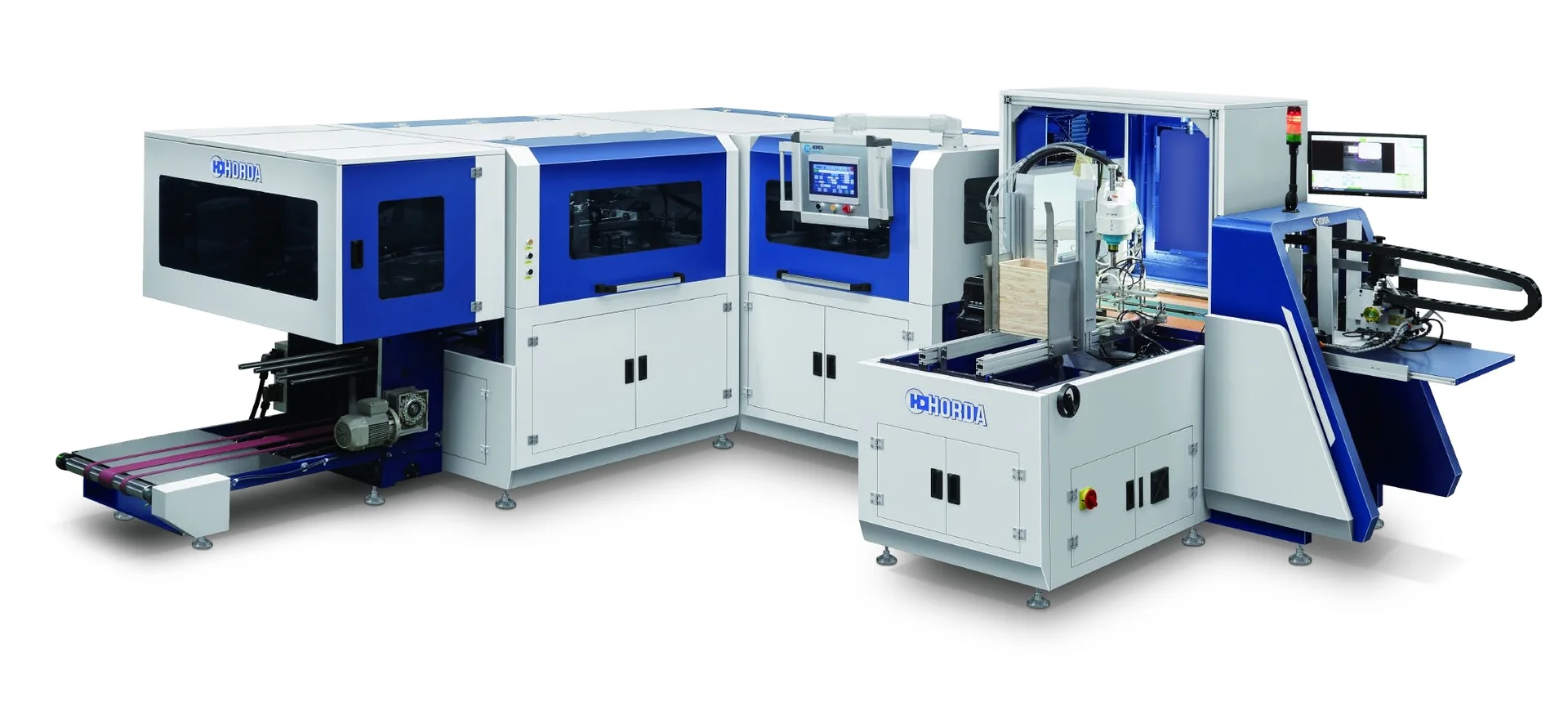
Before buying equipment for bracelet box production, prepare a representative sample trial that tests the actual box structure, materials, required machine operation, and agreed quality criteria. The checklist should cover production drawings, paperboard and covering materials, adhesives where applicable, sample appearance, dimensional inspection, repeatability, accepted output, and unresolved process issues.
One attractive sample is not enough to approve a machine purchase. A useful trial should show what the proposed equipment configuration can produce consistently under documented conditions. It should also distinguish the machine’s own output from later operations such as rigid-box assembly, insert fitting, and final product packing.
The objective is to leave the trial with evidence that supports a purchasing decision—not simply a collection of samples that look satisfactory.
Define What the Bracelet Box Machine Trial Must Prove
The first question is not how fast the machine operates. It is what the machine is expected to make.
Bracelet presentation boxes vary in construction. Depending on the design, a finished package may include a wrapped outer case, a formed rigid tray, an inner lining, a fitted jewelry insert, and separate closing or assembly components. These features do not necessarily belong to the same manufacturing operation.
A machine trial becomes misleading when the buyer evaluates a finished box without identifying which parts were actually produced by the equipment being considered.
Identify the Box Structure and Required Output
Start with the approved packaging drawing and, where available, a physical reference sample. Identify the finished dimensions, required components, covering materials, decorative details, and the stages needed to reach the final product.
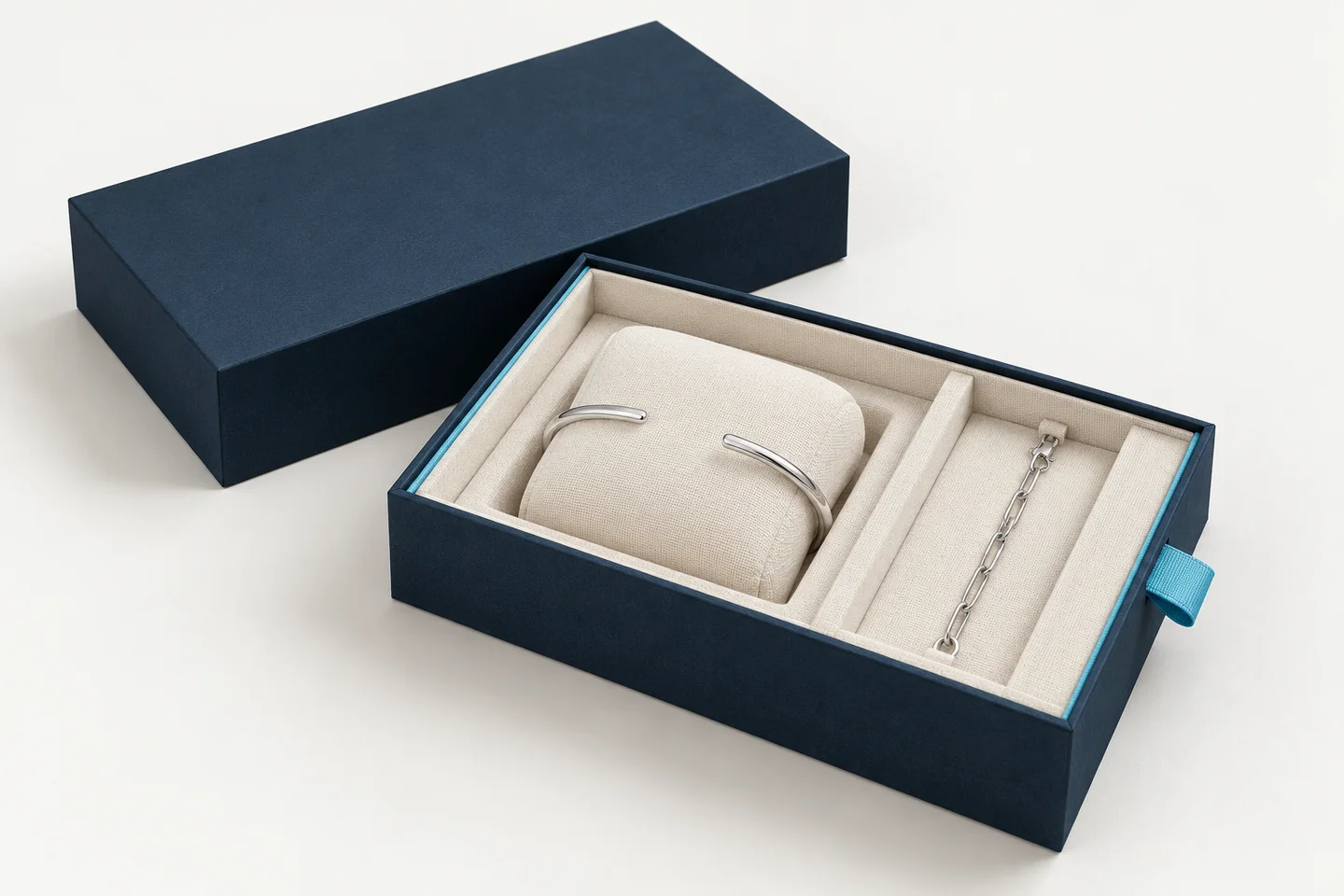
Then establish the precise output expected from the proposed machine.
For example, if the equipment is being evaluated for wrapped case production, the relevant sample may be the completed outer case rather than a fully assembled bracelet presentation box. If inner lining is also within the proposed configuration, the trial should identify that operation separately. If the box design requires a formed tray or a specialized insert, the production route for those parts must be reviewed independently unless the proposed equipment configuration explicitly includes them.
This distinction matters because the quality of a completed bracelet box depends on the combined performance of its components. A correctly wrapped case can still be paired with a poorly fitting insert, while an attractive finished presentation box does not establish that every component was produced by the machine under evaluation.
The trial objective should therefore describe a specific deliverable, such as producing the required wrapped case from nominated materials in accordance with an agreed drawing and inspection specification.
Separate Case Making, Box Forming, Lining, and Final Assembly
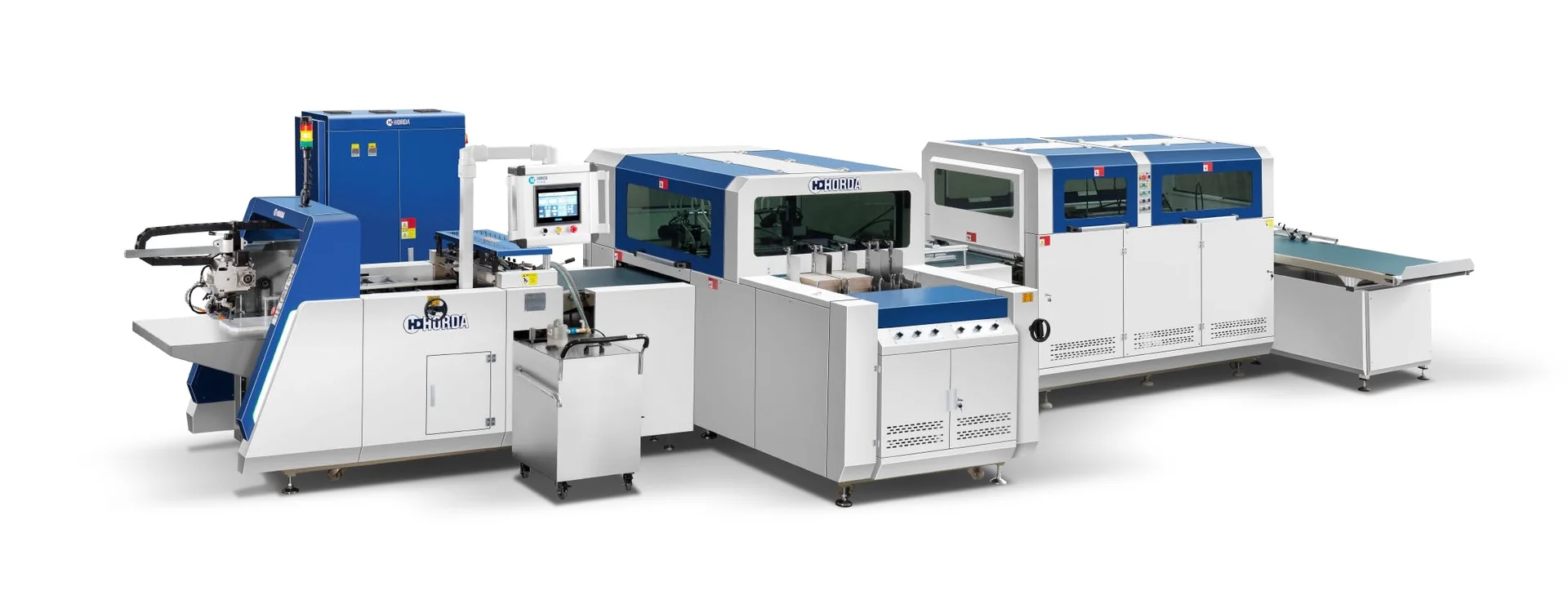
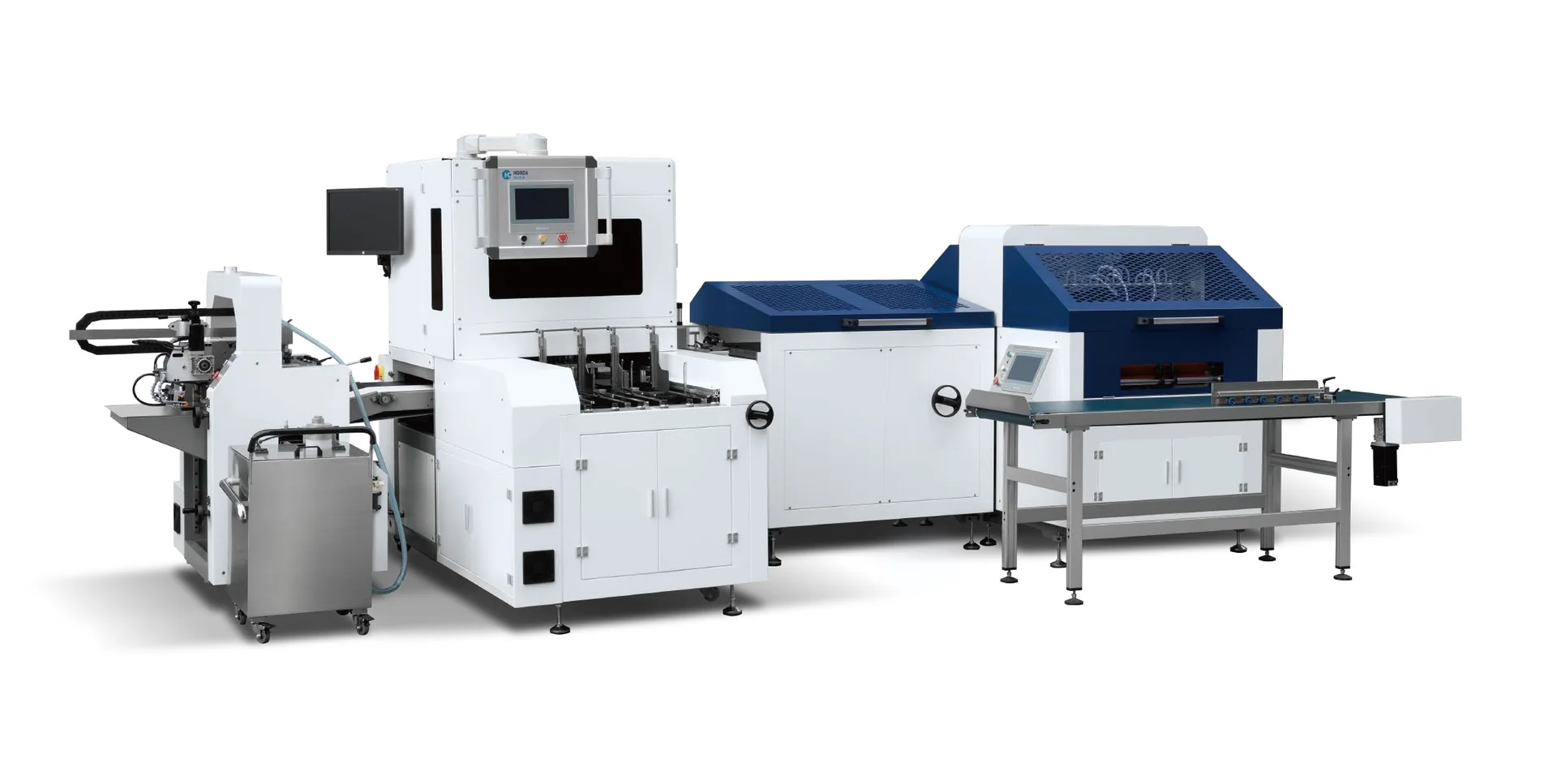
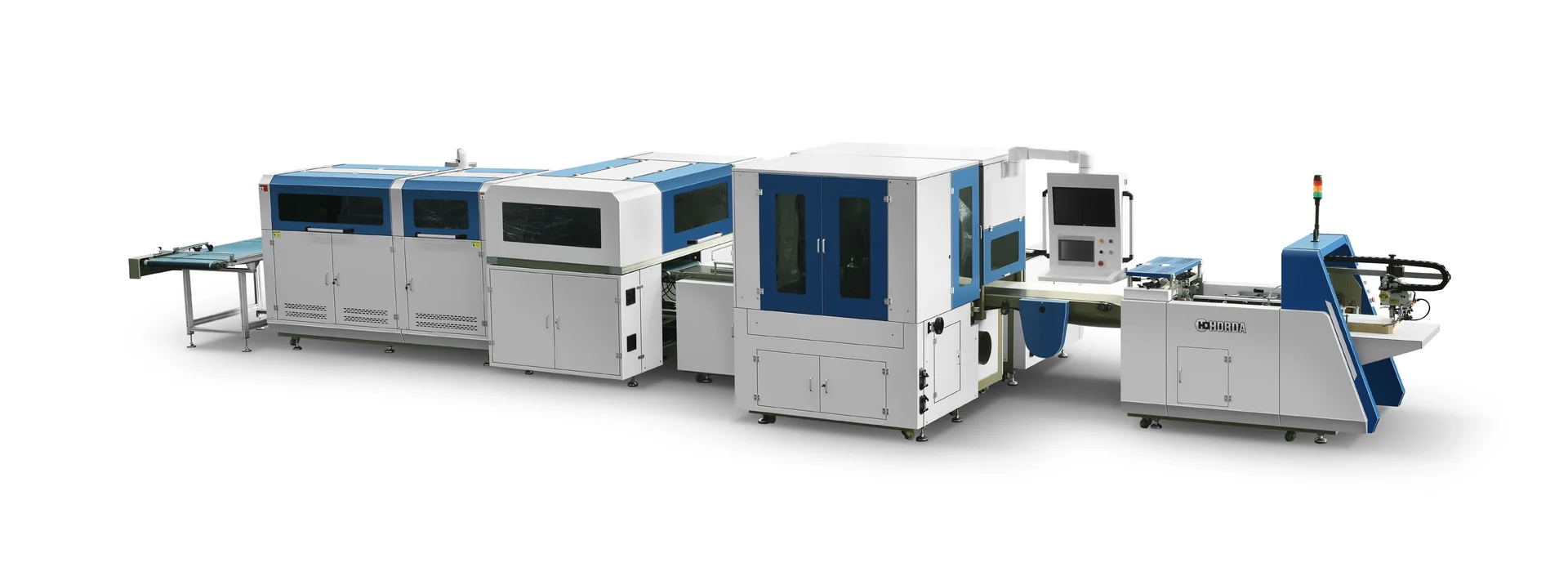
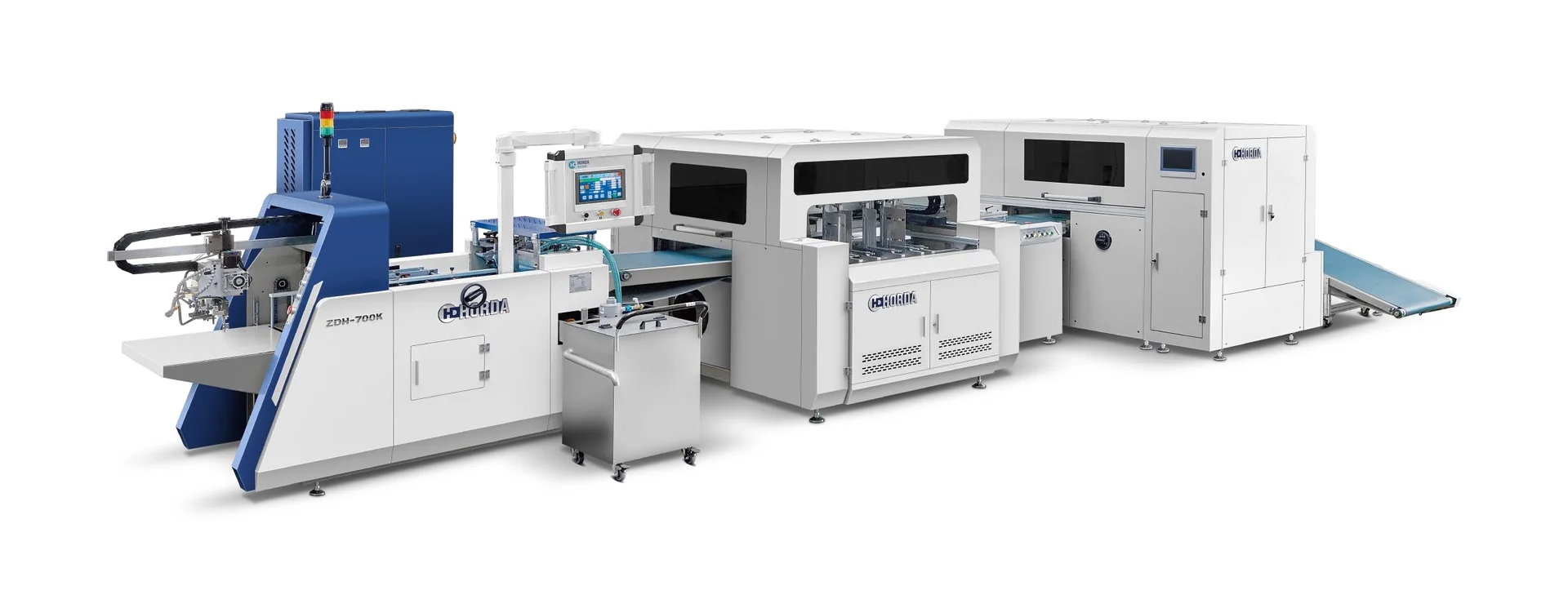
The HORDA equipment catalogue describes automatic case-making machines, inner-laminating equipment, rigid-box production operations, and book-type box assembly as distinct parts of packaging production. It also describes certain linked case-making and inner-laminating configurations. These descriptions establish process categories, not universal compatibility with every bracelet box design.
Before testing, confirm whether the selected equipment configuration is intended to perform:
- Board and covering-paper feeding, positioning, gluing, and edge wrapping.
- Inner-paper feeding, positioning, and laminating.
- Another defined forming or assembly operation specified in the machine configuration.
The actual scope should be established from the selected machine documentation, not inferred from the appearance of a completed packaging sample.
Also identify what happens before and after the machine. Incoming boards, covering sheets, adhesive preparation, component transfer, and subsequent box assembly may affect the final result even when they are outside the tested equipment’s responsibility.
With the process boundary established, the buyer can prepare samples that genuinely test the intended operation.
Prepare Representative Samples, Materials, and Drawings
The value of a bracelet box trial depends heavily on what goes into the machine. A demonstration using convenient test materials may show that a mechanism operates, but it may not show how the same configuration will behave with the buyer’s planned production materials.
Paperboard properties, covering-paper construction, surface finish, and adhesive conditions can influence feeding, positioning, folding, wrapping, and bonding. The interaction between these variables is particularly important when the required product has tight visual expectations around edges, corners, and decorative surfaces.
Document Dimensions, Structure, and Reference Samples
Prepare a sample package that connects the finished box requirement to the machine input.
| Trial input | What the buyer should prepare | Why it matters |
|---|---|---|
| Box structure | Approved drawings and reference samples identifying the required components | Establishes which output the trial must verify |
| Dimensions | Finished dimensions, relevant flat dimensions, critical positions, and drawing revision | Provides the basis for setup and dimensional inspection |
| Board material | Specified board grade, thickness (mm), and relevant material characteristics | Helps evaluate feeding, positioning, and forming behavior |
| Covering material | Actual covering material, including paper basis weight (g/m²) where applicable, material thickness or construction, and surface finish | Makes the trial relevant to the required appearance and wrapping operation |
| Adhesive | Specified adhesive information, where adhesive application is part of the tested process | Helps determine whether bonding behavior is being evaluated under relevant conditions |
| Reference quality | Approved appearance sample and agreed acceptance characteristics | Provides a consistent inspection basis |
| Product variants | Representative sizes, materials, and finishes from the planned job mix | Helps determine whether additional trials or adjustments are necessary |
| Production requirement | Required accepted output and intended operating conditions | Connects sample quality with the intended purchasing decision |
A physical reference sample is especially useful when an appearance requirement is difficult to describe through dimensions alone. However, the reference should be accompanied by a clear understanding of which characteristics are mandatory and which visual differences are acceptable.
Where the equipment processes flat case materials, provide the required flat layout and board-component arrangement rather than relying only on the dimensions of the assembled box.
Include Material and Surface-Finish Variations That Matter
Two coverings with similar nominal weight may not behave identically during processing. Surface treatment, stiffness, thickness, and the interaction with the selected adhesive can affect the trial result.
Paperboard converting guidance from Holmen identifies material choice, tool settings, moisture condition, and fiber direction as relevant factors in cutting and creasing. This does not establish one universally preferred fiber orientation for every bracelet box operation. The practical approach is to record the material orientation and evaluate the intended production construction.
Surface characteristics also deserve attention. A decorative covering may show scuffing or adhesive marks differently from a plain sheet. Bonding results can depend on the actual surface and adhesive combination, so a successful demonstration using a substitute covering should not automatically be treated as approval of the production material.
For projects with several bracelet box sizes or finishes, select trial variants according to the decisions they need to resolve. A format that is straightforward to set up does not necessarily represent another format with different dimensions or material behavior.
There is no universal sample quantity that proves suitability for every machine and box construction. The buyer and equipment provider should agree on enough representative material and testing coverage to investigate the important configurations and quality risks.
This preparation gives the subsequent inspection criteria practical meaning: the trial is now evaluating the product the buyer intends to manufacture, rather than an unrelated demonstration sample.
Agree on Sample Acceptance Criteria Before Running the Machine
Sample approval is difficult when the buyer and equipment provider use different definitions of acceptable quality.
One person may concentrate on the overall appearance of the bracelet box, while another evaluates the alignment of the covering paper or the completeness of edge wrapping. Both observations may be valid, but neither is sufficient unless the criteria have been established for the output under examination.
Agreeing on the inspection method before the trial reduces the risk of accepting a sample for its appearance and discovering later that a critical dimensional or process requirement was never checked.
Define Appearance and Dimensional Acceptance
The relevant criteria depend on the box design and the machine operation. A wrapped outer case may require inspection of its dimensions, covering-paper alignment, corners, wrapped edges, adhesive marks, and visible surface condition.
An inner-laminating operation introduces its own registration and bonding requirements. A downstream rigid tray or insert may have separate dimensional and fit criteria that should not be treated as direct measures of the case maker’s performance.
The acceptance record should connect each criterion to an inspection method and an agreed basis for judgment.
| Acceptance characteristic | Inspection approach | Acceptance basis |
|---|---|---|
| Critical dimensions | Measure the specified features using an agreed method | Approved drawing and project-defined tolerances |
| Covering-paper registration | Compare relevant covering edges, positions, or reference marks | Agreed positional requirements |
| Edge and corner appearance | Inspect for incomplete wrapping, excessive buildup, or visible irregularities | Approved reference sample and defined appearance criteria |
| Surface condition | Check for scratches, stains, adhesive marks, or other unacceptable damage | Agreed visual quality standard |
| Inner-lining position, if applicable | Compare liner placement and finished condition with the approved design | Specified lining requirements |
| Bonding condition, if applicable | Apply the agreed inspection method to the relevant bonded area | Approved material and process acceptance criteria |
The table identifies what can be checked; it does not assign universal tolerance values or inspection procedures.
A catalogue positioning figure, where available for an exact machine model, is not automatically the acceptance tolerance of the finished bracelet box component. Machine positioning performance and final product quality are related but different measurements, particularly when board dimensions, coverings, adhesive behavior, and other process variables contribute to the finished result.
Likewise, a requirement for a neat corner is not sufficiently defined simply by writing “good appearance” on a trial sheet. The parties should agree on a reference or inspection description that allows the result to be judged consistently.
Separate Individual Sample Quality from Accepted Output
Passing the inspection of one sample establishes only that the particular sample met the specified criteria under the conditions in which it was produced.
It does not establish how frequently acceptable samples are produced during a longer run, how many startup pieces are rejected, or whether the same quality can be maintained after changing a material or format.
For this reason, the trial should classify the output clearly. Accepted pieces, rejected pieces, pieces requiring rework, and incomplete pieces should not be combined into a single count of finished products.
When the buyer requires evidence of production suitability, the same agreed quality criteria should be applied to the units used in the output assessment. Otherwise, a machine may appear to achieve an attractive operating rate without demonstrating the required quantity of usable components.
The distinction between an acceptable sample and accepted production output becomes central during the running trial.
Run the Trial Beyond a Single Successful Setup
A machine may produce a satisfactory sample after careful adjustment. The next question is whether acceptable output continues under the agreed operating conditions.
This does not mean every pre-purchase demonstration must imitate an entire production shift. It means that the trial duration, quantity, product variants, and observation conditions should be chosen to answer the buyer’s actual purchasing questions.
Record Setup, Stable Operation, and Accepted Output
Separate the initial setup from the subsequent production observation.
During setup, adjustments may be needed to establish the required output with the specified materials. Record the machine configuration and relevant material conditions so that the final samples can be associated with the conditions under which they were produced.
During the agreed observation period, record what the machine actually produces. Inspect samples taken according to the agreed sampling plan rather than selecting only the best-looking pieces. Useful records include:
- Machine model and configuration being tested.
- Drawing revision, material identification, and relevant adhesive details.
- Trial format and operating conditions.
- Observation duration and any excluded setup time.
- Total units processed, accepted units, rejected units, and units requiring rework.
- Stoppages, recurring defects, and changes made during the trial.
- Samples retained for inspection and the results of those inspections.
The accepted-output rate can be expressed as:
Accepted output rate = Accepted units ÷ Agreed observation time
The calculation must identify the time basis. A rate calculated only during uninterrupted running cannot be treated as equivalent to a rate that includes startup losses and stoppages.
For an agreed first-pass quality measure:
First-pass yield = Units accepted without rework ÷ Total units processed × 100%
These are general calculation methods, not measured production results for HORDA equipment. Report units accepted on the first pass separately from units accepted after rework, and state whether the observation time includes stoppages. Their usefulness depends on consistent definitions and reliable trial records.
A catalogue-rated speed and the number of accepted components produced during the buyer’s trial should be presented separately. Neither a machine’s nominal operating speed nor a short demonstration establishes the sustained accepted output of a complete bracelet box production line.
Check Format Changes and Representative Material Variants
A trial performed on only one format may leave important production questions unanswered.
If the purchasing requirement involves different bracelet box sizes, covering materials, or decorative finishes, identify which variations warrant separate testing. A change in board dimensions may require a different setup, while another covering material may behave differently during feeding, wrapping, or bonding.
The engineering issue is not merely whether the operator can change a machine setting. It is whether the required sample quality can be re-established for the relevant variant and what evidence is available to support that conclusion.
Record changeover observations when the job mix makes them relevant. Do not assume a changeover time, operator requirement, or configuration capability from a different model or demonstration.
If an important variant cannot be tested, record it as an unresolved requirement rather than treating the tested format as proof of all intended applications.
Inspect Bracelet Box Defects and Identify Their Process Origin
A failed sample can be useful evidence, provided the trial identifies what was observed and what still needs investigation.
The mistake is to treat every defect as confirmation of a specific machine problem. Registration variation, poor wrapping, adhesive marks, or a badly fitting insert can originate from different parts of the production route.
The correct question is where the deviation first becomes observable and which process variables could plausibly explain it.
Check Registration, Wrapping, Corners, and Surface Finish
A registration error may involve the incoming material position, the machine setup, material dimensional variation, or another part of the positioning process. Without checking the inputs and intermediate result, the appearance of the finished sample alone may not identify the cause.
The same reasoning applies to corners. Excessive buildup or incomplete wrapping can be associated with board dimensions, covering allowance, material behavior, or folding conditions. A change in the visible corner does not, by itself, establish which of those variables is responsible.
Adhesive marks and poor bonding require a similarly careful approach. The surface characteristics, adhesive selection, and application conditions can affect the observed result, but the actual cause must be investigated using the materials and process involved.
A useful trial record therefore pairs each symptom with a check that can help distinguish possible causes.
| Observed problem | What may be involved | Useful discriminating check |
|---|---|---|
| Covering-paper misregistration | Input alignment, positioning setup, or material variation | Compare incoming positions and finished placement against the reference |
| Bulging or incomplete corner wrap | Board geometry, covering allowance, folding conditions, or material response | Review component dimensions and examine where the wrapping deviation appears |
| Adhesive marks or weak bonding | Adhesive, surface condition, or application process | Identify the actual materials and inspect the relevant bonding operation |
| Liner displacement | Incoming liner position, transfer, or laminating conditions | Compare the case before and after the lining stage |
| Poor final insert fit | Case, tray, insert dimensions, or subsequent assembly | Measure the separate components and review their fit at the assembly interface |
These are possible investigation paths, not confirmed failure diagnoses for a particular HORDA model.
Operators and inspectors should document defects through approved observation and inspection practices. Internal adjustments, troubleshooting, or interventions that require machine access must follow the manufacturer’s instructions and the appropriate qualified-personnel procedures.
Distinguish Machine-Stage Defects from Downstream Box Assembly Issues
The location of the problem matters for procurement.
Suppose a case-making machine produces a component that meets its agreed dimensional and appearance criteria, but the finished bracelet box does not close or fit together as expected. The buyer should examine the downstream components and their interfaces before concluding that the case maker has failed.
Conversely, a downstream operation cannot be expected to correct an outer case that already falls outside its approved dimensions or wrapping requirements.
This is why intermediate samples and inspection records can be more informative than inspecting only the final assembled package.
For a multi-stage packaging project, retain evidence of the machine-produced output at the point where it leaves the tested operation. That establishes a clearer boundary for discussing whether a deviation originated in the incoming material, the machine process, component transfer, or later assembly.
Convert the Trial Record into a Purchase, Re-Test, or RFQ Decision
The final value of a bracelet box machine trial lies in the decision it supports.
A buyer should be able to identify what the equipment has demonstrated, which requirements remain conditional, and whether the proposed configuration is sufficiently defined to proceed with procurement.
The decision should be based on the agreed criteria and documented test conditions—not on the general impression created by a favorable sample.
Accept the Evidence, Request Re-Testing, or Revise the Configuration
There are several defensible outcomes.
Proceed with procurement review. The tested configuration has produced the required output under the agreed conditions, and the relevant samples and production records meet the agreed criteria. The buyer can carry the demonstrated results into the quotation and contract review without treating them as an unconditional future performance guarantee.
Request a targeted re-test. An important material, finish, format, or quality characteristic remains unverified, or a defect requires investigation. Define what needs to change or be observed before repeating the relevant portion of the trial.
Review the proposed configuration. The required operation appears to fall outside the tested machine’s confirmed scope, or the process route is incomplete. The next step is to review the model, tooling, included operations, or production-line interfaces rather than forcing the existing demonstration to represent an unsuitable configuration.
Hold the purchasing decision for additional evidence. The available samples may look acceptable, but the trial has not established an agreed output requirement, inspection basis, or critical operating condition. The missing evidence should be identified specifically so it can be obtained or addressed in the procurement agreement.
A conditional result is not automatically a rejection. It is a statement that the purchasing decision still depends on a defined verification or contractual action.
Carry Open Conditions into the Quotation and FAT Agreement
Before accepting a quotation or finalizing equipment requirements, preserve the trial record and identify its applicability.
The purchasing file should make clear which machine model and configuration were evaluated, which materials and product variants were tested, which criteria were agreed, what results were observed, and which requirements remain unverified.
Where relevant, the buyer should also confirm the production interfaces and site requirements that cannot be established by inspecting box samples alone. These may include the required machine footprint, electrical and pneumatic utilities, operator access, upstream material presentation, and downstream handling arrangements. Such items must be checked against the exact proposed configuration and project documentation.
A later factory acceptance test may include different or more formal requirements than the initial sample trial. PMMI’s One Voice FAT guidance provides a general framework for agreeing on equipment acceptance expectations, but it does not replace the parties’ actual purchase specification or establish mandatory requirements for a HORDA machine.
The sample-trial record is valuable because it helps define those later expectations. It does not, by itself, establish that every contractual, installation, commissioning, or production requirement has been satisfied.
For equipment manufactured by HORDA and presented through Raymon Machinery, buyers can begin the inquiry process by supplying the bracelet box drawing, relevant physical samples, material specifications, proposed output requirements, and the operations to be evaluated. These inputs provide a clearer basis for discussing a suitable machine configuration and any sample trial that needs to be agreed.
The purchasing decision should follow the evidence. A successful bracelet box trial is one that identifies the verified machine output, demonstrates the required quality under stated conditions, and makes the remaining technical and contractual questions visible before equipment is ordered.