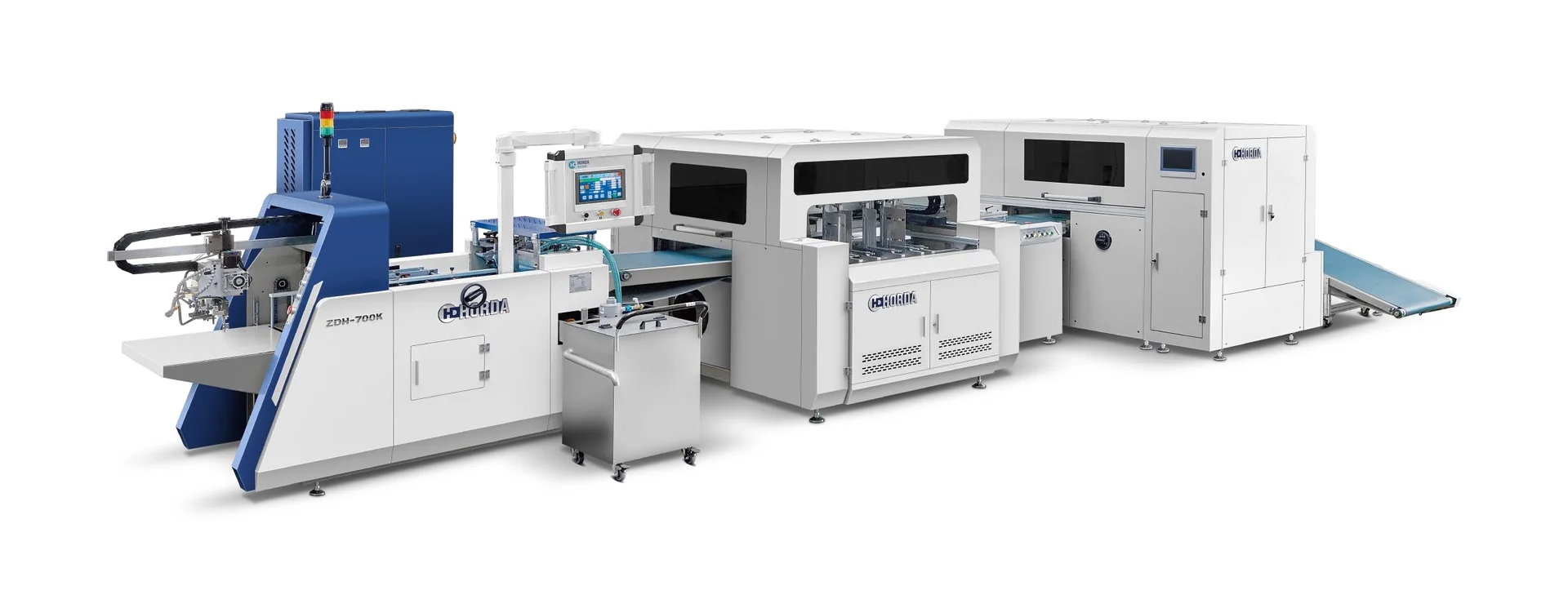
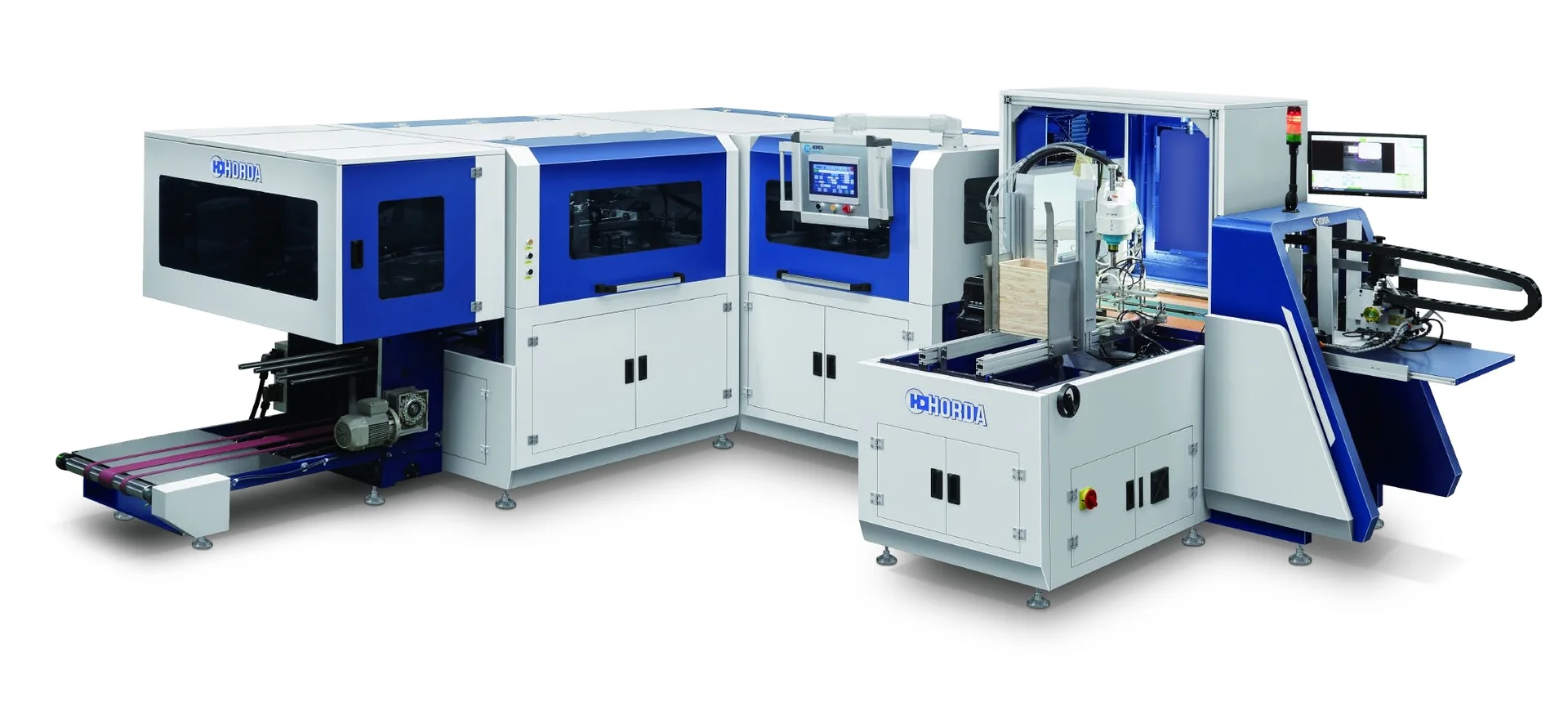
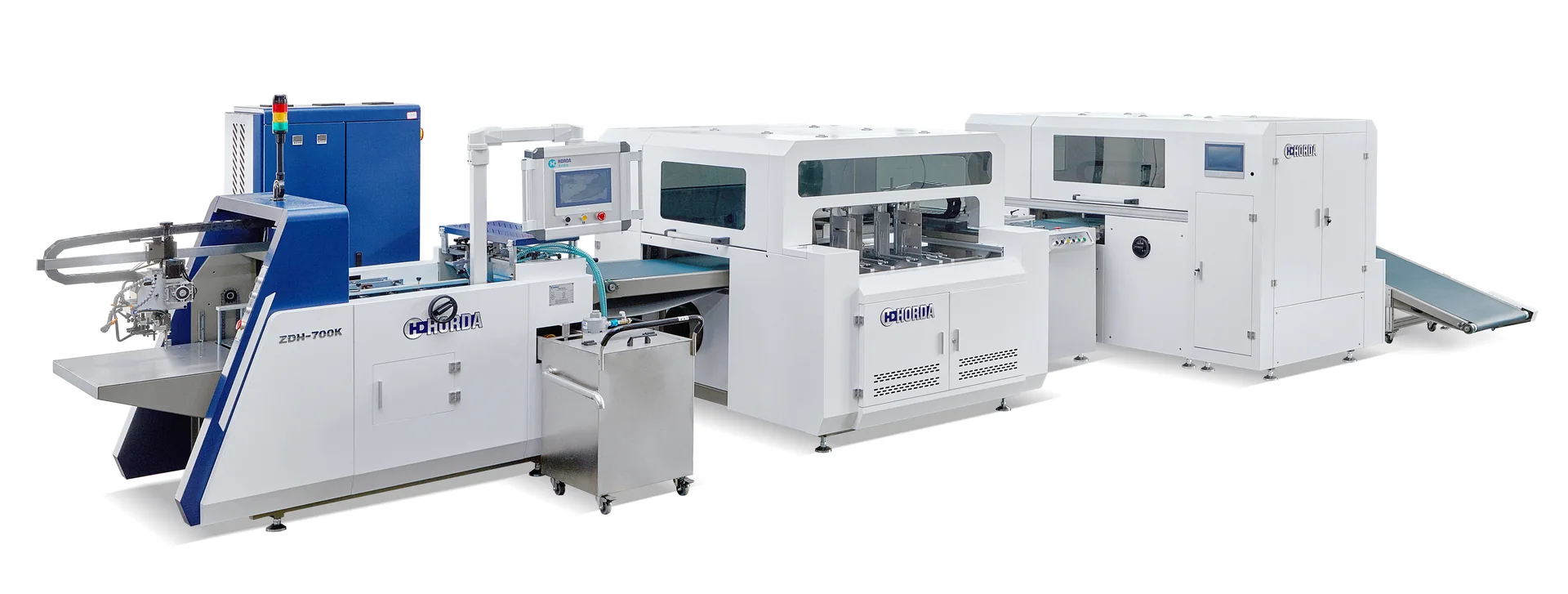
A collapsible box wing machine should be selected against the jobs you actually need to run, not from a model name or headline speed alone. Start by defining whether you need a dedicated wing-making stage or a multifunction machine, then document the flat product geometry, board and covering materials, job mix, quality requirements, required accepted output, and upstream/downstream interfaces. Use those inputs to check the current model specification, verify representative samples under agreed conditions, and make the same assumptions part of the RFQ.
That sequence matters because three numbers that may look similar in a quotation can describe very different things: a published machine specification, a measured result from a particular trial, and the sustained output of acceptable products in a production line. A useful buying process keeps those identities separate.
Define the Wing-Making Job Before You Compare Machines
The first question is not “Which model is faster?” It is what exactly must the quoted machine do?
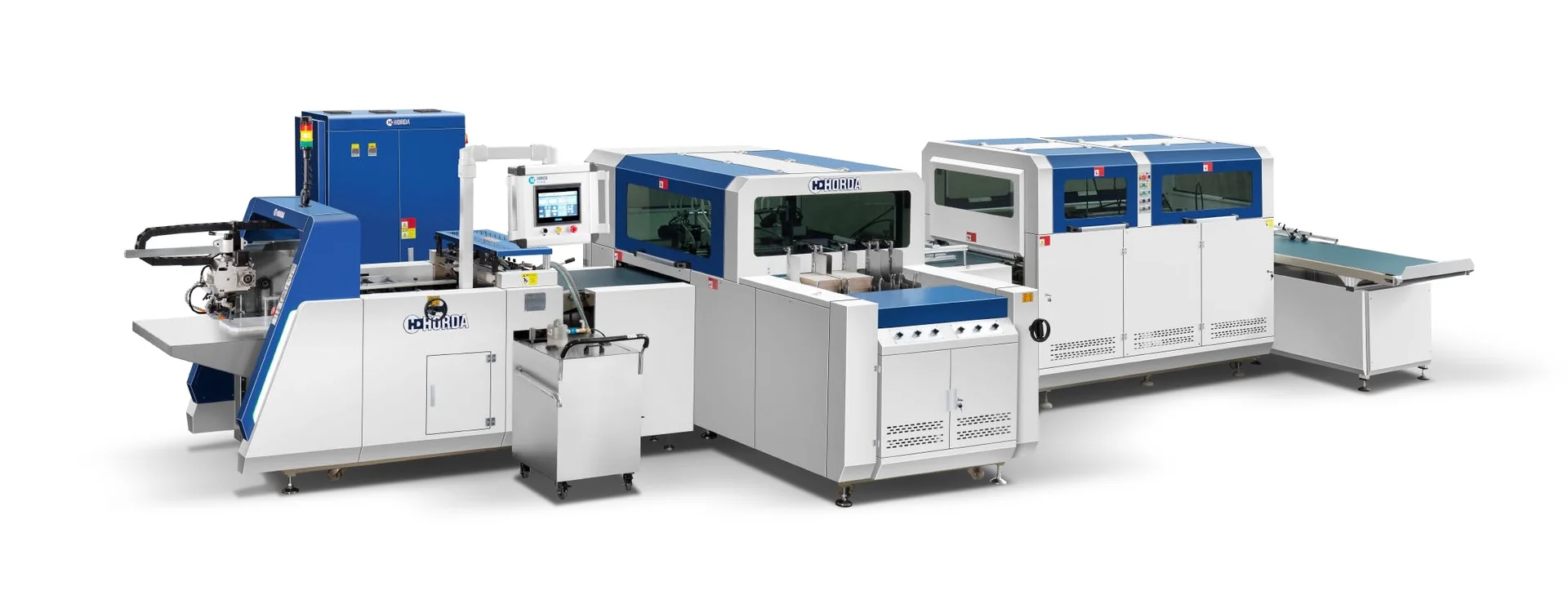
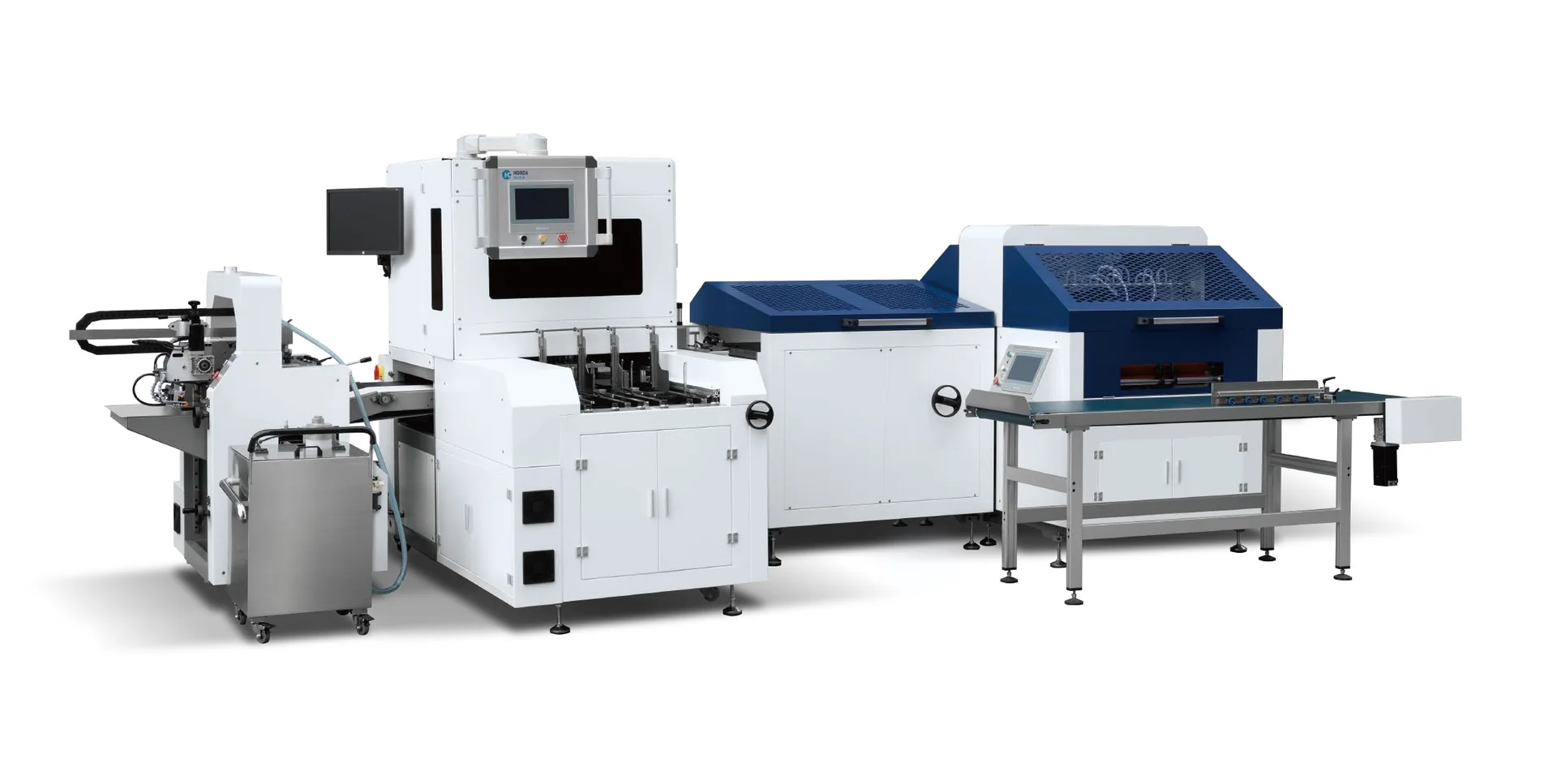
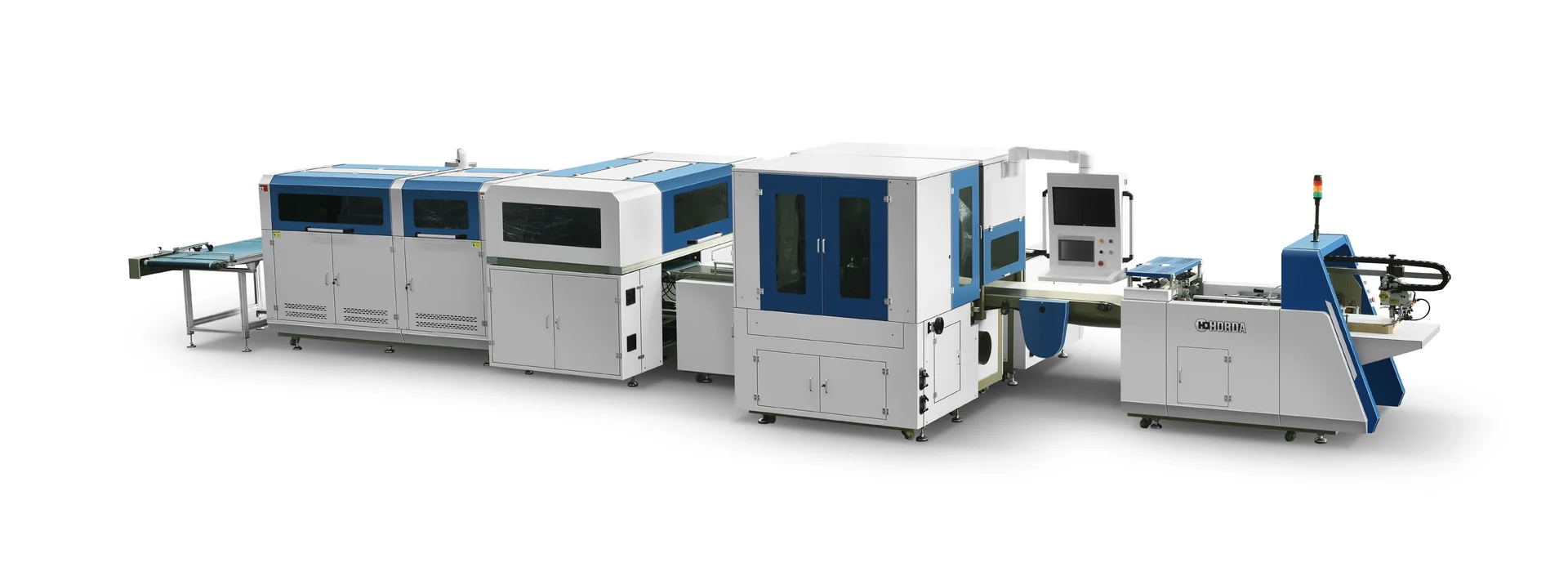
Collapsible-box production can involve several separate operations. HORDA’s published production-line material, for example, shows case making, inner laminating, wing making, forming and locating as distinct stages in the broader route. If your project needs only the wing-making operation, the selection problem is different from a project where the machine is expected to combine wing making with other cover or lining operations.
That distinction also exists within HORDA-manufactured equipment. The supplied catalogue describes the DFM-1000B as a multifunction machine combining case making, collapsible-box wing making and inner lamination. HORDA also presents dedicated wing-making equipment in its ZDH range, with a process that includes paper and board feeding, gluing, positioning/correction, folding and collection. These are different process scopes, so they should not be compared as though the model names represented interchangeable machines.
Before requesting a quotation, describe the process boundary in practical terms:
- What arrives at the machine: individual boards, preassembled components, covered cases, or another defined intermediate product?
- Which operations must the quoted machine perform?
- What condition must the product be in when it leaves the machine?
- Which operations remain upstream or downstream?
- Is the capacity target for this machine only, or for the complete production route?
This prevents a common quotation problem: two suppliers may appear to quote equipment for the same “collapsible box” project while actually including different process stages.
A dedicated wing-making configuration may be the appropriate scope when the rest of the line is already defined. A multifunction configuration may make more sense when the project intentionally combines several operations. Neither conclusion should be drawn from the machine name alone; it depends on the production route that the buyer needs.
Build a Production Envelope from Size, Board, Paper and Job Mix
After the process scope is clear, convert your product range into a production envelope.
A catalogue’s maximum and minimum size fields are only useful when the buyer and manufacturer are using the same dimensional definition. For a collapsible-box wing job, a drawing or flat-layout definition is therefore more useful than a product name such as “gift box” or “cosmetic box.”
For each representative job, record the relevant dimensions in a consistent drawing and identify which dimensions correspond to the boards and wing structure that enter the machine. Then add the material stack: board thickness, side-board thickness where applicable, covering paper, surface condition, and other material information required to reproduce the sample.
Do not test fit with only one convenient SKU if the machine is expected to run a wider job mix. At minimum, the shortlist should be checked against the jobs that actually define the operating envelope:
| Production input | What the buyer should provide | Why it matters to the decision |
|---|---|---|
| Product / wing structure | Flat drawing and finished-product reference | Defines what the machine must form |
| Dimensional range | Representative small, large and typical jobs | Tests whether the quoted working range covers the real mix |
| Main board | Type and thickness used on the submitted sample | Allows the quoted configuration to be checked against the actual substrate |
| Side board / wing board | Dimensions and thickness where applicable | Defines a critical part of the wing structure |
| Covering material | Paper or other covering stock used for the job | Keeps the quotation and sample trial tied to the intended material |
| Surface condition | Relevant finish or treatment on the submitted material | Prevents a trial on materially different stock from being treated as proof of the production job |
| Job mix | Typical SKUs and expected switching pattern | Helps evaluate whether the chosen scope suits the production environment |
| Sample set | Physical material and representative blanks where requested | Gives the supplier a reproducible basis for verification |
The purpose of this table is not to create a universal material-compatibility chart. Published ranges are model- and document-specific, and a numeric board or paper range does not prove that every substrate within that range will run equally well under every finish, glue, geometry and production condition.
This is also where document revision control becomes important. HORDA’s catalogue explicitly notes that machine structures and technical parameters may change and advises users to obtain the latest details. The practical purchasing consequence is simple: the technical sheet attached to the current quotation should be the document used for the actual fit decision.
If an older catalogue and a current quotation show different values, do not average them or choose the more favorable value. Ask which configuration and document revision govern the offer.
Translate Quality Requirements into Machine and Sample Checks
A positioning or accuracy number is not a complete quality specification.
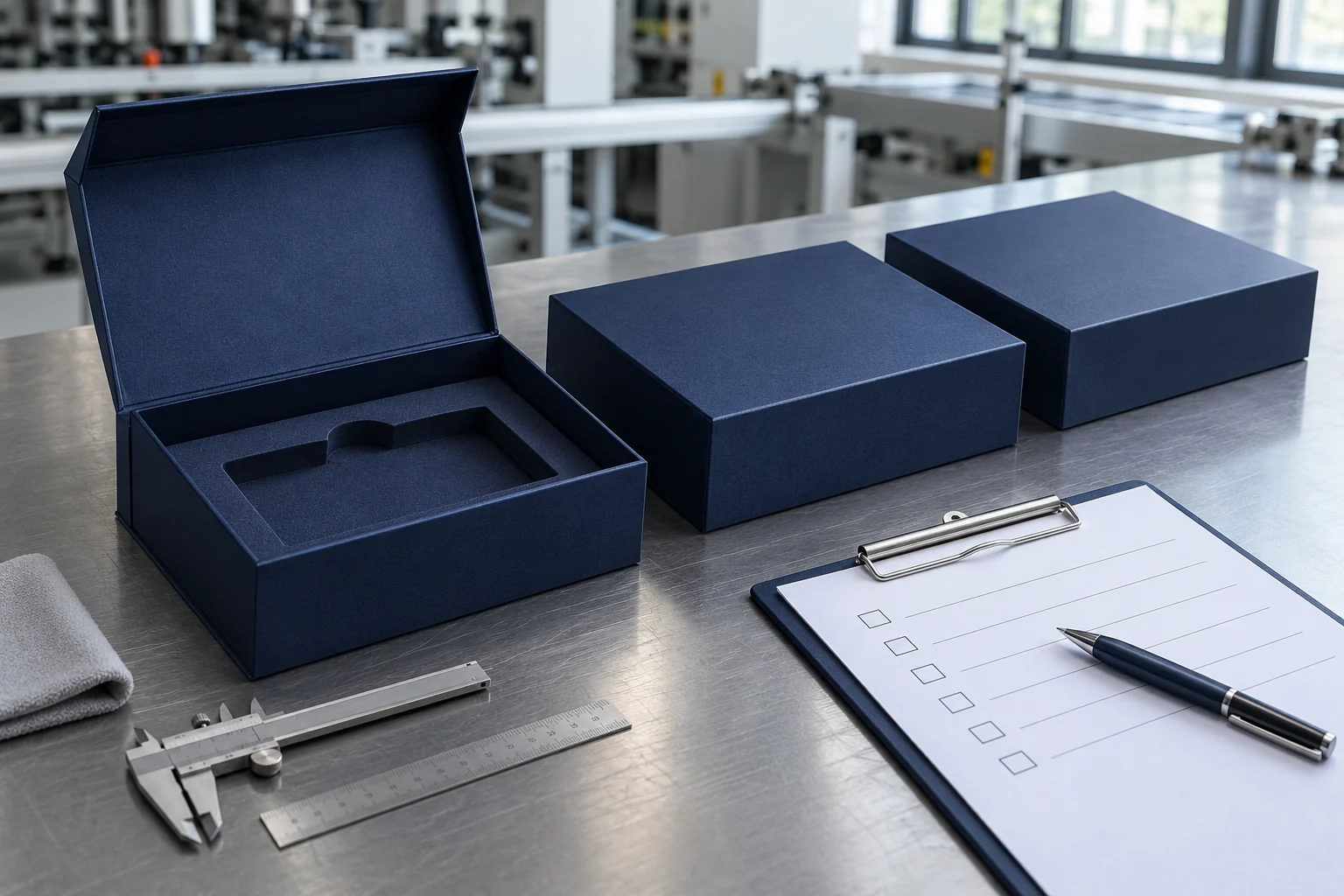
The buyer ultimately accepts a finished wing or box component, not an isolated sensor or positioning system. A machine specification may describe a positioning method or tolerance, but that does not automatically define the finished-product acceptance rule for your job.
Start with the defect or variation that would make the product unacceptable. Depending on the box structure and artwork, that may involve visible registration, alignment of boards and covering material, fold position, consistency between left and right components, surface appearance, or another job-specific feature.
Then turn the requirement into a measurement or inspection method.
Instead of writing “high positioning accuracy required,” define the RFQ input in a form that can later be verified:
- identify the relevant reference edge or artwork feature;
- identify what dimension or offset will be checked;
- define where the measurement is taken;
- provide the representative drawing or approved sample;
- state the project’s acceptance requirement if one already exists.
This creates a direct link between the buying requirement and the later sample trial.
The same discipline should be used when reviewing a supplier’s technical data. If a published accuracy value appears in the model specification, ask what it describes: a positioning subsystem, a machine setting, or a finished-product result under defined conditions. Do not silently convert one into another.
For the HORDA wing-equipment sources reviewed for this article, published positioning descriptions and exact numerical values are not consistent enough across document revisions to justify one universal family-wide accuracy claim. The safe buying practice is therefore to request the positioning method and relevant tolerance for the quoted configuration, then confirm the result on representative samples.
That is more useful than choosing between two machines on the basis of an isolated number whose measurement basis may not be the same.
Evaluate Output as Accepted Production, Not Just Rated Speed
“Pieces per minute” is one of the easiest specifications to misuse in packaging-machinery procurement.
A manufacturer may publish a machine speed in pieces per minute. That is a legitimate specification when its model and document identity are clear. It is not, by itself, proof that your production line will continuously deliver the same number of saleable products per minute.
For buying purposes, separate three questions:
1. What speed is documented for the quoted machine?
This is the manufacturer’s current model specification. Because technical documents can be revised, the value should come from the technical sheet associated with the quotation rather than from an unrelated or older page.
2. What output is demonstrated with your representative job?
This is a sample or trial result. It only has meaning when the job, materials, settings, test conditions and acceptance method are known.
3. What sustained accepted output does your project require?
This is a production requirement. It should count acceptable pieces under an agreed operating basis rather than assume every machine cycle produces a saleable part indefinitely.
The formula is not a HORDA production claim. It is a way to define the metric that you want the trial or FAT to report. The important part is the agreed basis around the calculation.
Record, as relevant:
- the representative SKU and material;
- the agreed trial quantity or duration;
- the quality criteria used to classify accepted pieces;
- stops or interruptions during the agreed run;
- rejected pieces and the reason they were rejected;
- whether feeding and collection conditions reflect the proposed production setup.
Do not invent a universal test duration or reject allowance. Those are project acceptance decisions.
Also keep machine output separate from line throughput. HORDA’s production-route material shows that wing making can sit between other case-making, lining, forming or locating operations. A wing machine’s specification therefore does not prove the throughput of the entire line. Upstream supply, downstream handling and the other operations in the route still have to be checked.
Job mix can change the capacity discussion as well. If a project frequently changes size or structure, the useful question is not just maximum cycle speed; it is how the complete production plan behaves across the intended jobs. Changeover performance should only be quoted where it is documented for the exact machine and conditions. A model-specific claim must not be generalized across all wing-making equipment.
Use Samples and FAT to Verify the Shortlist Under Representative Conditions
Once the shortlist is technically plausible, the next step is evidence.
A sample trial or factory acceptance test should not be treated as a demonstration designed only to show that the machine can make one attractive sample. It should answer the questions that could still change the buying decision.
- Agree what is being tested. Identify the representative product, drawing, boards, covering material and required process scope.
- Agree what will be inspected. Define the dimensional, registration, forming and appearance criteria relevant to the product.
- Agree what output means. State whether the test is recording machine cycles, total pieces, or accepted pieces under the agreed conditions.
- Record operating conditions that matter. Preserve enough information for the result to be understood later.
- Record defects and stops rather than hiding them in an average.
- Compare the result with the RFQ acceptance basis.
The purpose is traceability between requirement and evidence.
If a quotation promises a particular working range, the representative test should include a job that actually exercises the important part of that range. If artwork registration is critical, the sample should make that condition visible and measurable. If accepted output is a purchase criterion, the test record should distinguish accepted product from total machine cycles.
A demonstration and a contractual acceptance test are not automatically the same thing. If the buyer needs a result to become a formal acceptance criterion, the definition, test method and sign-off requirement should be agreed in the quotation, technical agreement or other project document before the test.
That avoids arguments later over a number that each party understood differently.
Practical Sample / FAT Evidence Checklist
- representative product drawing or flat layout;
- actual or agreed-equivalent board and covering material;
- small, large and typical jobs where the production mix requires them;
- quoted machine configuration and technical-document revision;
- positioning / registration item to be inspected;
- finished-product quality criteria relevant to the process;
- agreed definition of accepted output;
- agreed trial quantity or duration;
- record of accepted pieces, rejects and relevant stops;
- upstream input condition;
- downstream hand-off condition;
- configuration or adjustment changes made during the trial;
- agreed evidence to retain, such as samples, measurement records or video where appropriate;
- written identification of any item that still requires project confirmation.
The checklist intentionally does not prescribe universal pass/fail numbers. Those must come from the buyer’s product requirement, agreed manufacturer data and the project acceptance agreement.
Write the RFQ So Suppliers Quote the Same Production Requirement
A technically useful RFQ does more than ask for “one automatic collapsible box wing machine.”
Its job is to keep the assumptions fixed while different configurations are quoted.
If one supplier quotes a dedicated wing-making stage, another quotes a multifunction machine, and a third assumes different board or output conditions, their prices and specifications are not directly comparable even though all three quotations may use similar equipment names.
The RFQ should therefore connect every major selection variable to a written input or confirmation item.
| RFQ item | What to specify or attach | What the supplier should confirm |
|---|---|---|
| Process scope | Required wing-making operation and surrounding process route | Functions included and excluded from the quoted machine |
| Product structure | Drawings / flat layouts / approved samples | Suitability of the offered configuration for those structures |
| Size range | Representative small, large and typical jobs | Current model/configuration range using the same dimensional definitions |
| Board | Type, thickness and sample material | Applicable documented range and any sample-verification requirement |
| Side / wing boards | Relevant size and thickness | Compatibility with the quoted configuration |
| Covering material | Actual paper or specified production material | Applicable documented material range and trial requirement |
| Job mix | Main SKUs and expected change pattern | Required setup/configuration approach; documented changeover information where available |
| Quality requirement | Registration, alignment, folding or appearance criteria | Positioning method and how the requirement can be verified |
| Output target | Required accepted-output basis and shift context | Current rated specification plus proposed demonstration/acceptance method |
| Upstream interface | Condition and delivery of incoming work | Required feeding/input arrangement |
| Downstream interface | Required condition at machine discharge | What remains outside the machine scope |
| Utilities / site | Available electrical supply and relevant site constraints | Power, air if applicable, machine dimensions, required clearances and installation interfaces |
| Sample / FAT | Representative materials and agreed checks | Trial plan, evidence to be recorded and acceptance-document format |
| Documentation | Required technical documents | Current datasheet/layout/configuration documents supplied with the offer |
| Commercial responsibilities | Delivery, installation, commissioning, training, warranty and support questions | Exact obligations, exclusions and commercial terms in writing |
The RFQ should not turn unknowns into assumed promises. If compressed air, operator requirement, service clearance, installation responsibility or another item has not been confirmed, keep it as a question for the offered configuration.
Likewise, do not let commercial language inherit technical claims from a catalogue. Installation, training, warranty, response time and after-sales responsibility are contractual matters and should be confirmed in the current quotation or agreement.
A Final Quotation-Comparison Check
Before comparing prices, ask whether the quotations answer the same requirement:
- Is the machine scope the same?
- Are the same drawings and materials being evaluated?
- Are dimensions defined in the same way?
- Is each supplier using a current, identifiable technical specification?
- Does “speed” mean a documented machine specification or an accepted-output result?
- Is the quality requirement measured in the same way?
- Are upstream and downstream responsibilities equivalent?
- Are trial/FAT conditions comparable?
- Are utilities, layout and exclusions visible?
- Are installation, training, warranty and service responsibilities written rather than assumed?
If the answer to several of these questions is no, the quotations are not yet ready for a meaningful price comparison.
The objective is not to find the machine with the most impressive specification table. It is to find a configuration whose documented scope fits the production envelope and whose important claims can be verified against the same acceptance basis used in the RFQ.
Next Step
For a machine-specific quotation through Raymon Machinery, prepare the flat drawings or dimensional definitions for your representative jobs, board and covering-material information, sample requirements, target accepted-output basis, quality/registration criteria, job mix, and known upstream/downstream interfaces. Those inputs allow the inquiry to be matched against current HORDA-manufactured equipment documentation without assuming that an older catalogue value or a different configuration applies to the project.
Prepare a Machine-Specific RFQ
Send representative wing or box drawings, board and covering-material details, sample requirements, your accepted-output basis, quality or registration criteria, job mix, and relevant upstream/downstream conditions. Raymon Machinery can use those inputs as the basis for a quotation inquiry involving current HORDA-manufactured equipment documentation. Final machine scope, technical specifications and commercial responsibilities should be confirmed in the current quotation and project documents.