
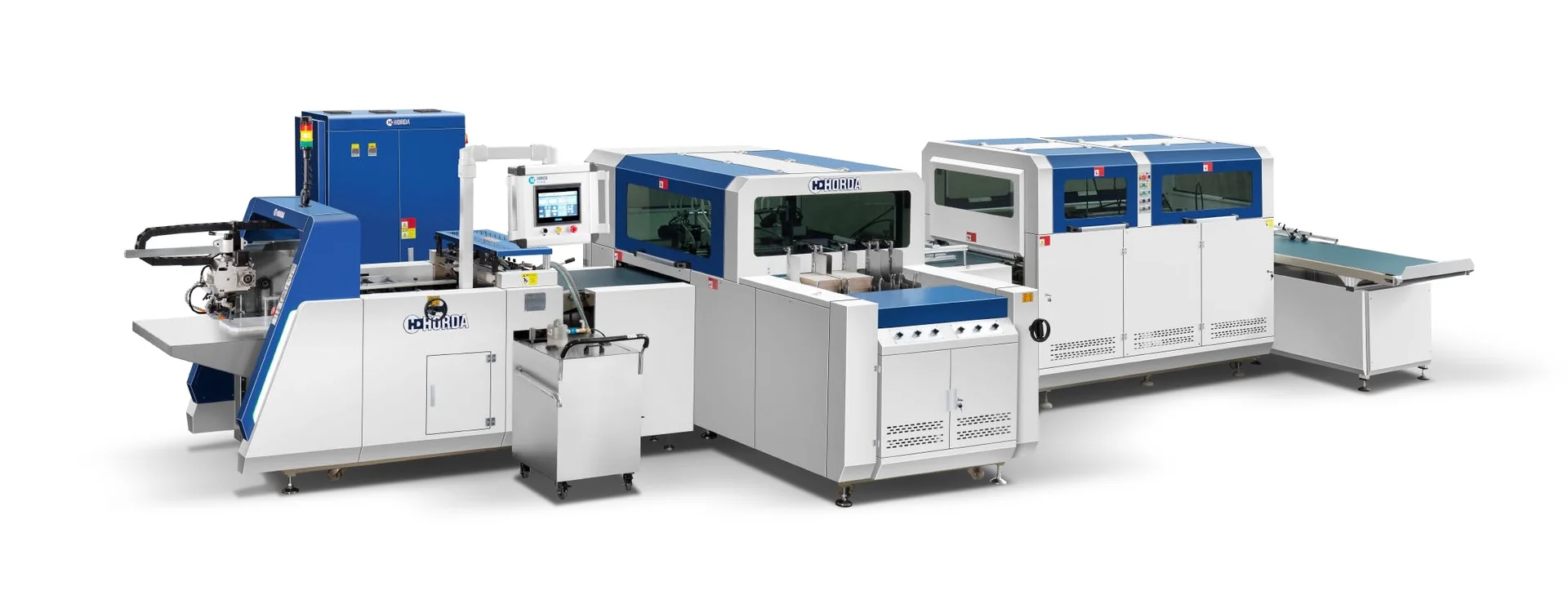
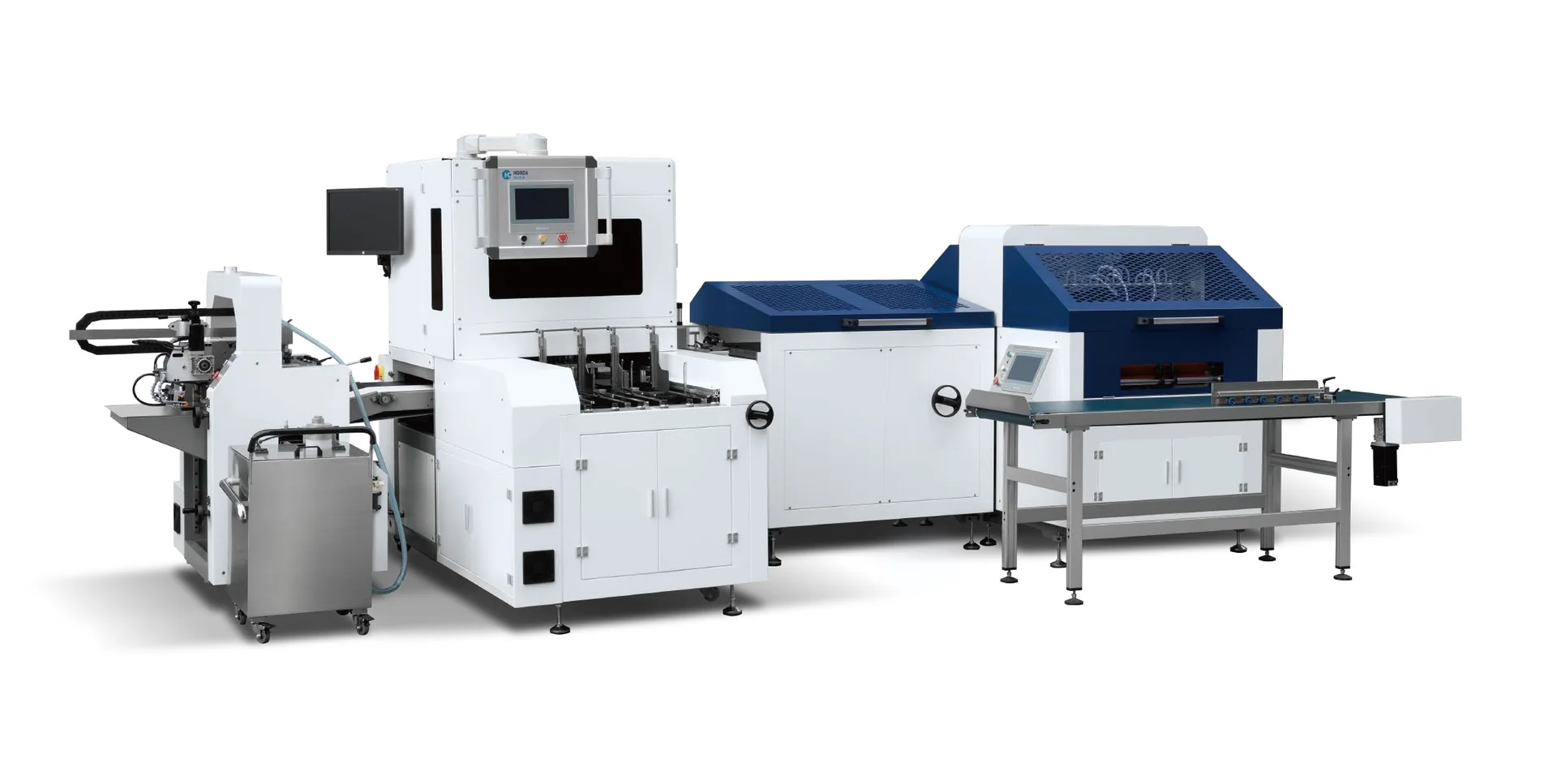
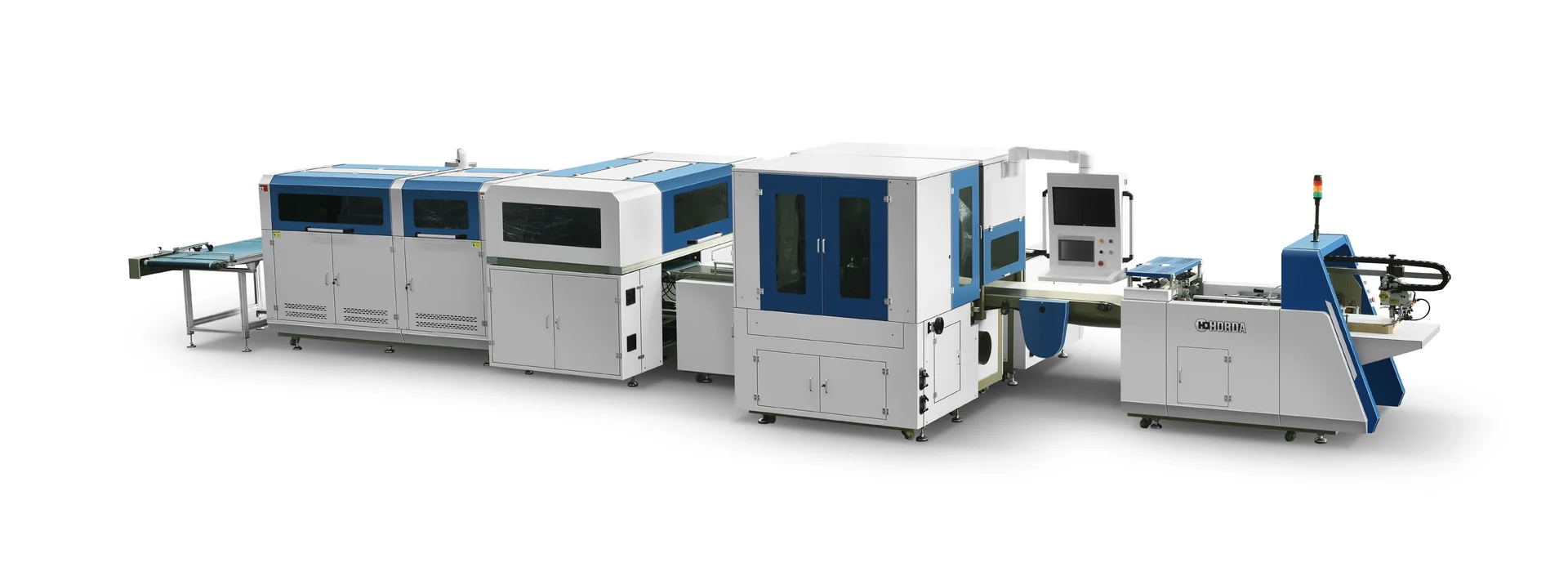
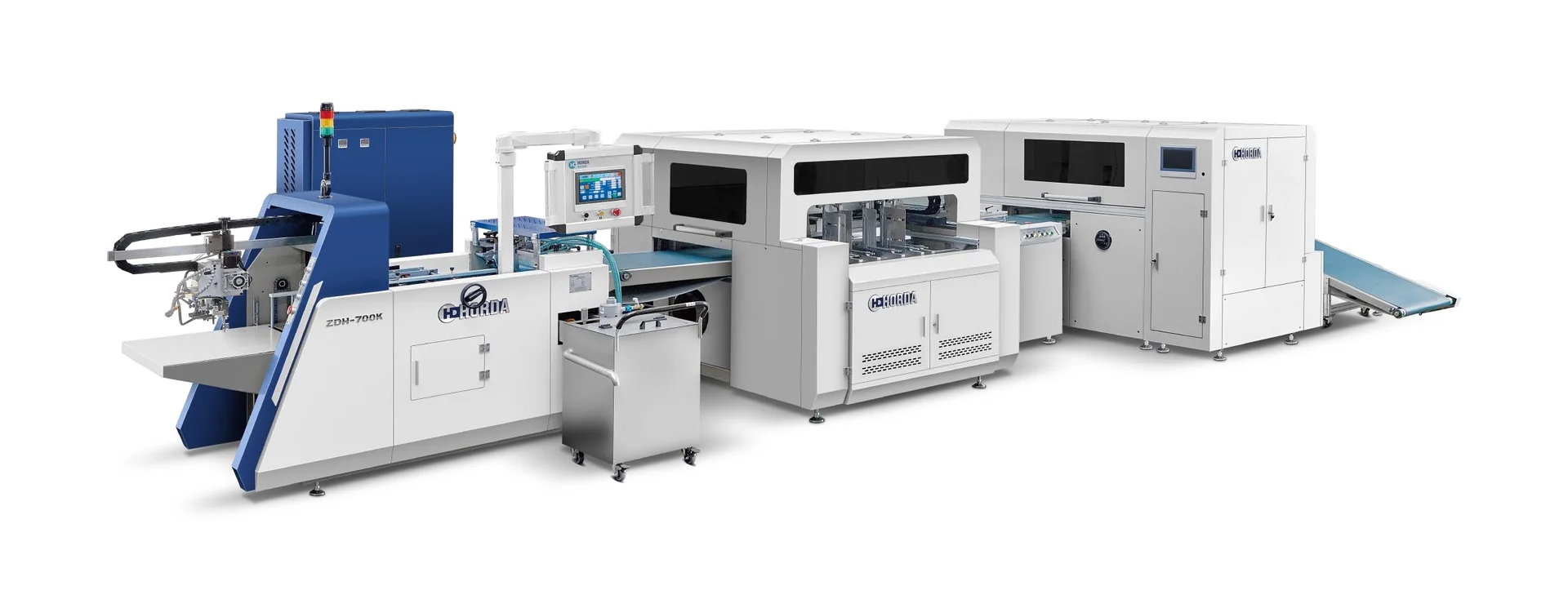
A photoelectric case making machine should be selected by matching an exact machine configuration to five things: your case dimensions and materials, registration requirement, required accepted output, production interfaces, and sample/FAT acceptance criteria. Do not choose primarily by the largest format or highest catalogue speed.
The important distinction is between a machine that looks suitable on a specification table and a machine whose documented range can be reconciled with your actual jobs. Catalogue speed is not automatically sustained accepted output, and catalogue positioning accuracy is not automatically a guarantee that every finished case will meet the same tolerance under every material and production condition.
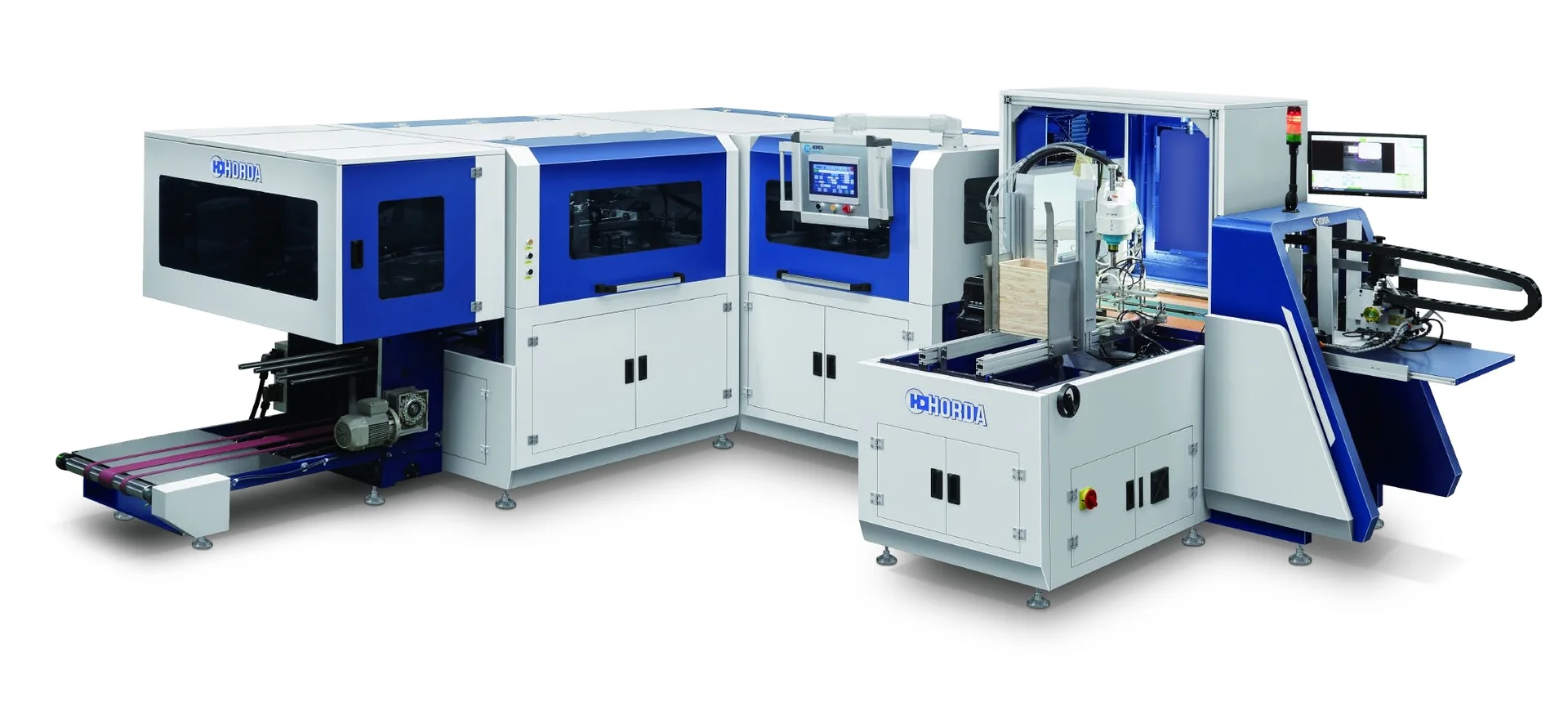
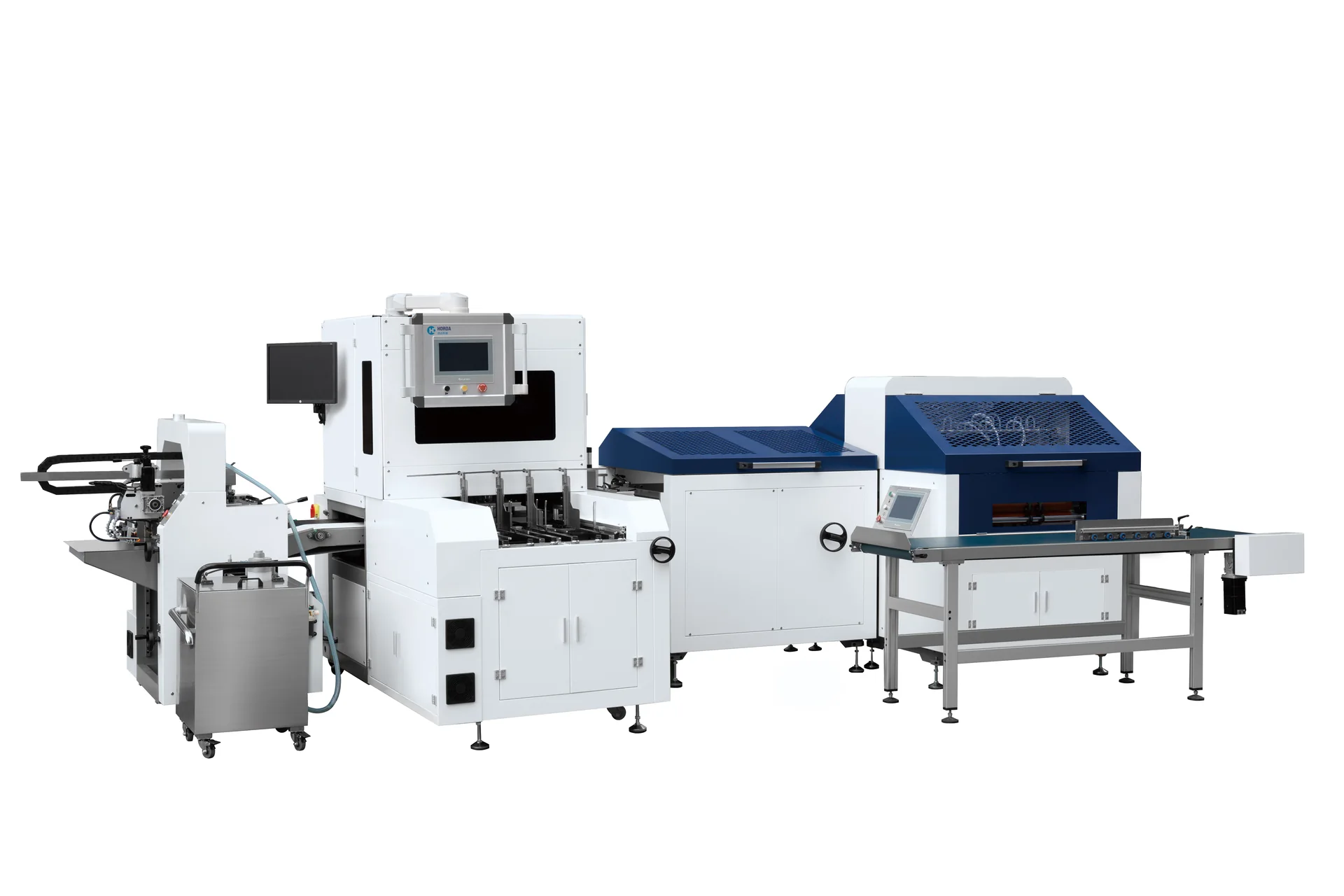
For the photoelectric models covered by the supplied HORDA catalogue, that evaluation should be made model by model. The catalogue identifies ZFM-700K and ZFM-1000K as automatic case making machines using four-photoelectric detection with servo positioning, while ZFM-1350A is identified as a three-photoelectric-detection, servo-positioning model.
Define the Job Before You Compare Machine Specifications
Start with the case you need to manufacture, not with the machine brochure.
A useful machine inquiry should establish the finished-product structure, the relevant case or cover dimensions, board arrangement, board thickness, covering material, printed registration condition and the output level you actually need to accept. If a factory runs many formats, the job mix matters as much as the largest format because suitability is not only about whether one sample fits through the machine.
This also changes how output should be specified. A requirement such as “30 pieces per minute” is incomplete unless both parties know whether it refers to a catalogue maximum, a short demonstration run, a sustained test condition or accepted pieces that meet defined quality criteria.
For purchasing purposes, it is more useful to describe:
- the case or cover structure;
- representative minimum and maximum job dimensions;
- number and arrangement of board pieces;
- board and covering-material details;
- artwork or registration-mark condition;
- required accepted production rate;
- shift pattern and job mix where relevant;
- representative samples;
- the defects or dimensional/registration conditions that would make a piece unacceptable.
That requirement set gives the supplier something that can be checked against an exact machine rather than answered with a generic “yes.”
Check Size, Board, Covering Material and Case Structure as One Fit Window
The size table is a screening tool, not the final selection decision.

The supplied HORDA catalogue currently lists the following specifications for the three standalone photoelectric case-making models. Because HORDA also states that machine structures and technical parameters may change, buyers should request the latest model data before treating these figures as order specifications.
| Catalogue specification | ZFM-700K | ZFM-1000K | ZFM-1350A |
|---|---|---|---|
| Photoelectric configuration | Four detection + servo positioning | Four detection + servo positioning | Three detection + servo positioning |
| Maximum size | 450 × 720 mm | 600 × 1050 mm | 750 × 1350 mm |
| Minimum size | 90 × 180 mm | 140 × 240 mm | 140 × 240 mm |
| Board thickness | 1.0–3.0 mm | 1.0–3.0 mm | 1.0–3.0 mm |
| Boards amount | 1–6 | 1–6 | 1–6 |
| Minimum spine width | 8 mm | 8 mm | 8 mm |
| Minimum side-board width | 25 mm | 25 mm | 30 mm |
| Catalogue speed | 20–35 pieces/min | 20–30 pieces/min | 15–25 pieces/min |
| Catalogue positioning accuracy | ±0.2 mm | ±0.25 mm | ±0.5 mm |
| Machine power | 16 kW | 18 kW | 19 kW |
| Approx. machine weight | 3,500 kg | 5,000 kg | 6,500 kg |
| Catalogue dimensions | 8500 × 2600 × 1500 mm | 10440 × 3000 × 1500 mm | 11500 × 3500 × 1500 mm |
Source basis: HORDA product catalogue supplied for this project. Catalogue specifications should be confirmed against the current manufacturer’s technical data and quotation before purchase.
The table also lists a paper-weight field of 100–250 with the unit printed as “g.” The current source does not define that unit more precisely, so an RFQ should ask HORDA to confirm the applicable paper-weight basis rather than silently converting the catalogue value into another unit.
The same caution applies to “maximum size” and “minimum size.” A number is only useful when the dimensional convention in the manufacturer’s data matches the dimension on your drawing. If your production documents use finished size, open case size, board layout or another reference, send the drawing rather than assuming the catalogue terminology uses the same convention.
More importantly, passing the dimensional screen does not by itself prove material suitability. Board thickness is only one variable. Covering-paper surface, printing, coatings, curl, stiffness, adhesive behavior and material consistency can affect feeding, gluing, positioning and folding. The safest purchasing route is therefore:
Screen by catalogue limits → identify the exact model → send representative material → validate the actual job.
That is a stronger selection method than choosing a machine because its nominal maximum format is large enough.
Match the Positioning Method to the Registration Requirement
A photoelectric case maker is not simply a “more accurate” or “less accurate” alternative to another positioning technology. The first question is what reference the machine must detect on your covering sheet and what registration result the finished job requires.
HORDA describes these models as using photoelectric detection with servo positioning. In functional terms, a photoelectric system uses a detectable printed or contrast reference as an input to the positioning process, while the servo-positioning system performs the corresponding correction or positioning action. The buying implication is straightforward: the sensor must be able to detect the actual reference condition consistently enough for the required job.
That makes the covering sheet itself part of the selection problem.
Before requesting a machine recommendation, provide details such as the mark or printed-reference location, contrast condition, surrounding artwork and surface treatment when those factors could influence detection. A catalogue positioning-accuracy number should then be treated as a model specification, not as proof that every printed design will produce the same finished result without testing.
For example, the catalogue lists positioning accuracy of ±0.2 mm for ZFM-700K, ±0.25 mm for ZFM-1000K and ±0.5 mm for ZFM-1350A. Those values can be used to compare documented model specifications. They should not be rewritten as a universal finished-case tolerance or a guaranteed result for a buyer’s specific paper, mark design and process conditions.
This distinction matters because a buyer does not ultimately purchase “sensor accuracy.” The buyer purchases a process that must produce acceptable cases from real materials.
Can the proposed exact configuration repeatedly detect my actual printed reference and produce acceptable registration on representative production samples?
That question can be answered through sample testing and an agreed acceptance method. A brochure number alone cannot answer it.
Separate Rated Machine Speed From Accepted Production Output
Speed is one of the easiest specifications to misinterpret in packaging machinery procurement.
The HORDA catalogue lists model speed ranges of 20–35 pieces/min for ZFM-700K, 20–30 pieces/min for ZFM-1000K and 15–25 pieces/min for ZFM-1350A. These figures are useful rated or catalogue specifications. They should not be converted into a promise that a factory will continuously receive the same number of accepted pieces every minute.
Real production introduces conditions that a simple speed cell does not describe: material consistency, feeding behavior, format, setup, registration requirement, rejected pieces, job changes and the interaction with upstream or downstream handling.
The correct comparison therefore uses two separate quantities.
Catalogue speed tells you the documented machine speed range for an exact model.
Accepted output tells you how many conforming pieces the production process delivers under an agreed test or operating condition.
For a sample or FAT exercise, an uncomplicated measurement basis is:
The formula is simple; defining “accepted” is the important part. Before the test, the buyer and supplier should agree which materials will be run, which format will be used, how registration or other important quality characteristics will be assessed, and what constitutes an unacceptable piece.
Do not improve the calculation by adding an invented OEE factor, assumed scrap percentage or arbitrary utilization percentage. Those numbers are useful only when they come from the buyer’s real operating data or an agreed test.
This approach also prevents a common specification mistake. Suppose two machines show different catalogue speeds. That does not by itself tell you which one will produce more acceptable work in your plant. A slower-rated model that matches the required format and registration condition can be a better production choice than a faster-rated configuration that requires compromises on the actual job. Conversely, a machine that passes every dimensional requirement may still be unsuitable if accepted output under representative conditions falls below the project target.
That is why the RFQ should state the required accepted output, not merely ask for the machine’s maximum speed.
Validate Changeover, Feeding and Production-Line Interfaces With Real Samples
A machine can match the format table and still create operational problems if the surrounding production conditions were never discussed.
The standalone HORDA photoelectric models in the supplied catalogue show a case-making process that includes board feeding, covering-paper feeding and gluing, positioning/correction, cover formation and finished-product collection. This process scope should not be expanded into automatic inner lining, box assembly, product insertion or other downstream work unless the selected configuration and project documentation specifically include those operations.
For buyers running multiple products, changeover should be evaluated as a production requirement rather than guessed from marketing descriptions. The current evidence set does not establish a contractual changeover time for these models. A buyer should instead send the expected job range and ask what adjustments, tooling or setup steps are required when moving between representative formats.
The same approach applies to utilities and installation planning. The catalogue provides machine power and external dimensions, which are useful early planning inputs. The current evidence does not establish supply voltage, compressed-air demand, recommended operating clearance, staffing requirement or all site-interface conditions for a particular order. Those points belong in the RFQ.
Representative material is equally important. A useful sample evaluation is not a demonstration with whatever stock is easiest to run. It should represent the material and job conditions that could change the purchasing decision.
A practical sample package may include:
- representative board thickness and board arrangement;
- actual or representative covering paper;
- printed sheets containing the intended registration reference;
- challenging minimum or maximum formats that matter commercially;
- multiple important jobs when production is high-mix;
- drawings showing the dimensional convention;
- a written description of the critical quality criteria.
Before the test, define the question each sample is intended to answer. One sample might verify feeding and gluing behavior, another might verify registration, and another might verify format limits. This keeps the test tied to purchasing decisions instead of turning it into a general machine demonstration.
The acceptance result should also be recorded. If a job passes, record the exact material, format and configuration used. If it fails, identify which condition prevented acceptance. That information is more valuable during final machine selection than an unsupported statement that a machine is “suitable for many applications.”
Turn the Application Into an RFQ and Sample/FAT Checklist
A strong RFQ makes it possible for the manufacturer to confirm an exact model and makes it harder for important assumptions to remain hidden until installation.
Use the following information as the core of a photoelectric case-making machine inquiry.
Product and format information
Send:
- finished product or case type;
- drawings and the dimensional reference used;
- minimum, maximum and high-volume production formats;
- number of board pieces;
- spine and side-board dimensions where applicable;
- board thickness and other relevant board properties.
Do not rely on a statement such as “all our products are within 700 mm.” The arrangement of the boards and minimum component dimensions can matter even when the overall size appears to fit.
Covering material and registration information
Provide:
- covering-paper specification;
- representative physical samples where possible;
- printed artwork or sample sheets;
- position and appearance of the photoelectric reference mark;
- coatings, laminations or surface treatments that may affect the process;
- the registration result that matters to the finished product.
Ask the manufacturer to identify the exact proposed machine/configuration and confirm whether representative sample testing is required.
Output requirement
State:
- required accepted pieces per minute or hour;
- shift pattern where relevant;
- normal job mix;
- typical run length;
- important high-mix or short-run requirements.
Ask separately for the machine’s documented rated speed and for the proposed method of demonstrating the required accepted output. Do not combine those two questions.
Production and site interfaces
Request confirmation of:
- power-supply requirements for the ordered configuration;
- compressed-air requirements, if any;
- final machine footprint;
- access and service-clearance requirements;
- operator requirements;
- upstream material condition;
- downstream hand-off;
- tooling or options required for the submitted job range;
- expected setup/changeover actions for representative jobs.
The supplied catalogue gives machine power and overall dimensions, but those fields do not answer all site-planning questions.
Sample and FAT acceptance
Before a FAT or sample run, agree on:
- the exact machine/configuration being tested;
- materials and formats to be used;
- setup and production condition;
- quality characteristics to be inspected;
- method used to determine an accepted piece;
- agreed test duration or quantity, if the project requires one;
- recorded production result;
- deviations and required follow-up;
- documents or records to be supplied with the acceptance exercise.
There is no need to invent a universal sample count or universal registration threshold. Those criteria should come from the buyer’s product requirement, project specification and the agreed acceptance plan.
Commercial and project responsibilities
Treat installation, commissioning, training, warranty, spare parts, service response, shipping scope and project documentation as quotation items unless they are confirmed in current commercial documents.
Do not infer them from the machine specification table.
A Short Decision Rule Before You Request a Quote
A photoelectric case making machine is ready for serious RFQ evaluation when you can answer four questions:
- Does an exact documented model cover the required format and board arrangement?
- Can its positioning method be validated with the actual printed reference and material?
- Can the proposed configuration demonstrate the required accepted output under agreed conditions?
- Have the remaining production, site and commercial assumptions been converted into explicit RFQ questions?
If any of those questions is still answered only by assumption, the purchasing specification is not finished.
The goal is not to find the machine with the biggest number in each catalogue column. It is to create a traceable chain from your product requirement → exact model data → representative test → acceptance result → quotation.
That chain gives engineering, production and procurement teams a much stronger basis for comparing proposals and reduces the risk of discovering important application assumptions after the machine has already been selected.
If you are preparing an RFQ for a photoelectric case making machine, assemble your case drawing, board and covering-material information, registration requirement, target accepted output, representative samples, production interfaces and site constraints. Submit that package for exact-model review and quotation confirmation rather than requesting a recommendation from product size or maximum speed alone.