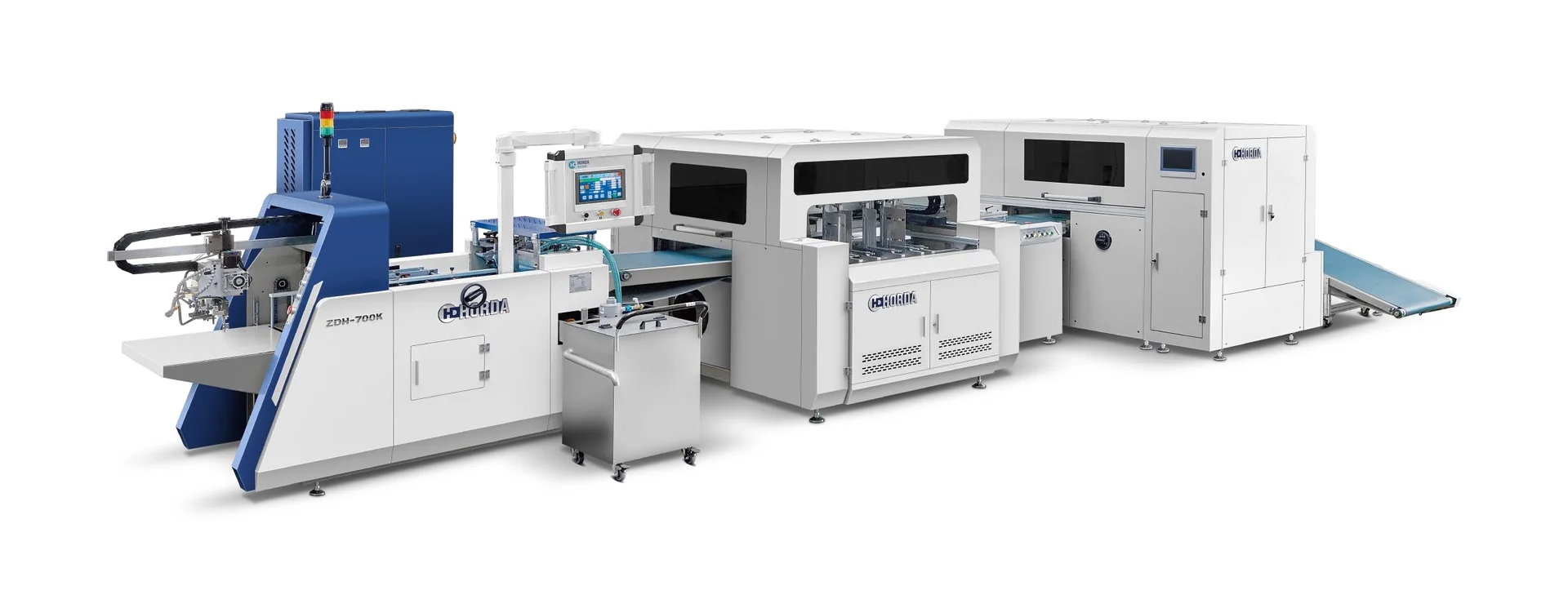
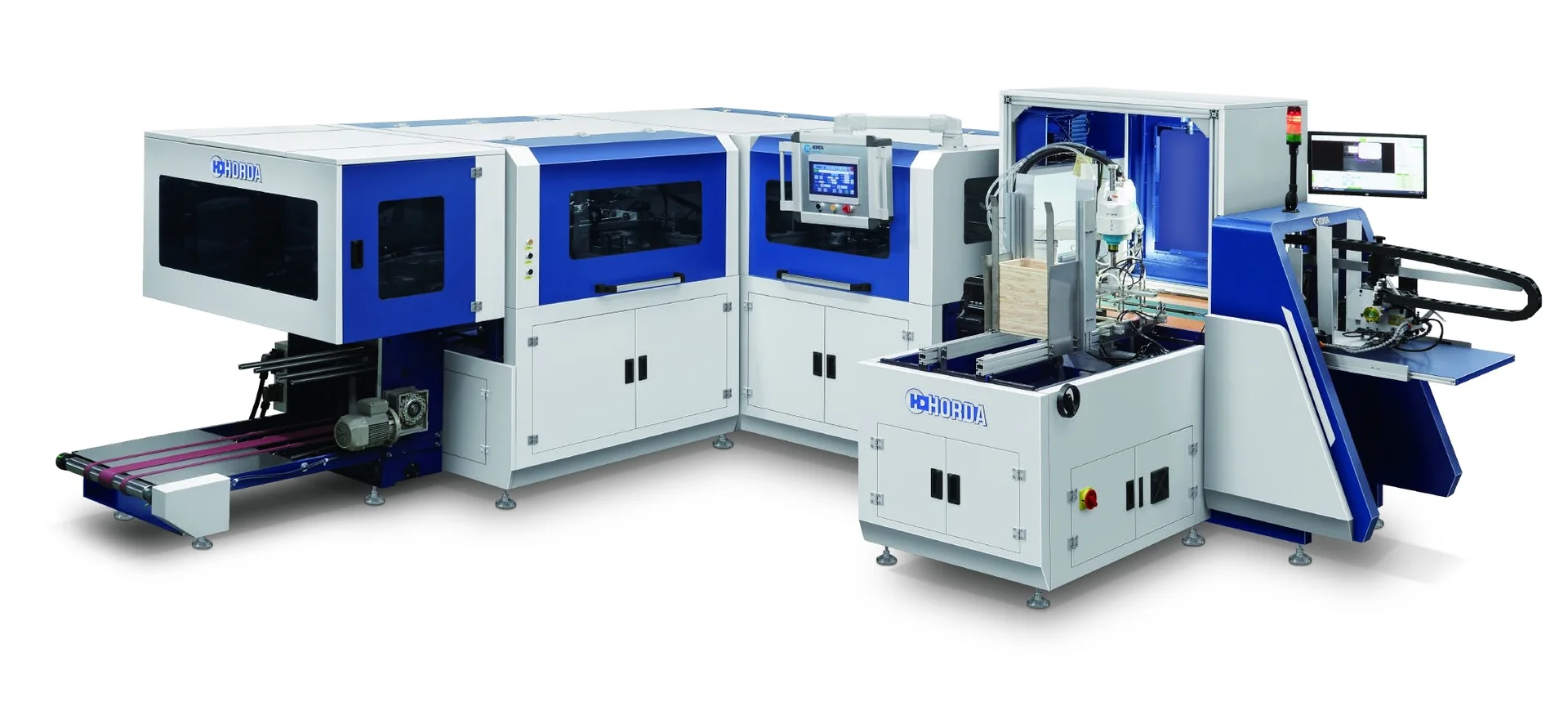
Commissioning a packaging machine should not end when the equipment powers up or completes a few successful cycles. A defensible commissioning process moves through controlled verification stages until the installed machine can produce acceptable work under the agreed materials, formats, operating conditions, and acceptance criteria—and until important defects, open actions, documentation, and handover responsibilities are recorded.
For the buyer, the practical question at every stage is therefore: Do we have enough evidence to move to the next commissioning gate, or should the job remain open?
The exact tests, limits, run duration, sample quantities, output targets, tolerances, and sign-off procedure should come from the selected machine documentation and the agreed project acceptance basis. They should not be replaced by generic commissioning numbers.
What Commissioning Must Prove Before Production Release
A newly installed machine can pass several different milestones without being ready for routine production.
It may be correctly positioned and connected. It may power up normally. Individual mechanisms may move correctly. A short dry cycle may run without alarms. A small number of products may look acceptable. None of those observations, by itself, proves that the production process is ready for release.
Commissioning becomes meaningful when those observations are connected in a logical sequence. The team first confirms that the installed configuration and site are ready for testing. It then checks basic machine functions before introducing production variables. Representative materials and formats are added next. Only after those conditions are controlled does it make sense to evaluate repeated production performance, product quality, interruptions, adjustments, and upstream or downstream interaction.
This creates an important distinction between four different claims:
- The machine operates: basic functions can be executed.
- The machine processes the intended product: representative material and format can pass through the required process.
- The machine demonstrates production performance: repeated operation is observed under a defined test basis.
- The project accepts the result: the observed performance satisfies the criteria and sign-off process agreed for that project.
These statements should not be treated as interchangeable. FAT, SAT, and commissioning should not be treated as interchangeable labels either. Factory and site acceptance tests are project-defined acceptance activities with agreed criteria and responsibilities; commissioning is the broader process of bringing the installed equipment into controlled operation and handover. The project documents should define the exact sequence, test basis, and sign-off language.
A practical buyer-side release sequence can be organized like this:
| Commissioning gate | Main buyer question | Evidence to retain | Typical decision |
|---|---|---|---|
| Gate 0 — Readiness | Is the delivered and installed system ready for meaningful testing? | Configuration, site and readiness observations | Start or hold |
| Gate 1 — Function | Do basic machine functions operate correctly before production variables are introduced? | Functional observations and deviations | Advance or correct |
| Gate 2 — Product | Does the machine process representative materials and formats acceptably? | Samples, settings and quality observations | Advance or correct |
| Gate 3 — Production | Is performance acceptable under the agreed production-like test basis? | Output, quality, stops, adjustments and interface records | Release or hold |
| Handover | Are documentation, training and open responsibilities adequately closed? | Punch list, records and responsibility status | Follow the project’s acceptance process |
The actual disposition terms—such as accepted, conditionally accepted, or still open—should follow the project documents rather than a generic template.
Gate 0: Verify Arrival, Installation, and Site Readiness
Commissioning results are difficult to interpret if basic delivery, installation, or site-readiness issues are still unresolved.
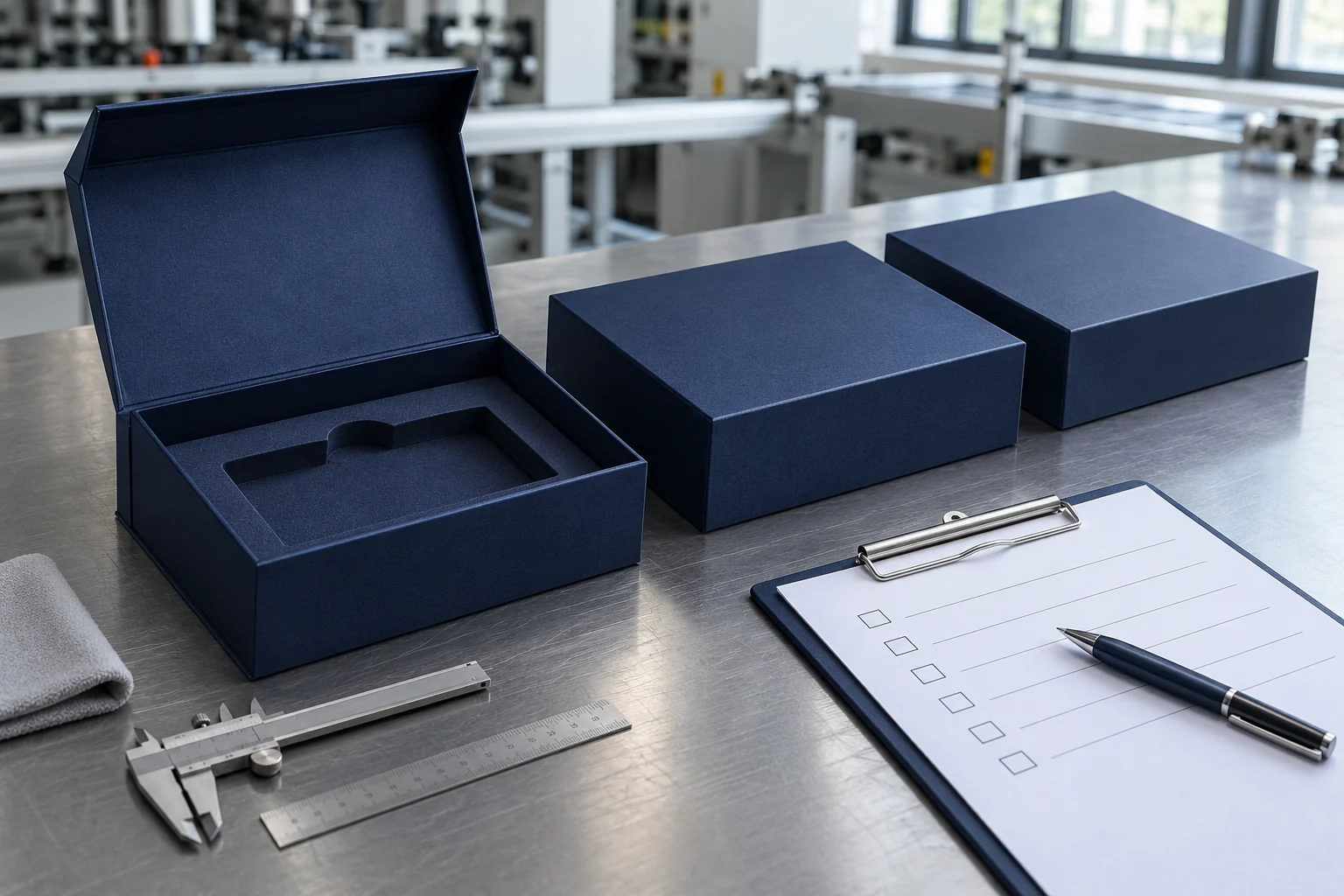
Before active testing begins, confirm that the equipment being commissioned matches the configuration expected for the project and that obvious transport or installation issues have been recorded. The commissioning team should also know whether required power, compressed air, adhesive or other utilities relevant to the selected machine are available within the applicable machine requirements.
This is not the stage to recreate the full installation plan. The objective is narrower: establish whether commissioning can begin on a sound basis.
Useful readiness questions include:
- Does the delivered machine or line correspond to the project documentation and expected configuration?
- Have visible transport or handling issues that could affect startup been recorded?
- Is installation sufficiently complete for the planned test?
- Are the required machine interfaces and utilities available according to the selected model documentation?
- Are guarding and other safety devices ready for the planned test, and are site energy-control procedures defined for servicing or adjustment work that could expose personnel to hazardous energy?
- Is the upstream input condition defined?
- Is the downstream hand-off ready if the machine is being commissioned as part of a line?
- Are the intended trial materials, formats, samples, drawings, and acceptance requirements available?
- Are known installation defects already on an open-action list rather than being rediscovered during production testing?
This separation matters because otherwise the team may spend time adjusting the production process to compensate for a basic readiness defect. A material-feed problem caused by the wrong substrate should not be diagnosed in the same way as a problem caused by an incomplete installation or incorrect interface condition.
The detailed utility values, anchoring, leveling, alignment, wiring, piping, or installation acceptance requirements must come from the applicable machine and project documents.
Gate 1: Prove Machine Functions Before Product Runs
The next gate is intended to separate basic machine-function issues from material- and process-dependent issues.
A controlled functional check can confirm whether the mechanisms required for the selected configuration operate as expected before real product variables are introduced. Depending on the equipment and approved procedure, this may include observing normal controls, feeding functions, sensors, actuators, alarms, guards, interlocks, transfers, or other machine functions relevant to the intended process.
The point is not to create a generic service procedure. The point is diagnostic separation.
If a mechanism cannot complete its intended function before representative product is introduced, changing paper, board, adhesive, registration settings, or product format is unlikely to be the right first response. Conversely, if basic functions operate correctly but a defect appears only with the production material, the troubleshooting direction changes.
That distinction reduces random adjustment. Commissioning should not become a sequence in which several variables are changed simultaneously until an acceptable sample happens to appear. When settings or conditions are changed, the change and its effect should be recorded so the team can distinguish a repeatable correction from a temporary result.
Gate 2: Run Representative Materials, Formats, and Process Conditions
A machine can run normally without product and still perform differently when real substrates, adhesive, dimensions, surface conditions, positioning requirements, and production loads are introduced.
That is why representative material testing is one of the most important commissioning gates.
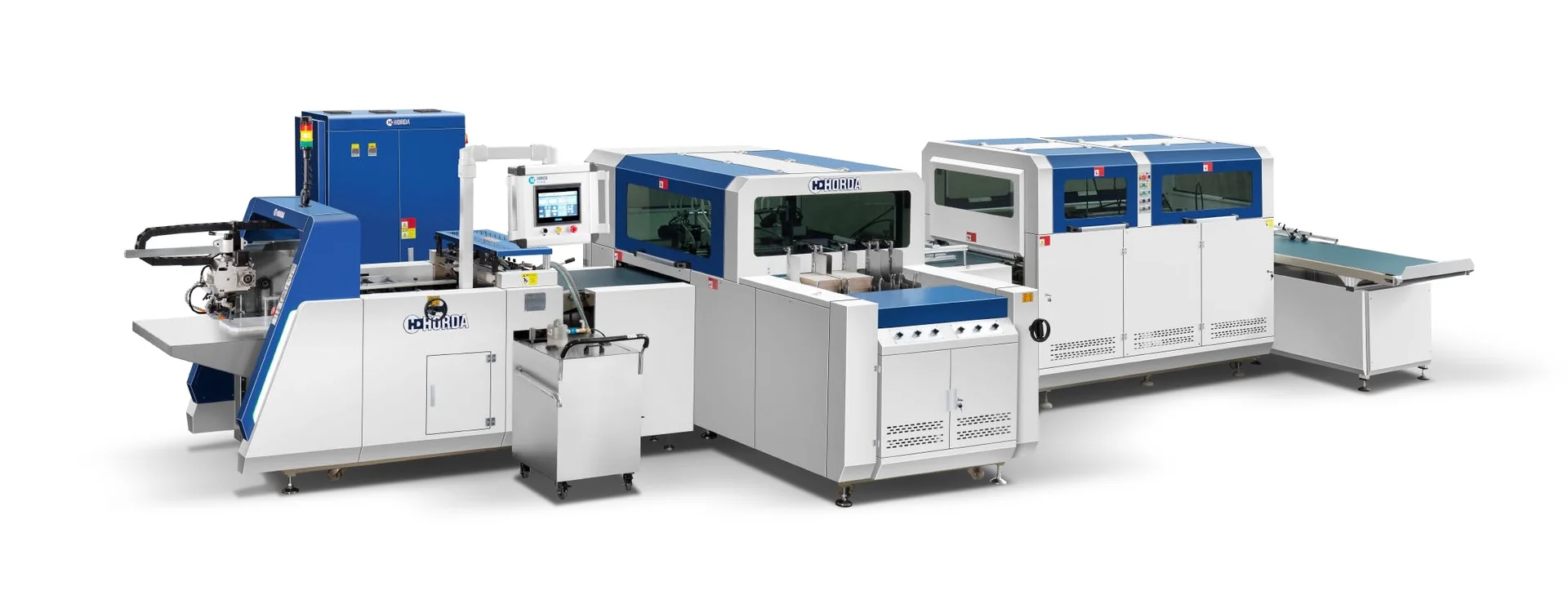
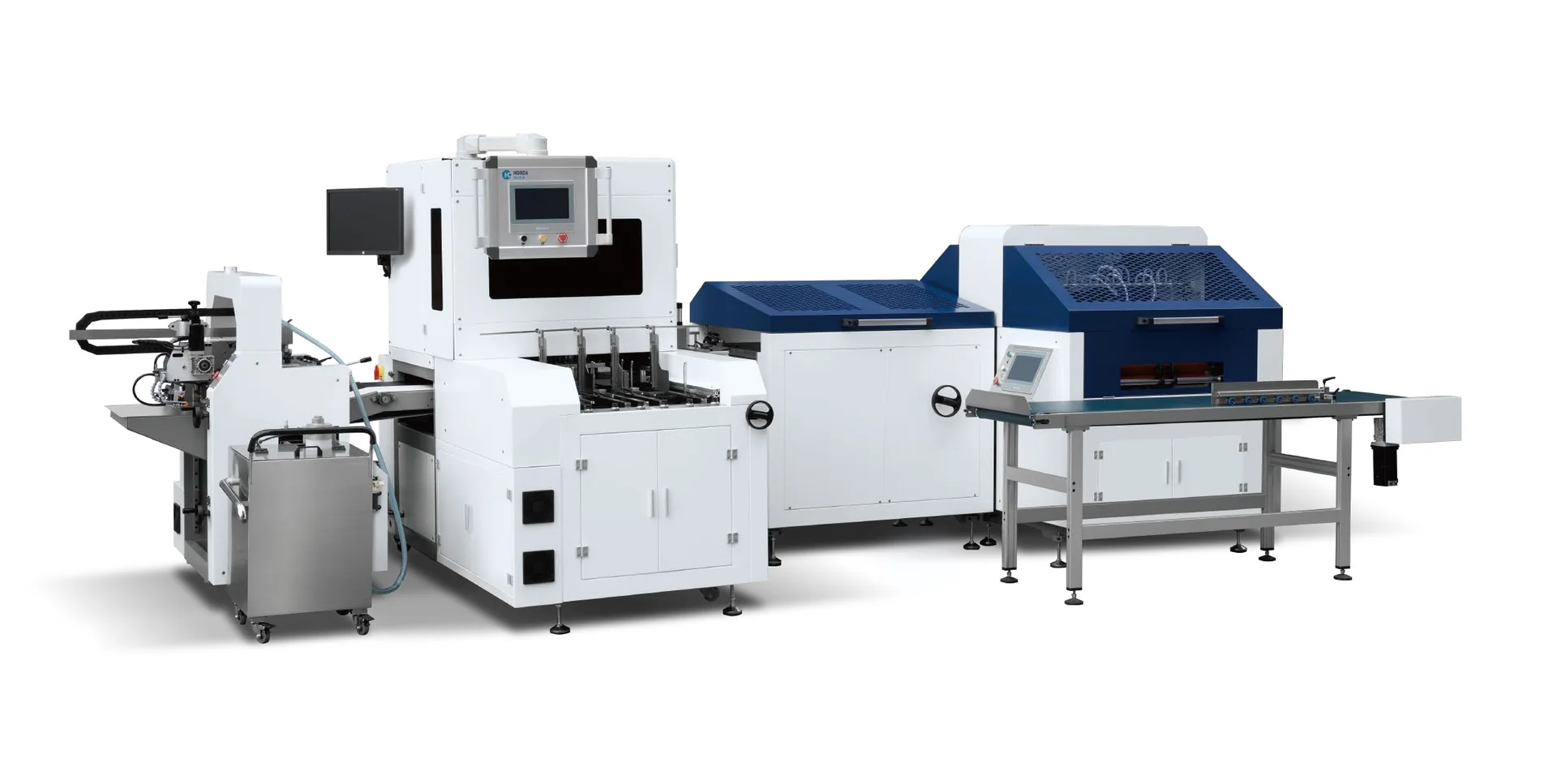
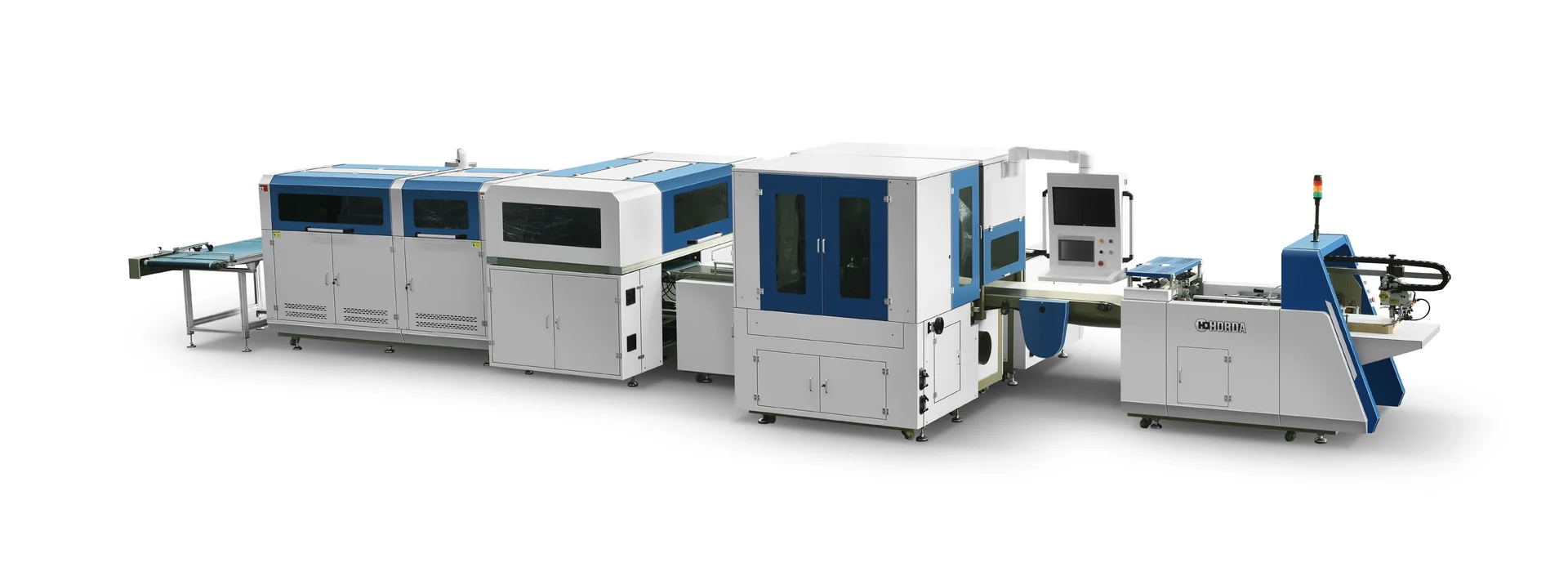
For relevant case-making and inner-laminating configurations, the February 2026 HORDA catalogue shows process steps including board feeding, paper feeding, gluing, positioning, edge or cover formation, inner-paper feeding and gluing, laminating, flattening, transfer, and collection. Different configurations can also use different positioning methods.
Those process steps make material identity relevant to the commissioning result. The trial should therefore be based, as far as practical, on the materials and formats the buyer actually intends to produce—not merely on whatever material is easiest to obtain during startup.
For the selected project, relevant variables may include:
- board type and thickness;
- cover or printed paper;
- surface condition;
- adhesive and applicable process condition;
- complete product or flat format;
- number and arrangement of boards where relevant;
- positioning or registration requirement;
- folding, wrapping, lining, or bonding requirement;
- upstream presentation of the material;
- downstream transfer condition.
The exact applicable variables depend on the selected machine and configuration. They should not be converted into universal specifications.
This model-specific boundary is important. The February 2026 HORDA catalogue presents product size, paper weight, board thickness, speed, positioning accuracy, power, and other technical values by model rather than as one universal equipment range. The same catalogue also states that machine structures and technical parameters may change and recommends confirming current details.
Change one variable with a reason
Representative trials also need enough discipline to make the result interpretable.
Suppose feeding is stable during a basic function check but becomes inconsistent when the intended covering paper is introduced. The useful next step is not to declare the machine unstable or immediately change every setting. The team should first identify what changed between the two conditions and record the resulting adjustment.
The same logic applies to registration, adhesive behavior, folding, lining, or transfer defects. A useful commissioning record preserves the relationship:
condition → observed result → adjustment → new result
That record is much more valuable after handover than a final setting value with no explanation of how it was reached.
Gate 3: Demonstrate Stable Accepted Production, Not Just Rated Speed
Speed is one of the easiest commissioning terms to misunderstand.
A catalogue speed is a machine specification associated with a particular model and basis. A brief demonstration at a given speed is an observation during a test. Sustained accepted output is a production result under defined material, product, quality, interface, and test conditions. Complete-line throughput adds the behavior of upstream and downstream processes.
These are different claims.
A machine should therefore not be released for routine production merely because it reaches a headline speed for a short period. The commissioning team needs an agreed basis for deciding whether the production run is acceptable. Agree that basis before the run starts: which products and formats are included, how output and rejects will be counted, what measurement method applies to key quality checks, and which interruptions pause or invalidate the test.
That basis may include, where relevant to the project:
- the actual product and format being run;
- material identity and condition;
- machine configuration and important settings;
- output over the agreed test period;
- quality results;
- rejects or rework, if an acceptance criterion exists;
- adjustments made during the run;
- unplanned stops or interruptions;
- reason for each significant interruption;
- upstream or downstream constraints;
- unresolved defects.
No universal percentage of catalogue speed, run duration, reject rate, or uptime target should be inserted into this process. Those values belong in the project acceptance criteria when they matter.
Machine performance is not automatically line performance
This distinction becomes especially important when commissioning integrated equipment.
The machine under test may operate correctly while an upstream process cannot supply material consistently, or while a downstream process cannot receive output at the same rate. In that case, complete-line throughput cannot be attributed solely to the machine being commissioned.
For relevant HORDA case-making and lining configurations, the published process sequence can contain multiple linked feeding, gluing, positioning, forming, laminating, flattening, and collection stages. The commissioning record should therefore identify which part of the process produced an interruption instead of reporting only one final pieces-per-minute number.
This is also why a sample demonstration and contractual acceptance should remain separate concepts. A good-looking sample can be useful evidence, but it does not automatically prove that the agreed production acceptance criteria have been achieved.
Record Deviations, Acceptance Evidence, and Punch-List Closure
A strong commissioning process leaves behind evidence that another engineer, production manager, or service technician can understand later.
That does not require excessive paperwork. It requires enough information to reconstruct the important conditions and decisions.
A useful commissioning record can include:
| Record field | Why it matters |
|---|---|
| Machine / project identity | Prevents results being attributed to the wrong configuration |
| Product / format | Shows what was actually tested |
| Material identity | Makes the trial condition reproducible |
| Relevant machine settings | Connects the result to a known configuration |
| Test condition / period | Establishes the basis of the observation |
| Acceptance criterion / measurement method | Makes the pass/fail basis explicit and repeatable |
| Quality observations | Shows whether output met the applicable acceptance requirement |
| Output basis | Separates observed production from catalogue claims |
| Stops / interventions | Reveals whether the run required repeated correction |
| Deviation | Defines what remained outside the agreed expectation |
| Corrective action | Shows what was changed |
| Retest result | Shows whether the change resolved the issue |
| Open-item owner | Prevents unresolved issues from disappearing at handover |
| Final disposition | Records the result under the project’s agreed acceptance process |
The exact fields and approval signatures depend on the customer’s acceptance procedure and contract. The important point is traceability.
If the machine repeatedly requires intervention during an acceptance run, that fact should not disappear because the final few samples look correct. If a defect remains unresolved but is judged non-blocking under the agreed project process, it should still be recorded with an owner and next action.
This punch-list discipline protects both production and project teams. After handover, the difference between “we noticed that during commissioning” and “this was documented, assigned, and retested” can determine how quickly the next problem is understood.
Handover: Training, Documentation, Spares, and Open Responsibilities
Commissioning is also a transition of responsibility.
The equipment may be technically capable of proceeding, yet the plant may still be unprepared to operate it consistently if the relevant documentation, settings, training, tools, or open-action ownership are unclear.
Before closing the commissioning stage, the buyer should confirm the applicable handover items for the actual order. Depending on project scope, these may include:
- operating documentation;
- current machine or configuration information;
- approved settings or recipe records where applicable;
- changeover information required by the operators;
- maintenance information within the agreed supply scope;
- operator or maintenance training defined for the project;
- supplied tools or spare parts if included in the order;
- unresolved technical items;
- responsible person or organization for each open item;
- retest requirements;
- outstanding commercial or service actions.
Training is deliberately treated as an interface here rather than a full curriculum. What operators need to learn before handover is a separate task from the commissioning sequence itself.
The same boundary applies to service responsibility. The February 2026 HORDA catalogue describes assembly, process commissioning, and comprehensive services among HORDA’s areas of expertise. That general corporate statement does not establish what a specific order includes.
For an actual project, the quotation, purchase order, technical agreement, acceptance plan, and related project documents should define responsibilities such as installation, commissioning, training, travel, consumables, retesting, sign-off, warranty interface, and post-commissioning support. These responsibilities should not be inferred from generic supplier language.
Release Decision: Common Commissioning Mistakes That Should Keep the Job Open
Commissioning problems often become expensive not because the original defect is unusually difficult, but because the project moves to the next stage before the previous condition is understood.
The following mistakes should trigger additional review rather than automatic sign-off.
-
Starting production trials before basic readiness is closed.
If configuration, installation, utilities, interfaces, or known delivery issues are still uncertain, later test results become difficult to diagnose. -
Testing only with convenient materials.
A machine that performs acceptably with trial stock has not necessarily demonstrated the same result with the buyer’s intended paper, board, adhesive, surface condition, or production format. -
Treating successful cycles as production acceptance.
A few clean products can demonstrate a function. They do not automatically establish sustained accepted output. -
Changing several variables at the same time.
If speed, material, pressure, registration, adhesive condition, and mechanical settings all change together, the final good result may not be reproducible because the team does not know which change mattered. -
Using catalogue speed as the only production criterion.
A speed figure does not describe quality, rejects, interventions, interface constraints, or the acceptance basis of the actual production run. -
Ignoring upstream and downstream constraints.
A complete line can stop or slow for reasons outside the machine being commissioned. The record should distinguish machine behavior from line-interface behavior. -
Closing defects verbally.
An issue that is “understood” but has no documented condition, owner, corrective action, or retest status can easily reappear during production. -
Treating technician departure as project closure.
Commissioning should close according to the project’s acceptance and handover basis—not simply because scheduled onsite work has ended.
A useful final question is:
If this commissioning team were unavailable tomorrow, could the production team use the records to understand what was tested, what conditions were used, what passed, what remains open, and who owns the next action?
If the answer is no, the commissioning record is probably not complete enough for a controlled handover.
For buyers preparing a new packaging-machine project, the commissioning plan is easier to define before the equipment arrives. When discussing a machine or quotation, prepare the intended product formats, materials, output objective, upstream/downstream interfaces, quality criteria, planned acceptance criteria and measurement methods, and any project-specific installation or support responsibilities. That gives the equipment supplier and plant team a clearer basis for defining what commissioning must actually prove.
For HORDA-manufactured equipment presented through Raymon Machinery, those project inputs can also form the basis of a technical inquiry or quotation discussion. The exact machine capability and supplier responsibilities should still be confirmed against the selected model and current commercial documents.