



A packaging machine supplier should be evaluated on four connected capabilities: engineering definition, manufacturing and configuration control, measurable acceptance evidence, and documented service responsibility. Price and machine specifications matter, but neither is a reliable shortcut for supplier capability. A stronger basis for selection is whether the supplier can show how your production requirements become a defined machine scope, how that scope is controlled through manufacture and integration, how important claims will be verified before shipment, and who is responsible when the equipment reaches your plant.
That distinction matters because several very different things can appear convincing during a purchase: a catalogue speed, a factory photograph, a successful sample demonstration, a quality-system certificate, or a promise of fast after-sales support. Each may be useful evidence within its proper scope, but none should automatically substitute for the others.
A practical evaluation therefore follows a simple logic:
requirement → supplier claim → supporting evidence → applicable conditions → verification method → unresolved gap → responsible party → buyer decision
Use that sequence consistently and supplier comparison becomes much more useful than a feature checklist.
Evaluate Evidence, Not the Sales Presentation
Before comparing suppliers, make sure they are being asked to solve substantially the same problem.
If Supplier A receives only a finished-box photograph while Supplier B receives drawings, board specifications, target output, registration requirements and upstream/downstream interface information, their proposals are not directly comparable. A lower price or higher quoted speed may simply reflect a narrower interpretation of scope.
The first task is therefore to normalize the information provided to each supplier. For packaging machinery, the useful inputs depend on the project, but may include finished-product format, dimensions, substrates, required process steps, quality expectations, production targets, utilities, line interfaces, floor-space constraints, samples and drawings.
The next task is to distinguish a statement from evidence supporting that statement.
| Evaluation level | Example | What it tells the buyer |
|---|---|---|
| Supplier claim | “The machine can run this product.” | What the supplier is proposing |
| Technical evidence | Datasheet, drawing, configuration record or material review | What the proposal is based on |
| Demonstration evidence | Sample run or functional test under stated conditions | What was demonstrated under those conditions |
| Acceptance evidence | Agreed measurement, result and sign-off | Whether the agreed purchase criterion was met |
| Production evidence | Actual operation under the buyer’s SKU mix and conditions | What happens in the real production environment |
These levels should not be collapsed into one another. A machine that performs well in a short demonstration has produced useful evidence, but that result does not automatically establish sustained production output for every material, SKU, operator or changeover pattern.
This is why the most useful supplier question is often not “Can your machine do this?” but:
“What evidence will let us verify that it can do this under the conditions that matter to our project?”
Engineering Capability: Can the Supplier Translate Your Product into a Defined Machine Scope?
Engineering capability becomes visible before the machine is built.

A supplier that understands the application should be able to identify which buyer inputs change the equipment decision. For case-making, rigid-box, lining, collapsible-box and related machinery, that may involve the finished structure, complete dimensional range, board and covering materials, registration requirement, adhesive or process conditions, target output, job mix and interfaces with other operations.
Not every variable matters equally on every project. The important test is whether the supplier can explain which variables affect the proposed configuration and why.
Inputs a supplier should clarify before recommending equipment
A serious technical discussion may need to establish:
- the finished product or case structure;
- minimum and maximum formats that actually need to run;
- board, paper, covering or other relevant materials;
- required positioning or registration quality;
- target accepted production output, not just an isolated maximum-speed number;
- expected SKU mix, batch size and changeover pattern;
- upstream input condition and downstream hand-off;
- available power, compressed air, floor space and operator constraints where relevant;
- drawings or representative samples;
- the defects or acceptance characteristics the buyer considers critical.
The purpose of collecting these inputs is not administrative completeness. They define the problem the machine must solve.
For example, a supplier may quote a catalogue speed for a particular machine. That value can be useful for identifying the model’s documented rating, but it does not by itself tell the buyer how many acceptable products the full production process will deliver over a shift.
Actual accepted output can change with product mix, material behavior, setup conditions, changeovers, upstream feeding, downstream capacity and quality requirements. Likewise, the rated speed of one machine should not automatically be presented as the throughput of a complete line.
The buyer therefore needs to keep three concepts separate:
machine-rated performance → performance demonstrated under defined test conditions → sustained accepted production in the buyer’s operating environment
There is no single universal percentage that safely converts one into another.
What a credible technical proposal should define
A useful proposal should make the proposed scope easier to understand, not merely provide more specification numbers.
Depending on the project, the buyer should be able to identify:
- the proposed machine or line configuration;
- which processes are included;
- which upstream or downstream operations are excluded;
- key assumptions about product and materials;
- options or interfaces that materially affect the configuration;
- utilities or installation conditions that affect operation;
- which performance statements apply to the exact proposed model;
- which items remain subject to sample trials or technical confirmation.
This is also where model identity matters. Specifications such as size range, speed, positioning method, power and configuration belong to the particular documented machine or series. Values should not be moved from one model to another simply because the machines have similar names or appearances.
The goal is not to demand excessive documentation before an initial quotation. It is to prevent a purchasing decision from depending on assumptions that neither side has written down.
Manufacturing & Integration: Can the Supplier Build the Configuration That Was Approved?
A factory visit can be useful, but factory size is not the same thing as manufacturing control.
Rows of equipment, assembly areas and completed machines may give useful context. What they do not prove on their own is that the buyer’s approved configuration will move through design, manufacturing, assembly and testing without uncontrolled changes.
For capital machinery, the more useful question is:
Can the supplier trace the machine being built back to the configuration that was technically approved?
That brings several practical areas into the supplier evaluation.
Ask how configuration and revisions are controlled
Industrial machinery projects often change between initial inquiry and final manufacture. Product dimensions may be revised. An option may be added. A layout may change. A different electrical component may be selected. The buyer may approve a new sample.
The problem is not that changes occur. The risk is that changes are not controlled.
Where relevant to the project, useful evidence can include revision-controlled drawings, configuration lists, component identities, written change records and clear approval status. The buyer should be able to distinguish the current approved state from an obsolete quotation, drawing or test configuration.
This is particularly important when several machines or modules form a production line. A change to one interface can affect transfer conditions, operating sequence, line balance or acceptance testing elsewhere.
Look for evidence of assembly, integration and inspection
NIST MEP supplier-selection guidance recommends reviewing quality-system documentation together with records related to production and inspection. For a machinery buyer, that translates into practical questions.
Which inspections or functional checks apply to the ordered configuration? How is the machine identified? Are important options traceable? What records will be available at acceptance? If software, sensors, vision systems or downstream modules are involved, how will the integrated configuration be identified?
The exact answers vary by supplier and project. The point is not to impose one universal manufacturing procedure. It is to determine whether the supplier can produce evidence that corresponds to the machine you are buying.
A certification can contribute to this review, but it should stay inside its actual scope. A quality-management-system certificate can provide information about an organization’s management system. It does not, by itself, prove the speed, accuracy, material compatibility or acceptance result of a particular machine.
The same principle applies to photographs, patent counts, customer counts and other trust signals: they may provide useful context, but they should not replace machine-specific technical evidence when the purchasing decision depends on machine-specific performance.
Verification Before Shipment: Turn Performance Claims into Acceptance Evidence
Factory acceptance testing is useful because it can convert important purchasing claims into observable evidence. But the phrase “FAT passed” is meaningful only if the buyer understands what was tested and what counted as acceptance.
The OpX Leadership Network’s One Voice for Acceptance Tests focuses on clarifying FAT, vFAT and SAT criteria and expectations, with the aim of reducing miscommunication in capital-equipment projects. That is the same discipline a buyer should apply before treating a test result as acceptance evidence.
A practical chain is:
claim → test condition → measurement → recorded result → deviation handling → acceptance decision
Suppose a supplier states that a machine meets a required production rate. Before turning that statement into an acceptance criterion, the buyer may need to define which product is being run, which material is used, whether the quoted figure is machine speed or accepted product output, what quality conditions apply, and which stoppages or adjustments are relevant.
The same logic applies to positioning, appearance, folding, lining, bonding, transfer or other quality characteristics.
Make trial conditions representative
A trial becomes more valuable when the tested material and product represent the buyer’s real application.
Where practical, send representative samples, board, paper or other critical inputs early enough for the supplier to review them. If several products create materially different requirements, identify which ones should be included in technical review or acceptance testing.
A successful run of the easiest SKU should not silently become evidence for the entire product range.
Likewise, a test performed on substitute material may still be useful, but the limitation should remain visible.
Define what will be measured
Not every machine needs the same FAT structure, so universal sample quantities, run durations, reject limits or speed thresholds should be avoided.
Instead, define the questions that matter to the purchase.
- Is the agreed product format produced?
- Are the required processes included and functioning?
- Is the relevant positioning or registration characteristic measurable?
- Is the output statement being evaluated as machine cycles, finished pieces or accepted pieces?
- Are required interfaces demonstrated?
- Are alarms, controls and changeover functions included in the agreed test scope?
- How will deviations be recorded?
- What must be corrected before shipment?
- Who signs the result?
These questions allow the buyer and supplier to create project-specific criteria rather than importing arbitrary thresholds from another machine or factory.
Keep a documented acceptance trail
The commercial value of testing is reduced if the result cannot be linked to the configuration that will actually ship.
Where the project warrants it, the acceptance record should identify the machine/configuration tested, relevant samples or materials, test conditions, measured results, agreed deviations and approval status.
This protects both parties. The buyer receives a clearer record of what was demonstrated. The supplier receives a clearer record of what was accepted and what remained outside the test.
Most importantly, a FAT should not be presented as proof of unlimited future production performance. It is evidence from a defined test. Production conditions after installation may introduce different materials, operators, product mixes, maintenance conditions and upstream/downstream constraints.
Service & Lifecycle Support: Define Responsibilities Before Award
“Good after-sales service” is difficult to evaluate because the phrase can mean almost anything.
One supplier may include installation support. Another may expect the buyer to commission the equipment independently. Training may be included, limited or separately priced. Spare parts may be stocked, made to order or sourced from third parties. Remote support may be available while on-site support depends on location and contract terms.
Those differences should be clarified before supplier selection, not discovered after a machine stops. When an independent sales channel, OEM, integrator or service partner is involved, identify which legal party owns each responsibility in the written commercial documents.
Installation, commissioning and training scope
Before award, determine what the supplier is actually responsible for.
Questions may include:
- Who unloads, positions and connects the equipment?
- Who checks utilities and site readiness?
- Who performs commissioning?
- What conditions must be met before a technician arrives?
- What operator or maintenance training is included?
- Is training performed before shipment, after installation, remotely or in person?
- Which languages or training materials are available?
- Which manuals, drawings, configuration records or backups are included at handover?
- What is explicitly excluded from the supplier’s scope?
These are commercial and project responsibilities, so the authoritative source should ultimately be the applicable quotation, order or service agreement.
Warranty and spare-parts boundaries
A warranty statement should be read as a defined scope, not as a general promise that all future problems will be free to resolve.
Before placing the order, buyers may need to clarify:
- warranty period and start point;
- covered and excluded items;
- treatment of wear parts and consumables;
- labor, travel and freight responsibility;
- parts-replacement process;
- recommended start-up spare-parts package;
- identification of long-lead or critical parts;
- documentation required for a claim.
Do not assume that brochure statements automatically become contractual terms.
Support escalation and responsibility
Service evaluation should also answer a practical question: what happens when production cannot be restored through normal operator checks?
A useful service structure identifies the first contact, what information the buyer should provide, what can be handled remotely, when higher-level technical support is involved and when on-site assistance may be required.
Avoid treating phrases such as “fast response,” “global service” or “24/7 support” as complete service specifications. What matters is the applicable written responsibility, coverage and escalation path.
Red Flags That Should Change the Supplier Shortlist
A red flag is not proof that a supplier is dishonest or incapable. It is a signal that the buyer should request stronger evidence before increasing commitment.
| Red flag | Why it matters | What to request next |
|---|---|---|
| Performance claim has no defined conditions | The number may not transfer to your actual production | Exact model, product/material conditions and test basis |
| Proposal changes but revision identity is unclear | Buyer and supplier may be working from different configurations | Current approved drawing/configuration/revision list |
| Demonstration result is described as guaranteed production performance | Test conditions may be narrower than production conditions | Acceptance basis and stated transfer limits |
| Quotation, drawing and datasheet contradict one another | Machine identity or scope may be unclear | Written reconciliation and current authoritative document |
| Supplier cannot explain what will be tested before shipment | Important assumptions may survive until delivery | Proposed FAT objectives and acceptance responsibilities |
| “Full line” performance is based only on one machine’s rating | Upstream or downstream modules may become the constraint | Line scope, interfaces and throughput basis |
| Service promises are verbal only | Responsibility may be disputed later | Written installation, warranty, parts and support terms |
| Supplier pushes price comparison before technical scope is stable | Prices may represent different equipment or responsibilities | Normalized scope and exclusions before commercial comparison |
The buyer’s response to a red flag should be proportional.
Some issues only need clarification. Others justify another sample trial, a revised drawing, a more detailed FAT agreement or written service terms. Repeated contradictions on decision-critical information may justify removing a supplier from the shortlist.
The important distinction is between missing evidence and negative evidence. If a supplier has not yet provided a document, that does not automatically mean the underlying capability does not exist. But the buyer also should not score an unverified capability as though it has already been proven.
Build an Evidence-Based Supplier Scorecard
Supplier scorecards are most useful when they reveal uncertainty instead of hiding it behind a total number.
A buyer can create a simple comparison sheet with columns such as these:
| Evaluation criterion | Supplier claim | Evidence reviewed | Conditions / scope | Verification method | Open gap | Responsibility | Buyer status |
|---|---|---|---|---|---|---|---|
| Application fit | |||||||
| Machine / line scope | |||||||
| Output basis | |||||||
| Quality / positioning requirement | |||||||
| Configuration control | |||||||
| FAT / acceptance | |||||||
| Installation / commissioning | |||||||
| Training | |||||||
| Warranty / spare parts | |||||||
| Support escalation |
The buyer can add project-specific weighting if some factors matter more than others, but there is no universal score distribution that makes sense for every packaging-machinery purchase.
For one factory, product flexibility may dominate. For another, accepted output on a narrow SKU range may matter more. A third may place unusually high value on local technical support because downtime is difficult to absorb.
The scoring method should therefore follow the production risk rather than an arbitrary “100-point supplier evaluation” template.
One rule is particularly useful:
Do not score an unverified claim as a confirmed capability.
Instead, mark it as open, conditional or pending evidence. That keeps uncertainty visible while quotations are being compared.
It also improves the next conversation with the supplier. Instead of asking for another general presentation, the buyer can request the exact items that are preventing a decision: a revised configuration, a sample result, a drawing, an acceptance method, a responsibility statement or another relevant document.
That is the purpose of supplier evaluation. It is not to produce the largest checklist. It is to reduce the number of important assumptions that remain hidden when the purchase order is placed.
For buyers preparing a technical review or quotation request, the most useful next step is to assemble the real product and production inputs first: finished format, dimensions, materials, required processes, positioning or quality expectations, target accepted output, SKU/changeover pattern, line interfaces, utilities or site constraints, representative samples and the acceptance characteristics that matter to your operation.
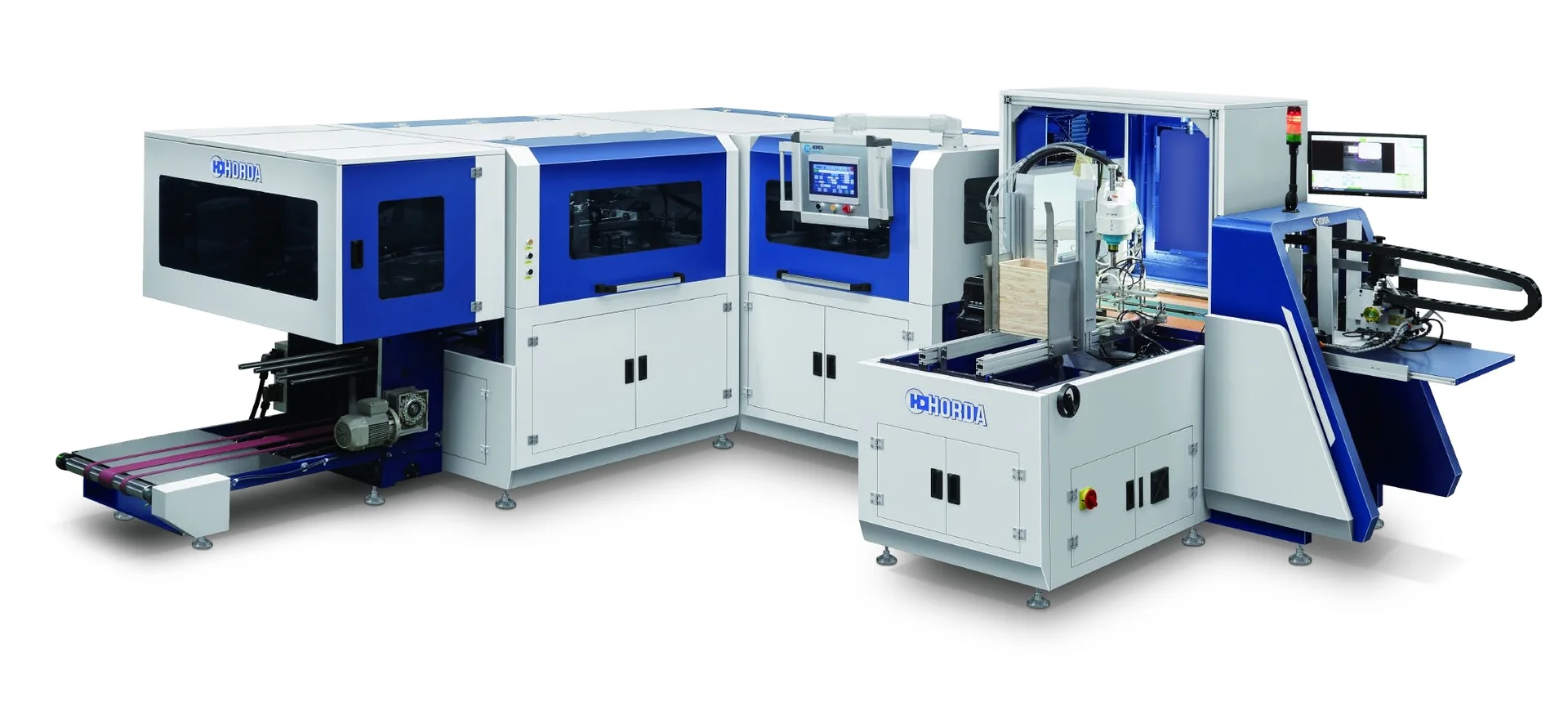
For equipment presented through Raymon Machinery, those inputs can then be used to discuss an appropriate HORDA-manufactured configuration without treating a catalogue specification as a substitute for project-specific technical review.